Road To Freedom founder Ra'ed Khan has credited the music industry's support as central to the organisation’s decade of impact as he prepares to release his debut book.
Khan, who is also director of growth at Warner Music Group (WMG), launched the nonprofit in 2015 in response to the Syrian refugee crisis. The organisation has gone on to provide aid and support to refugees and displaced people across Europe, Africa and the Middle East.
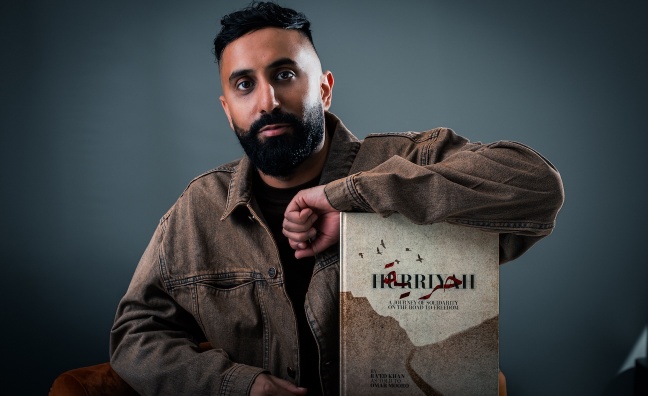
The executive’s debut book, Hurriyah, will be released independently on July 3, and documents “the lives, untold stories and unseen faces” that have defined Road To Freedom’s work so far in conflict zones all over the world.
The 10-year anniversary was marked earlier this year with an event in Kensington attended by label presidents from the three majors, alongside teams from Spotify, YouTube, TikTok and Meta. A documentary telling the story of Road To Freedom’s work then had its London premiere on April 30.
The duty to speak up doesn't only fall on artists. It falls on all of us who have the privilege of working in this industry
Ra'ed Khan, Road To Freedom
Here, Khan speaks to Music Week about the artists and music companies that have helped shape the initiative, and the book that tells the story of the people at the heart of it…
Can you remember the moment that led you to start Road To Freedom?
“Yeah, very clearly. I was in a junior role at a management company and I landed on a picture – an article about a young Syrian boy. His name was Alan Kurdi, and his body had been found on a beach in Turkey. I was just thinking, 'This is some sort of movie, this is not real.' I called my sister, crying, and she educated me about the war in Syria and the refugee crisis. I was just so heartbroken. This boy had tried to flee with his family to find safety and had sadly passed away alongside his mum and his siblings.
“The first thing I thought was, how do I help? I found an organisation called Care4Calais that had been in Calais and Dunkirk helping people for years. So immediately I was like, 'Right, we're going to go over, we're going to make food parcels and do our bit.' What I didn't realise was that that picture and that trip would become a big part of my life for the last 11 years.”
Why do music and humanitarian work fit together so naturally for you?
“Being in the music industry has been probably the most instrumental thing for our work to continue. On my first trip to Calais, when I told people I was going, I had this influx of people from management teams, record labels and DSPs saying, 'What do you need? Money? Clothes?' So a lot of the support I was able to give refugees on that first trip was because of what the music industry had given me.
“After I started meeting these people – not just from Syria but from all over the world – and seeing how incredible they were, I was like, this is something I want to do for the rest of my life. Every trip I went on, I had that same level of support, and it just kept growing. New people from different teams and companies would reach out asking what they could do.
“Around my 10th trip I thought, 'Let's do something different rather than just collecting donations – let's do something where everyone feels involved.' So we launched our first event, Grime Aid. Artists like D Double E, Chip, Jammer and Headie One all came together to waive their fees and perform, and I would take the money raised and go out to distribute aid. Over time, those events have grown hugely and there are always teams from labels and DSP partners lending their resources and skills to make it bigger and better.”
What surprised you most about the industry's willingness to support the mission?
“When I first started, I just didn't think anyone was feeling the same way I was. What surprised me most was how many people, from label presidents to interns, just wanted to come together and do something. It wasn't about who you worked for or what artist you worked on – it was just, how can we actually help?
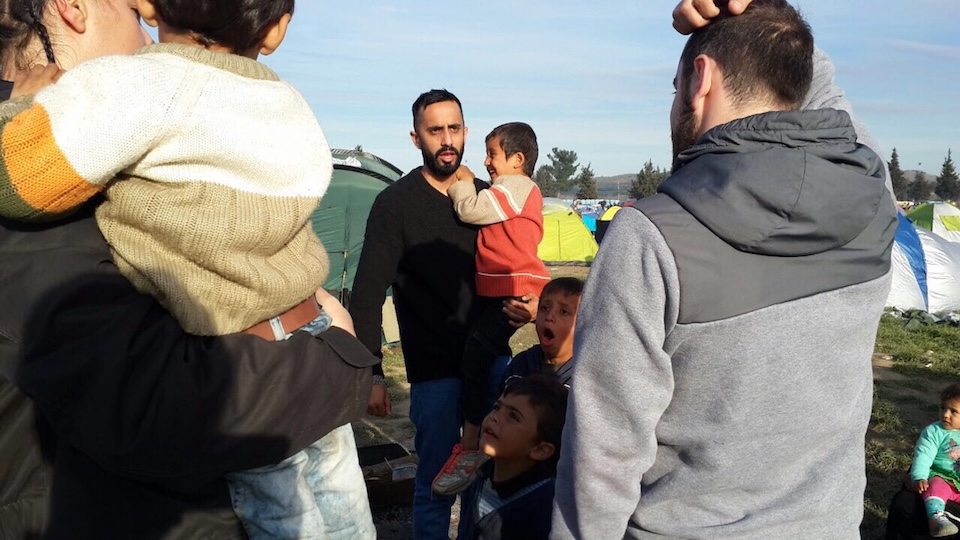
“What I'm really proud of with Road To Freedom is that it's become very accessible. When you hear the word 'charity' or 'humanitarianism', people often think, how do I even get into that? But with this, it's always a friend or former colleague, and it's accessible – some teams will literally be sitting in my living room in East London making food parcels, or they'll come out with me to refugee camps and distribute aid, or they'll be at events.
“Two other things stuck with me during the early stages. Stormzy would be like, ‘Come to my house, I've got clothes for you.’ We'd get to his house many times and he would just fill up the car with his brand new clothes, and the next few weeks I was sending pictures of a whole refugee camp with kids dripped in Adidas tracksuits. He'd be like, ‘Come back, I've got more.’ No one would know this story until I'm telling it now. Sienna Spiro literally just FaceTimed me a few weeks ago, sharing, promoting her massive platform about the work I was doing, which then brought a huge influx of donations for the Sudanese community. Those are just two examples, but there are so many moments like that.
“I also feel that the duty to speak up doesn't only fall on artists. It falls on all of us who have the privilege of working in this industry. What makes me really proud is that everyone in the music industry always has this sense that certain things are not acceptable, that we won't be bystanders. That has been the most surprising thing.”
What moments of resilience from your travels have stayed with you?
“In my first few trips I was so ignorant in my understanding of what displaced people's lives were actually like. When you actually spend time with these people – some of whom I've literally slept overnight with in refugee camps – they become like family. They tell you their stories. You meet amazing musicians, poets, rappers, singers who just want to share their talent.
“One story that really stayed with me is a Sudanese man who asked for a wooden chair. I thought it was just so he could sit down properly in his tent. Then a few days later we were sent a video of this man who had carved a guitar out of the chair and was strumming along and playing it brilliantly, without any tools. And I was like, where would you even be able to do that? It's just the brilliance these humans have.
“I always think there's no 'us and them'. There are young lads just like me who have the same dreams, the same ambitions, the same wish to be someone. The only difference between me and them is the luck of where I was born. That always stays with me.”
What did the 10th anniversary event mean to you personally?
“I cried. It was really special having Sony, Universal, Warner, Spotify, YouTube, TikTok, Meta – all these brilliant people I've had the privilege of working with over many years – all in the same room. It felt like a thank you, and a chance to look back on the impact Road To Freedom has had. But I also said on the night that it's a bittersweet feeling, because I wish Road To Freedom didn't have to exist for 10 years – I wish the world was in a better place. Still, everyone turned up, there were no egos, it was very much about coming together for a meaningful cause.”
How are you marking the anniversary beyond the event?
“There's a lot happening. We filmed a documentary in Cairo and London showing how we started, what we've done with the money and resources we've been given, and how the music industry has supported that. We also wanted to include displaced people and let them tell their own stories, which is why we went to Cairo to film with Palestinian and Sudanese voices. We've had screenings in London and are planning more in New York, LA, Lisbon and Cairo, with film festivals hopefully to come.
“And I've written a book called Hurriyah, which means 'freedom' in Arabic. It's a coffee table style book written over the course of a year. Wherever I've been – Syria, Yemen, Palestine, Sudan, Somalia, Afghanistan – people have always said to me, 'Please do not forget to tell the world what happened to us.' I've had those stories in my head for 10 years, and when the anniversary came I thought, 'I have this promise that I have to fulfil.' The book was written with an incredible Egyptian poet and writer called Omar Mooro. For months I just had sessions with him, sharing stories from displaced people all around the world.”
What's your message to the music industry?
“Firstly, that we all have a part to play. It's not always about donating money – we have this big ecosystem of resources, skill sets and platforms, and I'd love anyone, wherever they work in the industry, to contribute whatever they can. Road To Freedom is a non-profit with a 100% donation policy, and it's very much a community-led project that relies on volunteers giving up their time and skills.
“The second thing is that I want to motivate people to speak up. A lot of people in the music industry feel scared or worried to speak up on certain topics – Palestine, for example. I'd want them to watch the documentary or read the book and feel that it's okay to do so.”
What's next?
“The most immediate thing is responding to the situation in Lebanon – we're about to launch a campaign to provide food and hygiene to those impacted. We're also continuing long-term support for displaced communities, including helping Sudanese women become self-sufficient by investing in sewing machines and skills training. And there's a dream of mine to launch an education centre, because so many Palestinian and Sudanese children have been out of school for so long and their parents are desperate to get them back into learning.
“Our most impactful event to date was the Stand With Gaza show in 2024, headlined by Headie One. It wasn't just about what happened on the night – it raised so much awareness that it became one of the key reasons we were able to build longer-term infrastructures on the ground. That's what these events can do when the whole industry gets behind them.”
What drives you beyond Road To Freedom itself?
“Humble beginnings – very working class background, grew up on a council estate, but I always had this dream that I would work in the music industry. I'm from the era of unpaid internships, but through that I met people who have been so instrumental in my career – Safiya Lambie-Knight at Spotify, Tom Paul at Capitol Records, and now Natasha Billing at Warner. It's been a journey.
“I always want to bring not just Road To Freedom but also where I've come from into the spaces I work in. A lot of people talk about race, but I always like to mention class. That glass ceiling also needs to be broken. I sometimes see people that might look like me but who don't understand where I've come from. There are so many young people from similar places who are far more talented and skilled than I am but just need an opportunity. As my career continues to grow, I'd love to keep breaking those doors open for them.”
Hurriyah – A Journey of Solidarity on the Road to Freedom is out on July 3.
Testimonials
“It’s rare to find people who work in music that are not only passionate about art, but also humans. Ra’ed’s work is so important with Road To Freedom and something we should all take inspiration from!”
Sienna Spiro, artist
“Ra'ed brings his whole heart into everything he does. At Warner, we know him as a thoughtful, sharp leader who gets results – that same compassion and drive fuel his work with Road To Freedom. Whether he’s supporting artists or standing up for refugees, we’re simply proud to know and work alongside someone with such an incredible spirit.”
Ed Howard, co-president, Atlantic Records
“Ra’ed’s dedication and vision through his work with Road To Freedom is genuinely inspiring. The work he leads feels increasingly vital at a time when inequality in access, opportunity and resources continues to grow. Bringing the music industry into that mission is especially powerful, as it’s an industry built on people, influence and connection. Ra’ed has an incredible ability to unite voices with real cultural impact behind a cause that can create meaningful change for so many who need support most.”
Rachel Campbell, founder, Wired PR
“Ra’ed, your unwavering commitment and passion leave me constantly in awe. Road To Freedom is an organisation very dear to my heart – both for its deep roots in music and on a purely human level. It wouldn’t be what it is without your dedication and drive. The world needs more people like you.”
Maddy Smith, artist partner manager, YouTube
“The work that Ra’ed does for Road To Freedom is ever more important in a world of increasing wealth and opportunity disparity. Connecting the music industry, which is so anchored in people and relationships, is a wonderful way to ensure that we are bringing the people with the loudest and most impactful voices to a cause that can offer so much to so many. This is important and vital work at a time when so many people need help and support.”
Natasha Billing, SVP revenue & growth, Warner Music Group
“Few people have a bigger heart than Ra’ed. I recently watched the documentary celebrating the 10th anniversary of Road To Freedom, the charity he co-founded with his sister Rabania. The screening fell on the third anniversary of their mother’s passing; hearing about her, it’s clear she was an incredible advocate for living with intention and giving back and I'm sure she would be enormously proud of them both.
“The beautiful film highlighted their vital work supporting war-torn communities, from the camps in Calais to on-the-ground efforts in Sudan, Egypt, and Palestine. It’s inspiring to see how deeply Ra’ed and his team touch so many lives, and I am truly moved by his unwavering determination to make a positive impact.”
Briony Turner, co-president, Atlantic Records
“What Ra’ed has built with Road To Freedom is a reminder of what can happen when people use their networks, influence and resources to materially support others in thoughtful, consistent ways. At a time where so much online feels performative, I think there’s something genuinely powerful about creating work that has a direct impact on people’s lives – and about bringing artists, creatives and wider cultural figures into that conversation too.
“These are people who shape culture, influence public consciousness, and reach audiences in ways institutions often can’t. When that visibility is used with care and intention, it has the ability to raise awareness, shifting conversations and mobilising real support. The scale of what Road To Freedom has managed to do across the years, from Calais to Sudan, Egypt and Palestine, speaks to a real commitment to showing up where support is needed most.”
Alya Mooro, author and storyteller
“I’ve had the privilege of knowing and watching Ra'ed grow over the last decade. His humility, grace, and unwavering passion for both music and people make him truly one of a kind. There are very few leaders who are equally influential professionally and in the communities they serve, but Ra'ed has always managed to bridge both worlds with authenticity and purpose.
"His commitment to creating meaningful change through Road To Freedom, while remaining grounded and generous, is what sets him apart. I have no doubt that Road To Freedom will stand the test of time and evolve into a lasting legacy that our industry will be proud to champion for years to come. Truly inspirational.”
Mohammad Qazalbash, VP business development, Live Nation Arabia