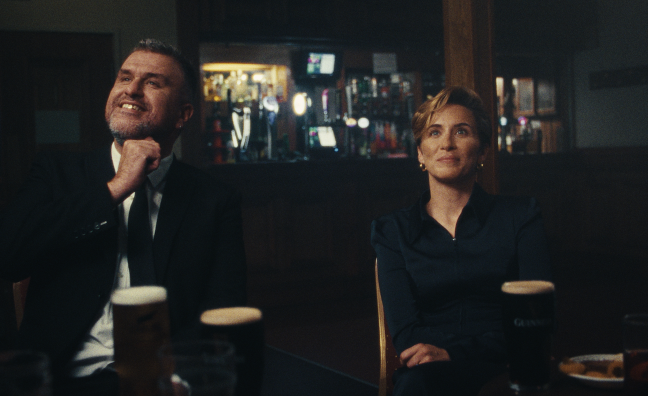
When Jon McClure of Reverend & The Makers co-founded Day Fever last year, sending shock waves across the music industry was not necessarily what he expected.
But, as he writes for Music Week in this exclusive Viewpoint, that is what is starting to happen. The singer founded the daytime events business alongside actor Vicky McClure (pictured above right), filmmaker Jonny Owen, festival promoter James O’Hara and comedian Chris McClure, and he and his team believe that the option of daytime partying can shed light on new possibilities for the wider business.
Here, he expands on what he means…
“British culture has always thrived in the dark. For the longest time our pubs and nightclubs formed the backbone of our cities. But ever since the pandemic, our relationship with time has been steadily rewired. A shift has been occurring, and the cost-of-living crisis has only helped to accelerate the trend. All night escapism is now a much harder sell.
“Enter the daytime economy, the hours in between our breakfast and the evening news. In recent times, matinees, pop up markets and 3pm discos have begun appearing right across the country.
“At the forefront of it all is Day Fever, a daytime disco that I set up with the actress Vicky McClure, filmmaker Jonny Owen as well as festival promoter James O’Hara and the comedian Chris McClure.
“Our wonderfully chaotic daytime parties are now in almost 30 towns and cities. Our second year has seen us move into the UK festival market.
“A convergence of forces has served events like ours well. An ageing club audience who still want to dance but no longer want to do so all night; younger generations seeking more flexible experiences; parents and carers craving a fun that fits around their responsibilities; and post-pandemic cities looking to activate their centres, as the high street crumbles all around them.
“What’s emerging is not a watered-down nightlife, but a new kind of social ritual, in harmony with the ways in which people live their lives. It is proof above all else, that the most radical thing you can do in 2025 might be dancing at 3pm.
“These kinds of businesses work particularly well in post-industrial cities, reimagining old and disused spaces, and serving a population hungry for a good time but often with little in the way of options. A big bonus is that they boost local economies, with nearby pubs and cafés, vintage shops, cab drivers, and public transport all witnessing a financial uplift.
What’s emerging is not a watered-down nightlife, but a new kind of social ritual, in harmony with the ways in which people live their lives
Jon McClure, Day Fever
“Perhaps most importantly, such events model a version of culture that doesn’t rely on darkness, or exclusion. The magic can still exist in the daylight hours. It feels more sustainable than what has come before.
“As councils and cultural strategists rethink the future of urban life, they would do well to pay attention to this trend; not just as a series of novelties, but as a template for what comes next. A city that dances before dark is one that’s ready to embrace a more modern and inclusive economy, where the best moments don’t have to start at midnight but at noon!
“Places like Sheffield, Leeds and Newcastle are often caught between post-industrial identity and cultural renewal. Their populations are intergenerational, experimental and disillusioned with the idea that cultural capital lives only in London or only at night. In these contexts, daytime discos and gigs function almost like a civic intervention, activating dormant venues, repurposing familiar cultural spaces. We are offering a low-barrier, emotionally rich experience that doesn’t require staying up past midnight or breaking the bank.
“We don’t claim to have invented the daytime party but what we do has captured something vital, something more than just a club. It is, in many ways, a reunion, rooted in collective memory, of simpler times when togetherness didn’t feel forced or impossible. Glitter flies, tears flow, arms wrap around strangers. People don’t just come to let off steam — they come to remember who they are, and who they used to be.
“We are, in essence, witnessing a nostalgia boom. Oasis reforming has been by far the biggest pop culture event of the summer. Their gigs have felt like seismic happenings. The daytime economy boom is a huge part of this yearning for nostalgia and should not and cannot be dismissed as a fad. These events exist to serve a demographic who are longing for connection. In a world of doomscrolling and division the daytime economy offers punters a comfortably soft landing, a permission slip to feel things fully, surrounded by others doing the same.
“But perhaps most profoundly, businesses of this ilk represent a shift in the emotional economy. At a time when many feel alienated from traditional institutions — political, religious, even familial — they offer a temporary respite for joy. People cry at these events, not because they’re sad, but because they’re surprised to be having a good time again. There’s no irony in the playlist, no status games in the outfits, no velvet ropes or VIP sections. The crowd dances onstage amongst the DJs. There is no “them and us”.
We might even start our own record label, who knows?
Jon McClure, Day Fever
“It challenges a long-standing prejudice in club culture: the idea that darkness equals authenticity. That to be truly moved by music, it must happen late, loud, and under the influence. That logic has flipped and proves that you can lose yourself completely in the daytime and that dancing in the afternoon doesn’t dilute the message — it only concentrates it.
“Day Fever is expanding rapidly, and we intend to embrace the opportunities that are presenting themselves to us. The ability to speak directly to an underserved and unappreciated demographic, can be viewed as a latent superpower. For artists of a certain age, events such as ours and the accompanying mailing list can help propel them up the album charts. We might even start our own record label, who knows?
“We are proud of what we’ve started and look forward to all that is to come in future for the daytime economy.”