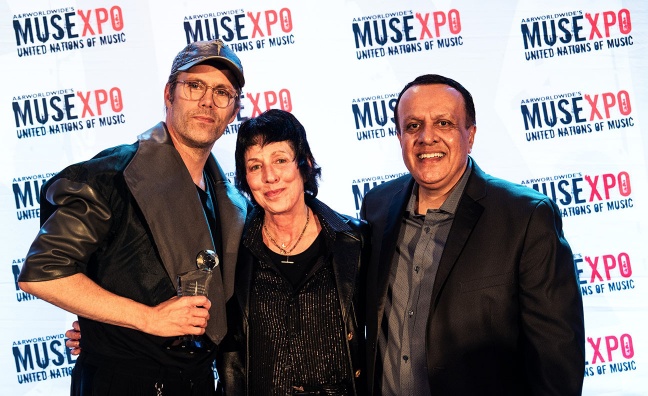
Last week saw the 26th edition of MUSEXPO take over Burbank, California, as artists, creatives, managers, label execs, music supervisors, live agents and more besides all connected to trade ideas (and enough business cards to fill a library).
Speaking in the aftermath of this year’s edition, Sat Bisla, president & founder, A&R Worldwide/MUSEXPO told Music Week: “MUSEXPO 2026 has been a powerful reminder that at the very core of our global industry lies something profoundly human – music itself. It is the nucleus that connects every deal, every strategy, and every innovation. Without the songwriters and artists who give it life, our business is merely an empty shell. Over these past days, we’ve witnessed how music continues to shape, transform, and elevate the world, especially in its most challenging moments.”
Indeed, across three days of panels and keynotes, everything from the enduring importance of radio to new opportunities emerging in India was covered, while elsewhere new acts were showcased and demos were assessed by top names. That’s not to mention the high profile winners of MUSEXPO’s International Music Industry Awards, who accepted their honours in person.
“What resonated deeply this year was a collective call from both creatives and executives across the globe to return to instinct, and to champion gut-driven A&R, to trust the emotional pulse of great music,” continued Bisla. “At the same time, we embrace AI and evolving technologies not as replacements for creativity, but as tools to enhance connection, discovery, and engagement, but never as the foundation of human expression. MUSEXPO reminds us that while the world may be vast and diverse, music remains our universal language; an innate connection embedded within us from birth. It transcends borders, cultures, and differences, bringing us closer together in ways nothing else can. We leave inspired, with purpose, and more committed than ever to the future of music. And as we look ahead, we are excited to return for an even more impactful and inspiring 27th global edition of MUSEXPO in 2027. You won’t want to miss it.”
Here, Music Week rounds up just some of the key talking points and memorable moments that cropped up…
JUSTIN TIME
Should Justin Tranter ever tire of being one of the most successful songwriters in the world, a career in stand-up comedy or motivational speaking could well beckon. Ahead of being presented with MUSEXPO’s Global Songwriter Award, the hitmaker extraordinaire delivered an often self-depreceating career-spanning keynote interview that chartered a course from artistic failure and poverty to working with the likes of Selena Gomez and Chappell Roan.
Elsewhere, there was talk of the pitfalls of chasing virality, learning how to survive the machinations of the business and how Little Mermaid and Annie started Tranter’s love affair with music (“Red heads singing in fictional situations” are, it turns out, Tranter’s creative rocketfuel). Interestingly, for someone who has has already sold over 75 million singles and notched up more than 100 billion streams on Spotify and YouTube, Tranter seemed far more excited about the future. When asked where pop is going next?
“I see it going in the direction of Rose Grey and Bea Miller… COS I EXECUTIVE PRODUCED BOTH OF THEM!” laughed Tranter. “I believe in both of them deeply. They’re brilliant and now that social media has broken traditional marketing, I may as well focus on what I deeply love. So when I say Rose and Bea funnily like that, and try to plug them, it also happens to be the truth.”
Tranter’s keynote ended with a bit of advice for the next generation of songwriters.
“You have to be willing to ruin your own life until your dreams come true,” deadpanned Tranter as MUSEXPO burst out laughing.
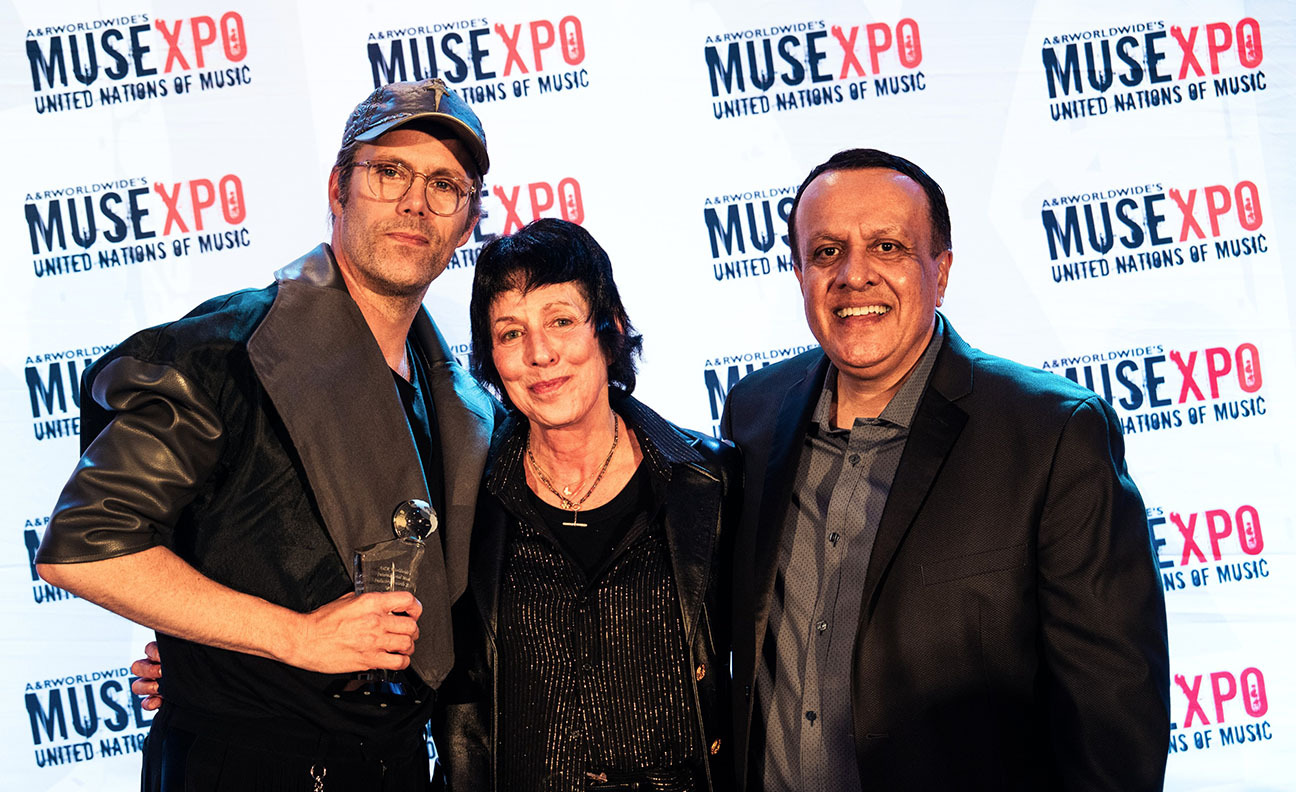
A few days later, Tranter formed a formidable comedy duo with Republic Records’ Wendy Goldstein who presented the songwriting guru with the Global Songwriter honour. For her speech, Goldstein poked fun at meeting the platform-heeled songwriter early on, back when Tranter’s group Semi-Precious Weapons were fixated on world domination.
“Of course, Semi-Precious Weapons went on to have five major label deals – and never actually produced a hit! You were ahead of your time, Justin!” she joked before turning to salute Tranter’s enduring brilliance as a songwriter for superstars around the world.
“I love working with you Justin, you make me look like I’m fucking genius!” she laughed.
“Thank you, Wendy,” Tranter responded. “You respect songwriters so deeply. And it’s also just so nice to see someone in the music business who dresses well!”
After thanking a host of people, the winner’s charismatic speech ended with a recitation of the following mantra.
“Without songwriters, there is no music,” Tranter said, bidding farewell. “Without music, there is no music business.”
TO BE FRANK(IEWICZ)
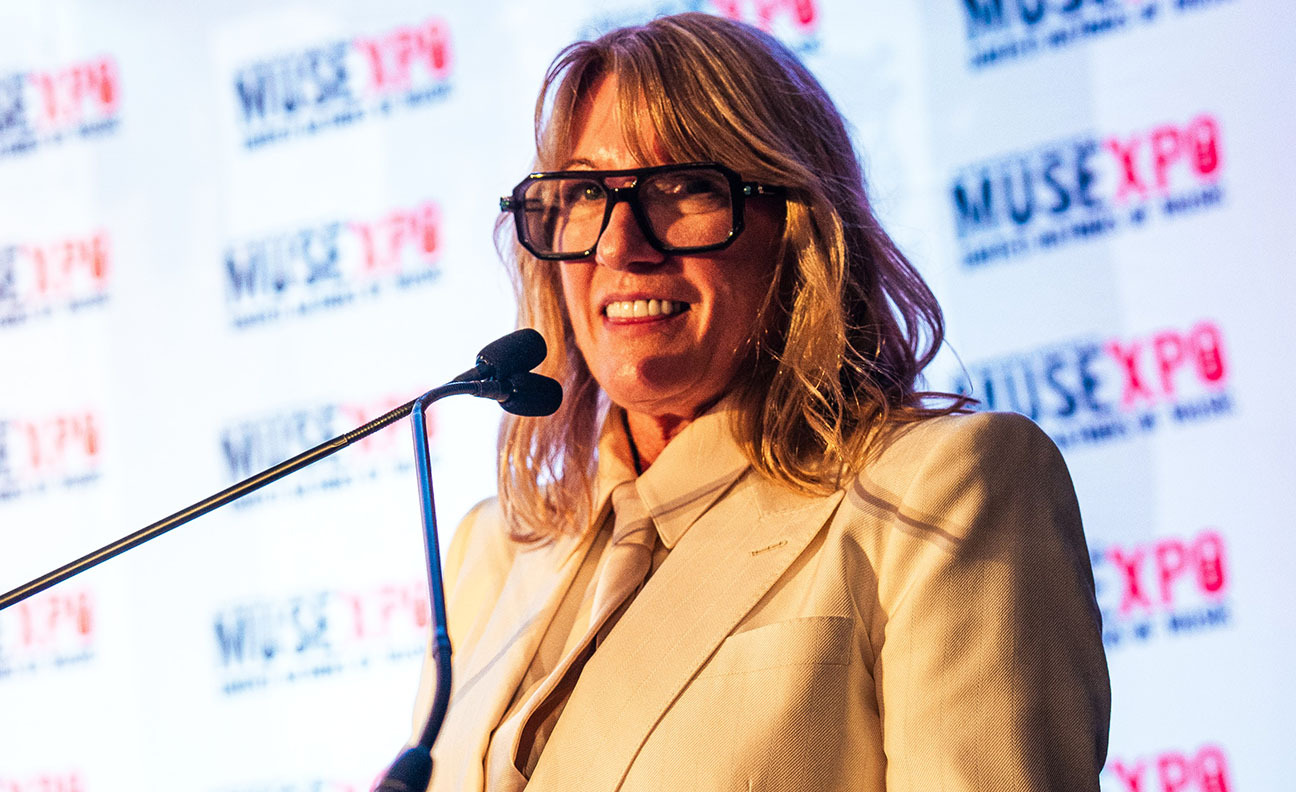
Kim Frankiewicz – executive VP, worldwide A&R at Concord Music Publishing – was the winner of this year’s Seymour Stein Global A&R Award to recognise her incredible global impact over the years. And she was on inspirational form during her acceptance speech.
“As a female Australian, I find this recognition particularly humbly,” Frankiewicz said. “For all you young females out there, never lose sight of your dream, please.”
She also made sure to recognise all of the people that had helped her along the way.
“Above all, my greatest thanks goes to the artist, songwriters, and producers who have placed their trust in me over the years,” she concluded. “None of us would be here without their remarkable talent.”
Elsewhere, in her keynote interview, Frankiewicz expressed relief that A&R is returning to the old ways, post-pandemic.
“I loved hearing people at the MUSEXPO A&R panel say how data is less important now,” she said. “Especially during covid, TikTok artists were blowing up and everyone was signing them but they didn’t have a career. The numbers were good on socials, but they couldn’t sell tickets.”
Frankiewicz also took time out to salute the work of her fellow publishers around the world for their increasing involvement in artist development.
“Publishers were always pooh-poohed when I started,” she reflected. “But now we’re a very important part of the music industry because a lot of major record companies are not signing and developing. There’s lot of great artists out there and outlets for them to get their music out, but they still need money to support that. And they also need creative support. I find people are going to publishers first because we can help them financially, creatively, and with finding a producer, an agent and a manager.”
SOMMER LOVIN’
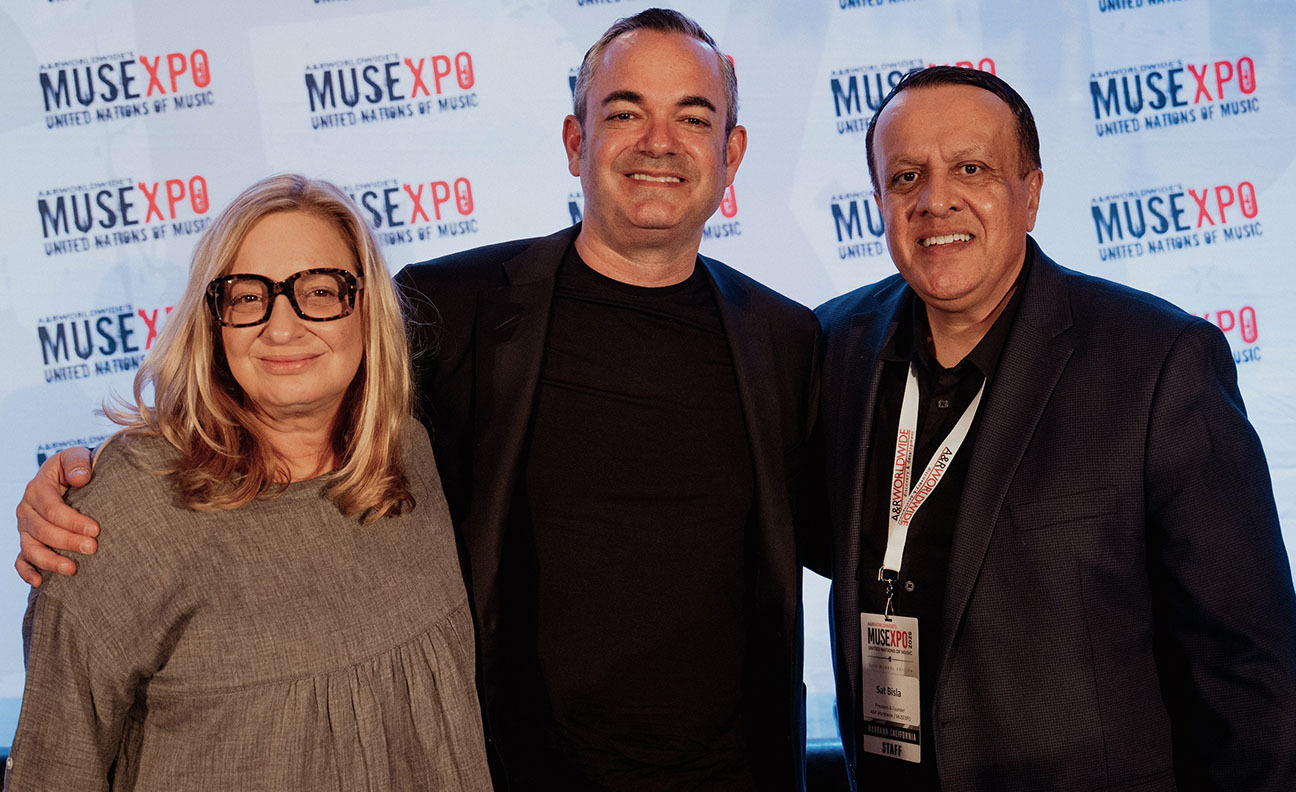
“That’s a lot to live up to, it’s all downhill from here!” quipped Kirk M. Sommer after watching a host of superstars –including The Killers, Sam Smith and Lola Young – praising him for being MUSEXPO’s winner of International Music Person Of The Year. Though WME’s senior partner and global head of contemporary music’s storied career needed no introduction, both The Killers’ Brandon Flowers and Zane Lowe nevertheless tried their best to recite the seemingly endless list of artists he's worked with over the years without losing their breath during their video tributes. While he may have famously started out life in the mail room at WME, it turns out Sommer was always driven from a young age.
“I was always an entrepreneur,” he laughed. “I did anything to make a buck, I raked leaves, shovelled snow, washed cars – I even built RC cars, I bought them wholesale and sold them above retail.”
Sommer also shared his biggest pet peeve (when people tell him, ‘Let me put my ear buds in’ on Zoom because “It’s like being on hold!”) and why he remains so bullish about the live sector.
“There’s an unbelievable amount of artists selling an unbelievable amount of tickets,” he said. “Business is booming. Opportunities are incredible. There are more stadium acts than ever before. And next year’s looking even busier.”
But one thing that really seemed to interest him was the residency model, with his client’s Sam Smith residency in San Francisco being but one example he cited to explain why the live music industry needs to prioritise making special moments happen.
“It’s about figuring out a goal and backing into it and finding alternatives, not getting back on the same loop of playing the same places all the time,” Sommer said. “It should be about, ‘How do we make this interesting?’”
Later on, as Sommer was presented with his award, his daughters delivered a brilliant speech (“Fun fact, he’s quite the bird enthusiast!”) and an emotional Sommer, in turn, thanked his family for their patience on the days he gets home long after they’ve gone to sleep and has already left before they wake. A procession of thanks for his colleagues also ensued, including for WME’s Benjamin Scales who gave him his first job and who is always on hand with the sage advice: “Don’t get caught up in the bullshit”.
And as for what’s next after the win? Well, he’s clearly not about to go back to raking leaves, put it that way.
“The best is yet to come,” promised Sommer. You wouldn’t bet against him.
SOUPED UP
During the conference, one panel sought to dissect a new age of tech innovations, social/streaming developments, AI, Web 3.0, and much more besides. Or, in the memorable words of moderator Ralph Simon (founder & chairman, Mobilium Global), turn a chunky “minestrone soup” of LLMs, SLMs and more and refine it into a nourishing “vitamin soup”.
Leading the discussion was, of course, AI and the opportunities and challenges ahead. Jonathan Griffit, co-founder & CEO at Zooly.ai, had quite the opening statement.
“We’re in the Napster age of AI but we’re moving towards a Spotify and Apple era,” he said, before unveiling Zooly AI’s PhotoBomb! app – a camera application that “photobombs” user selfies with digital, AI-generated content.
The untapped possibilities of social media also came into sharp focus.
“We can either just accept that social media and fan expression is just for promotional use, or we can lean in, give the artists control, give the fans and music lovers a fun experience and build an economy off of it,” added Gaurav Sharma, founder & CEO, Hook. “That's what we did with streaming. That's what we're doing at Hook.”
Alexandra Debow – CEO & co-founder, Swsh then turned the conversation to the need to prioritise authenticity above all else.
“Artists want to speak to their fans, fans also want to speak to the artists, and if we can create an authentic way to do so, using modern day technology, we're going to be able to do something that's actually a lot more transparent than before,” said Debow. “[The question is] how do we leverage data to be able to give a true story that connects fans in a trusting way?”
Naturally, data – and who owns it – also came to the fore. Clive Dickens, founder & CEO, The Meliora Company, gave his three imperatives for modern artists in the new era.
“If I was an artist now, one, you gotta have people you trust, two, you gotta use modern tools, and the third thing is to make yourself future proof: own your own data," he offered. "If you build your database from the beginning then your career can have a life-long journey, it’s transportable.”
Domenico Randazzo – client relations specialist at Chartmetric – also cited the disparity between the appearance of success and the reality of it, urging everyone to beware of “vanity metrics”.
“Chartmetric look at the correlation between Wiki searches and festival appearances – that means someone actually remembered your name and searched for you online," he said. "That behaviour driven metric gives a higher level of understanding. Just because you have two million followers on TikTok doesn’t necessarily mean you can sell 12 tickets at the Bowery Ballroom.”
SILVA LINING
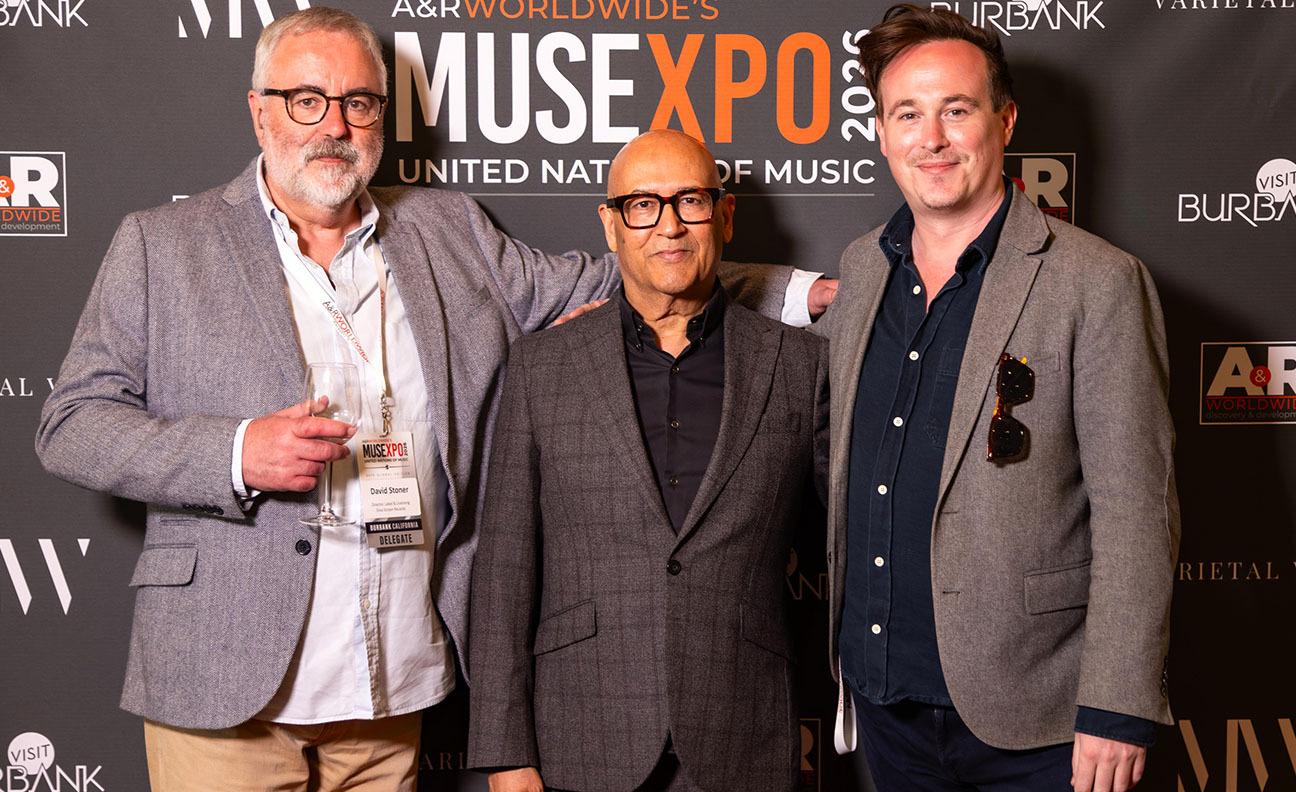
This year, MUSEXPO recognised Reynold D’Silva, founder & CEO of Silva Screen Music Group, as the recipient of its Lifetime Achievement Award.
After receiving a host of accolades and a presentation from the British Consulate-General Paul Rennie OBE, only one thing was on his mind as his storied career was honoured.
“I hope this means I don’t have to apply for an ESTA now?” he deadpanned.
Across his keynote interview and acceptance speech, D’Silva was often modest to a fault.
“We’re not disciplined,” he laughed of how they’ve managed to get by, and still have fun doing it. “We’re always dancing on pinheads, but it works.”
Elsewhere, he touched on his work spanning over 40 years – and 40 Dr. Who soundtracks! – taking in Enter Shikari, and why he signed Big Special (“They had this incredible song called Shithouse”). Fair!
But perhaps nothing spoke to his character more than a heartfelt introduction from MUSEXPO founder Sat Bisla (or “The Sizzler” as D’Silva calls him) who recalled a time around the global financial crisis in 2008 when times were hard and D’Silva reached out to him and offered – and delivered – emotional and financial support. Bisla tried to hold back the tears. He wasn’t the only one.
AI OF THE STORM
It will surprise precisely no-one that, on a panel christened “The Future Of The Worldwide Music Business”, AI dominated the discussion: AI. Getting to grips with that and more besides were Alexi Cory-Smith (founder & CEO, Bella Figura Music), Lucas Keller (founder & president, Milk & Honey Music + Sports), Richard Yaffa (EVP, Universal Music Group For Brands), Sankar Thiagasamudram (founder & CEO, Audeze) and Thomas Scherer (president, global catalogue recorded & music publishing North America, BMG). And they had fun with it, too.
“We're using AI, just to speed up work for executives, for research, for contracts, all kinds of things,” said Milk & Honey’s Lucas Keller before adding a comical addendum. “We’re trying to eliminate the lawyers.”
But within this he also had some good advice for the music industry workforce of tomorrow.
“AI is going to take over a lot of admin positions and the middle of the business,” he offered. “Now is a great time to become highly-specialised.”
Picking up the baton, Bella Figura’s Alexi Cory-Smith mulled over the threats and benefits of AI.
“The big concern now is people using our music to train things which they’re going to sell for lots of money,” Cory-Smith said. “And so it's very, very important that regulation and legislation is wrapped around this, but also without suffocating innovation, which I think is always the worry when tech and law and rights meet. We invest in really good quality copyrights and then we enhance them and look after them, so we really don't want anybody cannibalising those in any way. For example, we work with Sony for our global publishing so we lean into them hugely, because they have market share, they have so much power to make sure we lead that good fight in terms of trying to balance preserving the art and the demands of the commercial world and innovation.”
Universal’s Richard Yaffa was the first person of MUSEXPO to name-drop the superfan phenomenon.
“Brands, creative agencies, media companies and platforms are all starting to realise, ‘Wait, there's a fundamental shift happening,’” he noted. “Their advertising models are shifting. If you look at Unilever this past year, they’ve shifted massive amounts of their media budgets into the creator led community and superfans. And they're really seeing the results. There are so many examples of where social media integrations with brands, that are carefully curated with authentic moments with music, have moved market share.”
There was also time to talk about gaming, and in particular the eagerly-awaited arrival of GTA VI. Which may earn a penny or two by the sounds of it.
“The projected revenue is $7 billion,” said Sankar Thiagasamudram. “Gaming audio is becoming a much bigger area of experience for people.”
Special credit, too, must go to BMG’s Thomas Scherer, who was on excellent form, be it admitting to how he’s been covertly adapting to AI (“Don’t tell my boss but I use Chat GPT all the time for my presentations”) or laughing alongside Alexi Cory-Smith when the ex-BMG exec recalled how she aimed to start Bella Figura by “pinching” her top 5 clients at BMG. He also expertly parried a question on whether BMG would be acquiring Concord with this absolute 10/10 poker face of an answer: “What’s Concord?”. Bravo.
LIVE AND LET LIVE
Executives from Live Nation, Eventim Live Global, MDDN, Malsons Media and Locomotion Music Group/Special Projects were corralled to tackle the new reality of live music, taking in both the fan and artist experience and what has (and hasn’t) changed since the pandemic.
“The real separation now is the artist being willing and wanting to show up to meet fans where they are, come to them where they feel comfortable and invest in them,” David O’Connor – VP, artist & business development, Live Nation. “The fan evangelising thing is so true, if you give to your fans, they’ll give back ten fold.”
From there, the panel moved on to look at how to know which territories to zero on in live, with Jenn Tolman Hurst – Sr. VP, talent management, MDDN – recalling her experiences with Ava Max and how they targeted Sweden first and built the campaign from there.
“Sweet But Psycho didn’t blow up [in the US] at first, it did in Sweden,” she recalled. “We saw a huge uptick and started the record at radio there and spread it out across Europe then we brought it back [to the US].”
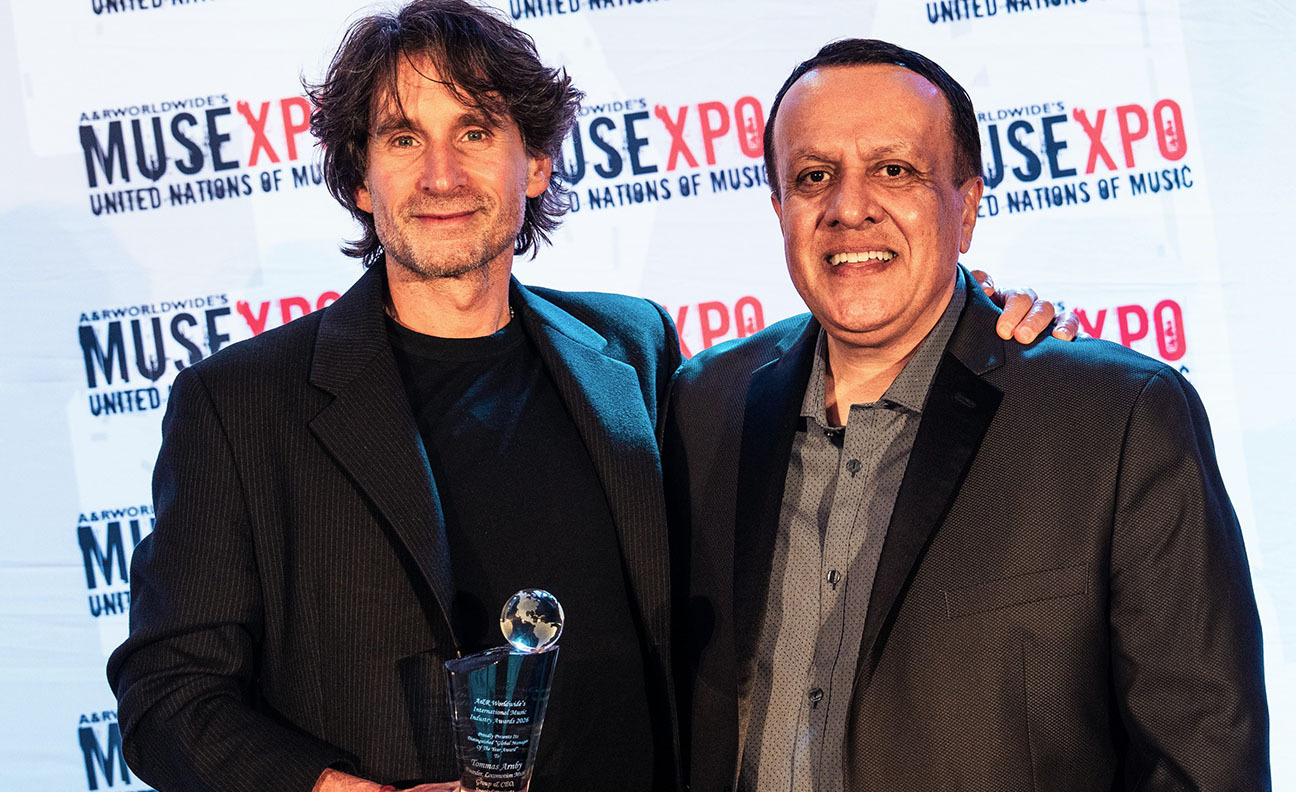
Picking up this thread was was Tommas Arnby – founder, Locomotion Music Group & CEO, Special Projects, Yungblud’s manager and also the recipient of MUSEXPO’s Global Manager Award.
“The best bet is to go where the love is,” he said. “Often people will say, ‘Break in the UK first’ or ‘plant a flag in the US first’ but that’s so hard to do. It’s so hard to build a fanbase in general. So, to build any form of success in this business, you need to go where the love is and start connecting the dots from there.”
Arnby proceeded to identify how difficult this will be for the next generation of artists as touring costs continue to soar. He did, however, have solutions.
“We need to find ways of funding, and be smart about identifying the next generation of truly talented artists,” Arnby added. “We absolutely need to find the cash to help them build audiences that they and the rest of us would benefit from. And there just isn’t enough of that right now. That’s a big problem.”
His sentiment secured one of the biggest rounds of applause at MUSEXPO 2026.
SYNC BIG
If there was an overarching theme this year it was not AI, but rather sync, music supervision and the magic of sound being paired with image with representatives from Netflix, Dreamworks, Paramount, Amazon/MGM, Format Entertainment and more.
Music Week was on hand to host a keynote with with Bob Bowen, worldwide head of music, film & series, Amazon MGM Studios which covered his incredible career, from his time at New Line Cinema and working on the legendary scores for Lord Of The Rings, Blade and Elf, to his recent hot streak including Project Hail Mary, Saltburn, Hazbin Hotel, and Daisy Jones & The Six. Among a host of memorable recollections, he pointed to the increasingly borderless nature of TV and film.
“I think we're starting to see that English is not always the default language for TV and film, and I think that's super exciting,” he offered. “We're starting to see that in India. We've seen that, obviously, with KPop Demon Hunters, too. That's a signal that audiences are responding to productions that are coming from all these different territories. Latinx, another big area that we see shows doing well and crossing over. For us, we had Maxton Hall, which was a German YA series that came out last year that did really well and crossed over in a lot of English speaking territories and caught fire.”
Elsewhere, the Netflix team offered interesting insight into how they are challenging their biases and overreliance on using the same composers when it comes to recruiting scores by blind listening to sample scores.
Another key appearance was the core executive team of Format Entertainment, their credits spanning the Marvel Cinematic Universe (Black Panther, Guardians Of The Galaxy, Avengers: Endgame), plus A Star Is Born, Straight Outta Compton, Pitch Perfect, and Trolls.
Its founder & CEO Dave Jordan – who also won MUSEXPO’s Global Music Supervisor Award – was a lively presence and gave a stark warning for music supervisors.
“You need to serve the film first, that’s the win,” Jordan said. “Everything else is a side attraction. Some of our best things are just ‘serve the film’ if you try and force a soundtrack or do a tie-in, it usually doesn’t work.”
AND THE AWARD GOES TO…
Alongside the previously mentioned winners Justin Tranter and Dave Jordan and Tommas Arnby, there were other big winners at MUSEXPO’s Global Music Industry Awards gala dinners.
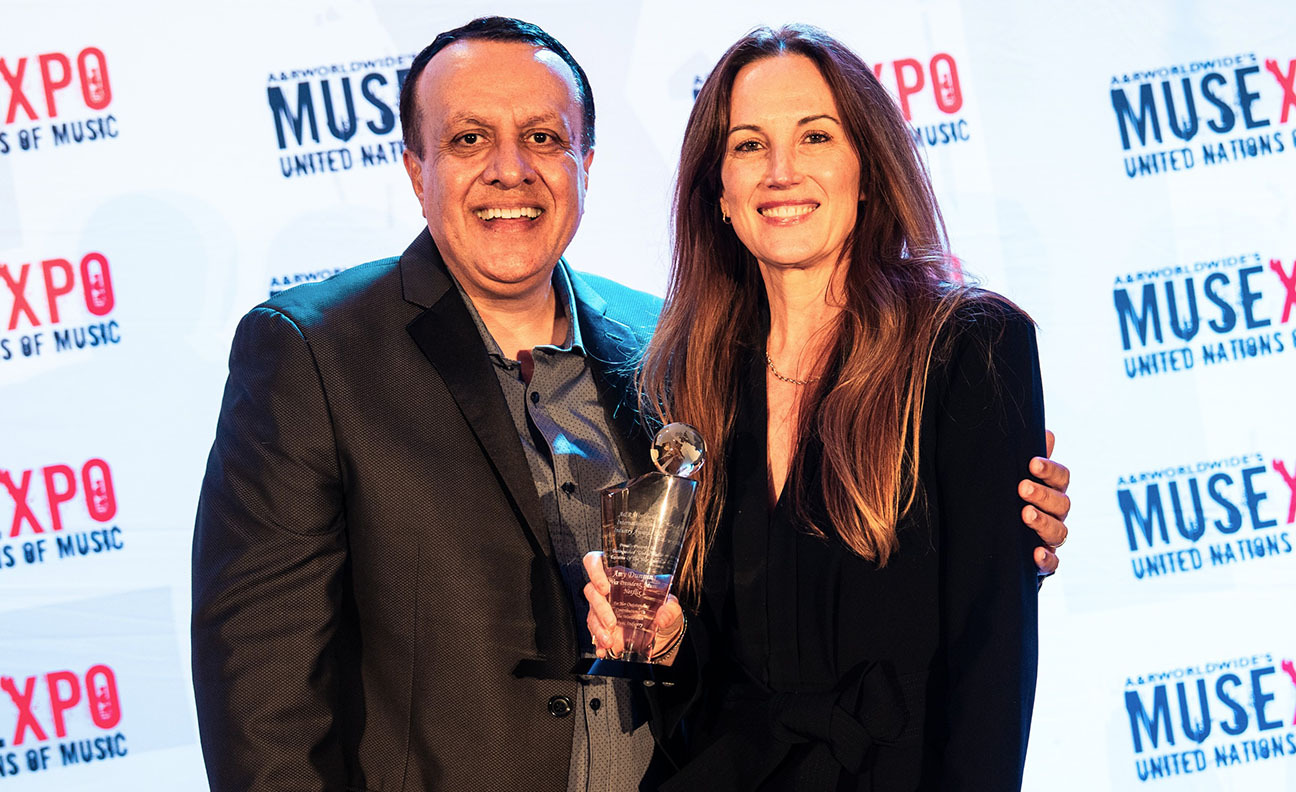
One of whom was Amy Dunning, VP, Music, Netflix, who picked up the Global Media Executive recognition. During her powerful speech, she acknowledged music’s connective role amid our turbulent present (“it’s the only thing that can connect us, it seems, globally,”) and her pride in “hiring so many female leaders” in her career.
Elsewhere, Arnold P. Peter – founder & managing partner, Peter Law Group – picked up the Global Music & Entertainment Attorney Award. And he brought the lols.
“I want to thank all of you for being here, especially those of you who tried to escape but weren’t able to,” he quipped. “I have purposely limited my remarks to 30 minutes.”
He went on to salute the legal world’s relationship with the creative community.
“I've spent my career working alongside many of you in this room in an industry that's built on creativity, risk, on collaboration,” he said. “People like you take chances on ideas that do not yet exist. And us as lawyers? We have the unique opportunity of supporting that process while trying to slow you down just a little bit. Although I admit, we don't always succeed, and thankfully so.”
Jeffrey Remedios, president & chief executive officer, Republic Collective was presented with the Global Music Executive Award and used his speech to emphasise what he believes is the duty of the modern music executive to help the next generation.
“The centre of everything is always the artist,” he said. “They're the ones who take the risks.They're the ones who create the culture. Our job is to build the systems, the teams and the opportunities that support their reach around the world. It's incredibly exciting, but it's also a responsibility, because as this industry grows, we have a chance to make it more inclusive, more creative, and more supportive of the next generation of voices.”
Last but certainly not least, Tyler Bacon – founder & CEO, Position Music – took home the Global Music Publisher Award.
“I started Position Music 27 years ago, back when I was just a young punk with dreadlocks,” he laughed. “A friend of mine named Kevin Edelman once said to me, ‘You know, you're doing the work of a publisher’ and it was such a light bulb moment. Now, here we are, and we have built a real full service publishing company, and I'm so proud of the team I have.”
WHO DO YOU THINK YOU A&R?
When it came to the panel christened “The Future Of A&R, Breaking New Talent & Nurturing The Next Wave Of Global Hits”, one of the most notable things was just how prominent UK talent was in the discussion. On hand to give a personal account of this was Harri Davies, head of A&R at The Other Songs.
“Certainly in the last decade, it’s never been more exciting than it is now to work in the UK,” praised Harri Davies. “More UK acts have been signed out of the US in the past 12 months than I’ve ever known in my career – that’s a result of what’s happened with Lola Young, Olivia Dean and Myles Smith.”
Data also figured heavily in the discussion, as did what metrics are actually useful these days.
“In London at the moment we have a really buoyant live scene, bands are popping up every other week and they’re all amazing,” Davies said. “We haven’t seen this since pre-Covid times. But go on Spotify pages? You would see 500 monthly listeners, but they’re actually selling tickets!”
Davies followed with a warning for those obsessing over monthly listeners when deciding who to sign. As he explained, sometimes in the day of viral hits “the song becomes a runaway train, but the artist isn’t actually on the train”.
His advice?
“When we’re signing someone, I’d rather have 500 hardcore fans talking to each other on a community WhatsApp than 500,000 monthly listeners based off a playlist where nobody really knows who they are,” he said. “We need to stop using that as a metric for success.”
Photos: Courtesy of MUSEXPO
 FOLLOW