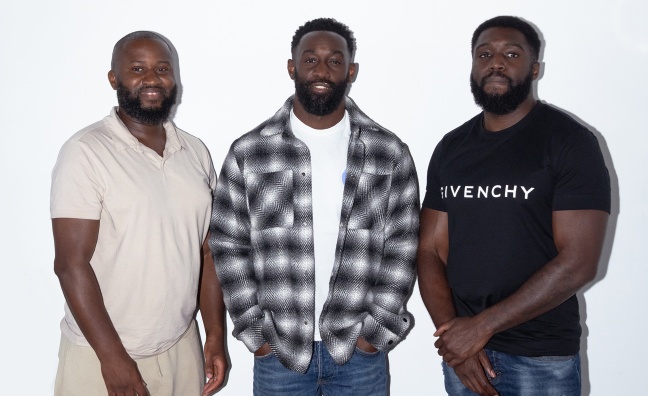
Fifteen years ago, Eddie Agyeman, Kwabz Oduro Ayim and Kingsley Okyere co-founded Mixtape Madness, with the idea of offering a platform for underground rap.
What started on SoundCloud and YouTube has since evolved into a hugely successful, multi-faceted business. Mixtape Madness now has 1.8 million YouTube subscribers
The trio are interviewed by Colleen Harris in the current edition of Music Week.
Here, in an extract from the feature, we hear from the Mixtape Madness team as they share insights on the current status of UK rap and the potential for new talent to come through…
This year was bookended by No.1 albums from Central Cee and Dave. How do you think the year has been in general for UK rap?
EA: “It’s been an interesting year for UK rap. I think we’re going through a transitional period. The likes of Central Cee and Dave are now seen as more the OGs and we’re seeing a lot of newcomers coming through, so I think there’s been a change to the sound. A lot of music now is more content-led in regard to Gen A and how they consume music. Their consumption is through apps and mobile phones, so UK rap artists have had to navigate that.
“We’ve seen the likes of Central Cee with his fanpages doing exceptionally well, Dave as well. He doesn’t do too much content, but we have seen him definitely do more digital marketing this year, which has helped his sales. I think there’ll be more merged genres coming through, maybe hip-hop and rap merged with house music or drum & bass. I also see us going back to old-school mixtapes being made to promote it and build up core audiences before going through the content side.”
I know we’re in an era of viral success and fast music, but I still think there is a new wave of solid artists emerging
Kingsley Okyere
KO: “This year has definitely been a harsh reminder for artists that quality music needs to be at the forefront. I know we’re in an era of viral success and fast music, but I still think there is a new wave of solid artists emerging. Kidwild had a really good year with his release Distro Kid; he created a name for himself and broke out of the underground to become a more established artist. You had Jim Legxacy, who’s had an incredible year and featured on Dave’s album. But again, he’s another example of a breakthrough artist that has got a bit of depth about him.”
Is there anything in particular you’d put the changing tides of the scene down to?
KOA: “Rap in some respects reflects society. Many have touched on the UK’s lack of global stars, and I have read articles that suggest UK rap is thriving in many non-English speaking countries, but English speaking countries such as the UK are more adversely impacted by the consumption of US rap. But, as we speak, an independent UK rap artist from Liverpool called EsDeeKid is getting millions of Spotify streams globally. In LA, there were TikTok reports that 50,000 people were trying to get access to his shows. I think we are merely seeing a new generation of artists that are unapologetically defining their sounds, tastes and culture in a way that is unique to their generation, which is exactly what art is supposed to do. They are a new generation that is telling the world what culture feels like to them!”
There is a lot of talent, but not enough has been done to back and showcase it
Kwabz Oduro Ayim
How important is it that rap is regularly in the charts?
KO: “If we’re talking prime Stormzy era or the AJ Tracey wave, I definitely think it opened doors for quite a few artists to break through. It probably allowed the D-Block Europes to become more palatable to pockets of the mainstream. Headie One, Digga D, J Hus, Potter Payper – a lot of artists have been able to get through the doors because of the mainstream success of the Stormzys and the AJs, and the fact that they were more experimental and did things with different people. Even Skepta, every couple of years he just reinvents himself – now he’s doing dance fusion-type stuff. The fact that Stormzy became a household name and had grandmas and young kids from Scotland singing his music was a catalyst for making Black music feel more palatable to a wider audience. I don’t think it’s stopped. I think the artists just need to figure it out now.”
Is there enough new talent coming through and being backed?
KOA: “Yes, there is a lot of talent, but not enough has been done to back and showcase it. Venue closures and major label appetite for acts from this genre dwindling have encouraged us to see this as a window of opportunity and serves as reminder as to why Mixtape Madness and organisations such as ours are still needed. We are collaborating with key stakeholders to launch an initiative that sheds more light on UK rap successes and rewards them accordingly – I can’t say too much now other than watch this space.”
EA: “I think there’s enough talent coming through, but I don’t think they’re being backed by the majors. I don’t think there’s a lot of money getting reinvested into the UK hip-hop genre. There was a time they were investing in them, but I haven’t seen that much of an investment going back into Black hip-hop over the last few years.”
It’s now time to take Mixtape Madness global, to shine a light on UK music and culture to the rest of the world
Eddie Agyeman
And on the industry side, how do you feel about talent pathways there?
KOA: “We only have to look at pledges for diversity made during Covid and less than five years down the line it feels like that sentiment has evaporated. The number of labels, staff and artists that champion Black music has dwindled, along with live and commercial opportunities. Rest in peace Mel Rudder [who passed away in November], she was the first radio plugger I booked via Mixtape Madness. Individuals like Mel, Alec and Alex Boateng, Colin Batsa, Adele White, Natalie Wade, Lloyd Murray, Riki Bleau and more illustrate why representation is important, because they have helped music entrepreneurs like myself with very limited experience to navigate through the music industry. In turn, we have to do the same for emerging music entrepreneurs such as Groundworks, House Of Z, Unxpected Media, UKRapNumbers, Fly Str8, MadeYouThink, Mr Opinionated and more.”
Finally, can you share any grand plans for the future with us?
EA: “It’s about creating an ecosystem that lasts longer than the three of us. The platform was set up to build a community, and then over time, we understood that to allow the community to continue, you need to build the infrastructure. So it’s now time to take Mixtape Madness global, to shine a light on UK music and culture to the rest of the world, whether that’s through collaboration, content, music, who knows…”
Subscribers can read the full interview here.