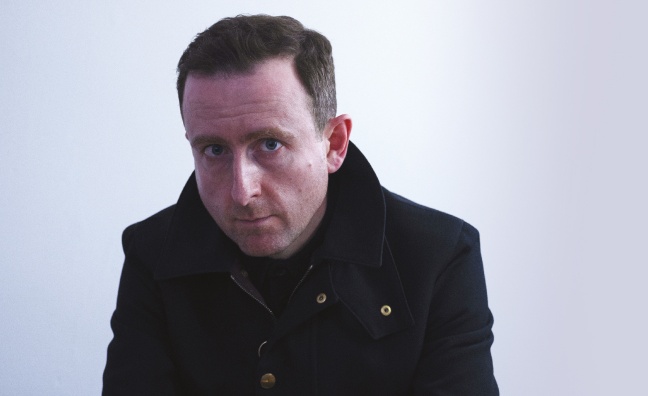
Following partnerships with Warner Music and Universal Music, North East-based development organisation Generator has been central to this year's Mercury Prize in Newcastle by organising the Fringe activity as a showcase for the region.
Ahead of the October 16 ceremony, CEO Mick Ross outlines Generator's vision for nurturing talent in the region – with support from Sam Fender – and welcomes the focus away from the capital...
You recently used an event in London to call for a regional balancing of funding for music – what was your message to the industry?
“The message on the day was that talent is everywhere, but opportunity hasn’t been and the North is ready to lead and to move forwards. We’re developing the infrastructure, we’ve got the partners. The fact that devolution has happened, all of the combined [local] authorities that we work with across the North have put music as a priority sector. So it’s about saying that the talent is here and it’s about time that everyone got behind it.”
Is the North East music sector growing?
“There’s been massive growth, certainly from a live point of view. We’ve got a lot more investment happening in the North East. I was an artist primarily for the first 10 years of my music career [including as a member of Frankie And The Heartstrings], so I’ve got a good baseline for how little support there was for us! But with the support of the majors and such a focus on music as a priority growth sector from the combined authorities, people are looking at Newcastle and the wider North East and Tees Valley now.”
How important has Sam Fender been to that increasing focus on the region?
“He’s been pivotal. I very much put a lot of it down to, if you can see it, you can be it. A lot of kids from this area are working class. A lot of people come from disadvantaged backgrounds, which aren’t allowing them that accessible route into music. Sam’s given everyone a bit of an aspirational lift. He’s also got behind major initiatives – he’s helped support [Newcastle Gateshead] Music City, he helped back the [Northern Music] Export Office. Sam has really opened the door.”
Following the MOBOs’ move to the city, how significant is this shift away from the capital?
“I think it’s huge. There’s been a movement to lobby for these larger events to move around the country for a while. It’s great to see the BRITs go to Manchester, and we’re absolutely delighted to host the Mercury Prize in Newcastle. It’s great that they have chosen the city and the region – they believe in us. The spotlight that it shines on the region and the young talent here is so important. Hopefully, we might get the BRITs in a few years!”
How is the EMI North joint venture on Interval Records working out?
“We bring all of our talent development experience – headed by Josh Daniel, who is an incredible professional talent – and they bring all of that infrastructure and support. We’ve seen it already in terms of getting on [DSP] playlists and the BBC. Finn Forster, who’s one of our core artists, has been on tour with Stereophonics around Europe and the UK, which opens a lot more doors. Working with EMI has been great. They’ve been really open to helping support not just the artists we’re signing, but also the professional talent, so helping younger people who want to get into A&R.”
We want to see the North championed as a centre of gravity for music
Mick Ross
What are the plans for the Warner-backed Tyneside studio?
“We’re going to have a world-class studio in Newcastle. We’re going to have people working there who’ve worked with global artists, who’ve worked with major labels, who can develop talent in a different way. We’ve got some great producers, engineers and songwriters in the North East. But you can’t quite put a value on that extra experience coming in to help skill people up.”
Why did Warner want to get involved with your work in the region?
“Tony Harlow, the chief exec, is super-passionate about access to opportunity, education and development – he’s probably our biggest supporter. The internship programme we’ve run with them provides real Living Wage salaries. They get all of their accommodation and travel paid for, they spend a week in London, and then they spend the rest of the time doing development with us. Usually at the end of that, actually, they end up with a job with us, or they end up with a job at the label.”
Generator had a presence at SXSW earlier this year. What are the regional authorities’ ambitions for music exports?
“They’ve announced the Northern Music Export Office, and there’s a lot of work going on behind the scenes between the Mayoral Combined Authorities to get that launched. The expectation is for continued showcases at SXSW, in Austin, Reeperbahn, Eurosonic, all of the usual ones you would expect. And then we would start to do trade missions. So it’s about getting that talent out there, and giving them the opportunity to access new international networks.”
Has devolution with the Mayoral Combined Authority been a game-changer?
“Definitely. There are a number of organisations involved in Newcastle, Manchester, Liverpool. We’ve essentially been the A&R departments in towns and cities across the North for many years, but not necessarily had that national support or regional investment because music was more just seen as something nice to have and then if London picks it up, great. Whereas now, actually, you’re seeing direct investments from combined authorities and local authorities. I think that’s the big shift, it’s a priority economic growth sector.”
Finally, how do you reflect on the impact that Generator has achieved in recent years?
“We’ve quadrupled the turnover in four years. We want to be able to develop more managers and more producers, build more infrastructure. We want to see the North championed as a centre of gravity for music. Organisations, not just us, are working really hard as a partnership to change the narrative – there’s just a huge opportunity to put forward.”
 FOLLOW