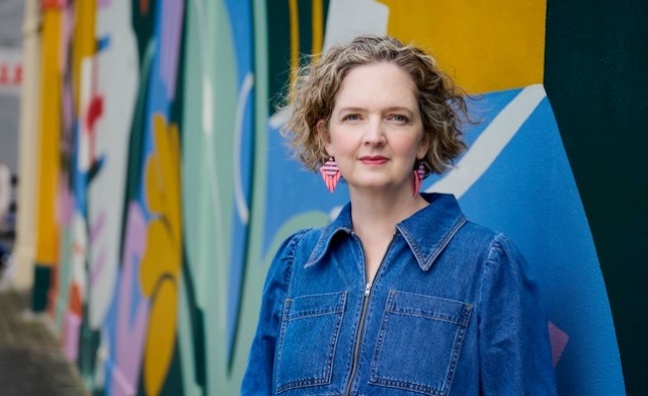
Anna Sabine MP, newly appointed Liberal Democrat spokesperson for Culture, Media and Sport and vice-chair of the All-Party Parliamentary Group on Music Education, on why success begins in the classroom…
When I was about 12, my clarinet teacher found a plastic bassoon in the cupboard of my (state comprehensive) secondary school and decided I should learn to play it. I was musical and apparently had big hands. As every bassoon player knows, playing such an unusual instrument opens all kinds of doors – clarinet players are everywhere, but ensembles are always on the lookout for a bassoonist.
But I only got the chance to walk through those doors thanks to a county music scholarship from the local council, which paid for both my lessons and the train fares to and from them. That support in turn got me into my local youth orchestra – alongside plenty of other state school kids benefiting from similar opportunities.
Being part of that orchestra changed everything. The rehearsals, the performances, the travel, and the friendships opened up the world to me in ways I could never have imagined. It taught me discipline, teamwork, and confidence. It taught me to listen, to lead, to persevere. And it left me with a lifelong belief that music isn’t a luxury – it’s a vital part of education and of life itself. Yet that kind of access is no longer guaranteed.
Peripatetic music teaching is no longer widely available, councils can no longer prioritise music scholarships, and music has been pushed to the margins of the curriculum. Children whose families have means, or who attend private schools, increasingly dominate our youth ensembles and organisations.
That’s why, as the newly appointed Liberal Democrat spokesperson for Culture, Media and Sport, and as vice-chair of the All-Party Parliamentary Group on Music Education, I’m determined to champion the future of music education and the Music Hubs responsible for delivering it.
Across England, Music Hubs do extraordinary work, often on shoestring budgets. They are the backbone of music education, helping schools, teachers and young people to access lessons, instruments and opportunities to perform. They connect children who might otherwise never touch an instrument with the joy of creating sound together – something powerful, creative and deeply human.
Yet despite their success, Music Hubs are under real pressure. For the last 13 years, government funding has failed to match inflation, with a real terms decrease of 46%. Local authorities, already stretched to breaking point, struggle to maintain music provision. Many hubs now cover larger areas with fewer staff and fewer resources. In rural places like my constituency in Somerset, that can mean long journeys, limited access to lessons, and schools unable to provide even the basics of musical experience.
We cannot afford to let that continue.
Because music education isn’t just about producing the next generation of professional musicians – though that too is vital for the health of our creative industries. It’s about nurturing skills that last a lifetime. Study after study shows that children who engage with music perform better academically, socially and emotionally. They develop stronger memory, better concentration and greater self-confidence. They learn to work as a team, to communicate, to lead, and to express themselves.
Music is also a proven driver of wellbeing. It helps young people process emotions, cope with stress, and connect with others. At a time when anxiety and loneliness among children and teenagers are on the rise, access to creative outlets like music has never been more important.
The benefits extend far beyond the individual. The UK’s music industry is one of our great success stories, contributing over £7.5 billion to the economy each year and supporting hundreds of thousands of jobs. But that success begins in classrooms and community halls. Every great musician, producer or composer starts somewhere – and if we close the door on music education, we risk closing the door on future talent.
Every great musician, producer or composer starts somewhere – and if we close the door on music education, we risk closing the door on future talent
Anna Sabine
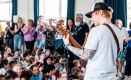
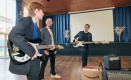
Recently, I hosted an event in Parliament celebrating the work of Music Hubs, in partnership with organisations including Music Mark, the Independent Society of Musicians, Future Talent and Trinity College London. We were joined by the brilliant saxophonist Jess Gillam MBE and a group of incredibly talented young musicians whose performances reminded everyone in the room exactly what’s at stake.
What shone through that day was the power of collaboration – between teachers, organisations, parents and policymakers – to keep music alive in our schools and communities. We heard how a single teacher can transform a child’s life, how a school band can bring together students from different backgrounds, and how parents beam with pride watching their children perform. We also heard about the barriers: the patchy provision, shrinking budgets and postcode lottery of opportunity.
It’s not enough to celebrate the power of music – we must act to protect it.
That means securing consistent, long-term funding for Music Hubs, rather than forcing them to survive on year-to-year uncertainty. It means supporting teachers with proper training, pay and recognition for their specialist skills. It means tackling the rural inequality that leaves children in smaller towns and villages with fewer creative opportunities.
And it means reimagining how we talk about education itself. For too long, the arts have been treated as an optional extra – something “nice to have” once the “real work” is done. But creativity isn’t a side issue; it’s central to who we are as human beings and to the future of our economy. Whether a child becomes a scientist, a builder, a doctor or a violinist, the confidence and imagination that music fosters will serve them for life.
As Liberal Democrat Spokesperson for Culture, Media and Sport, I want to see a national strategy that recognises the arts as essential, not expendable – one that links cultural education with wellbeing, opportunity and community cohesion. And one that ensures access to music never depends on a child’s postcode or parents’ income.
In Somerset, we’re blessed with a vibrant cultural scene – from choirs and orchestras to festivals, local bands and community groups. We have the world’s biggest festival at Glastonbury, and my hometown of Frome’s Cheese and Grain hosts global stars. Yet despite this richness, too many young people are missing the chance to take part, learn and create. That has to change – and it starts with giving Music Hubs the funding and political support they need to thrive.
When I think back to my own experience in that youth orchestra, I remember not just the music, but the sense of belonging it gave me – the feeling of being part of something bigger than myself. That’s what music does: it brings us together.
And that’s why we must keep fighting to ensure every child, in every community, has the chance to find their voice. Because if we want a future filled with creativity, confidence and connection, it starts with making music count.
PHOTO: Scarlet Page