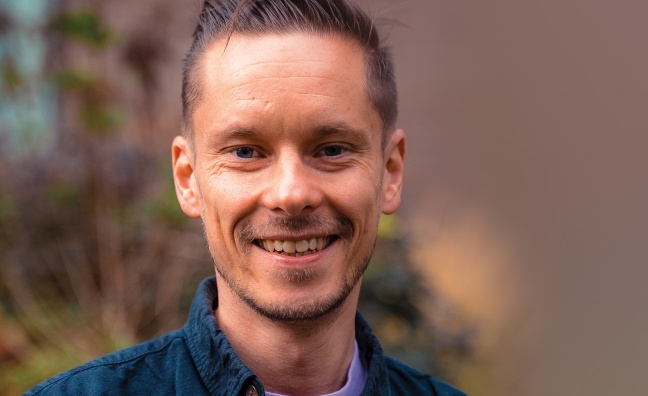
Formerly a music agent at WME, Finlay Johnson joined the Association For Electronic Music (AFEM) as COO in 2023 and was promoted to CEO last year. Here, in an extended online version of our Spotlight Q&A feature, he discusses the trade body’s global role, the rise of dance music scenes and the sector’s exports success with club brands and stars including Fred Again...
How is AFEM developing as a trade body?
“My background was in the live industry, and I joined AFEM at quite an evolutionary moment for the trade body. I stepped into a more focused version of what we need to be in 2026. We’ve bolstered our team to reflect that broader need for different voices. Jay Ahern, who's come from a recorded music background, is based in Berlin and he's our chief strategy officer. Alyssa Vera is our North American membership director, and her role is to provide value and support for everyone based over there. We’re trying to really be a truly global trade body. You can only do that if you’re in different countries.”
Why is it vital to speak for the sector globally?
“The world we live in is increasingly borderless. The way that talent moves across the world touring, and even the way that music is made, is now more international with lots of different influences. We were formed 13 years ago to provide a collective voice for quite a decentralised sector. We’ve now got 300 member companies all over the world in 40 different countries, all with different needs and types of stakeholders. So we’ve spent the last couple of years really finessing what AFEM does.”
What are the key areas of focus for your members?
“Most of our membership is motivated through business development – meeting people and making connections. The other area is education, so providing case studies and examples of best practice. And the third column is lobbying, but not in a traditional trade body way. We don't lobby governments particularly. It's more about speaking with the key stakeholders and gatekeepers within the industry, and representing the many artists, labels, managers, publishers and lawyers that make up our members.”
Are there policy issues where you are active?
“We try to pick policies that will have a global impact. Last year we launched the ethical AI Principles. Electronic music and artists tend to be the canary in the coalmine, both in terms of adoption and then the first to be impacted by it. So we take our responsibility from the perspective of education around that quite seriously. Our ethical AI Principles are centred around consent, moral rights, credit and review of previous contracts. We’ve got AI companies in our membership as well as rights-holders. So we’re saying, here’s a framework to work towards that is fair and respects compensation and creative rights.”
NTIA’s report on UK electronic music showed 3% annual growth in economic activity. Is that a good result amid the wider financial pressures?
“Yeah, it’s in a very exciting place. It’s a good sign that it’s growing. We’re not just concerned with financial growth. It’s also about, how are we culturally evolving? It’s really about finding your audience and building a community. Whether you’re running a club or you’ve got a label, you’re essentially doing the same thing, which is bringing people together around your art. At its heart, that’s what makes electronic music so interesting and culturally resonant, because you’ve got this community around a sound, not just one track or one artist. The fandom is very much a two-way thing.”
One of the challenges highlighted is the lack of progression available to electronic acts in terms of UK venues. Is there a solution there?
“You’re finding that talent is visiting regional cities a bit less, even if the venues are there, because they can go to Dubai, Ibiza, Asia, Australia. That’s always been the case with electronic music – you can work four or five days a week if you really want to, whereas that’s not the case in traditional routing. So I think the answer is really about building local scenes and support. There are examples of that all over the UK – Hannah Laing in Dundee, Ewan McVicar in Ayr, Patrick Topping in Newcastle. They are building these really organic communities within their home cities, and then going off to an international fanbase and stardom.”
The UK has a long legacy of pioneering in the electronic space
Finlay Johnson
Is that a healthy sign that electronic music can produce these scenes around the UK?
“Absolutely, that’s always been the case, but I think now it’s getting recognition. I live in Edinburgh, and I’m the first CEO of AFEM not to be based in London. That’s a good perspective to have because I can see what’s happening here. Sneaky Pete’s is a great example of a club innovating and evolving with its audience. There are Sunday daytime parties with Paul Woolford that sell out – they’re just adapting the model to see what the audience wants and needs.”
What’s the potential for international reach within these UK club scenes?
“Look at the clubbing brand Teletech – it’s a hard techno brand out of Manchester that has since gone international. So it’s not just talent that’s coming out of the regional cities; it’s also the promoters and the club brands that get exported. That’s the unique thing about dance music – you have a community built around the label because it represents a sound, and it’s the same with the clubbing brands. When we think about cultural exports from the UK, it’s not just the artists, it’s also the labels and club brands like Teletech and Fly out of Edinburgh that you then see all over the world. That is another really important part of the ecosystem, which is an essential element of our cultural exports.”
The NTIA report also shows UK exports up 8% for electronic music in 2025, what’s driving that?
“We’ve got a long legacy of pioneering in the electronic space. Off the back of that, you get artistic risk-taking, which results in amazing artists going abroad and becoming world-renowned. Look at someone like Fred Again.., who did the 10 shows in 10 cities tour and is reinventing what it means to tour as an electronic artist. So a large part of it is to do with the confidence and cultural risk-taking. The reason we have DJs is because they were once clubbers and we have amazing clubs here – so it breeds the next generation of DJs.”
AFEM is a signatory to an open letter from Not Bad For A Girl on gender balance in club and festival line-ups. Is progress being made?
“It’s important that we act as an amplifier for that, because our audience and our membership are largely businesses, and it's the businesses that are the decision-makers and the stakeholders. So we deliberately talk about things like trans inclusion and gender balance in line-ups. The bit where I want us to improve is club residencies and things that are less easily measurable and identifiable because they change each week. So I want to see more gender balance, particularly in places like Ibiza and Mykonos. There are signs of progress but that is the next barrier to break through and have that equality on line-ups.”
Finally, what do you think the outlook is for dance music in 2026?
“It’s in a very good space. It’s also different each year – it’s reinvented and you see it evolving. Jyoty selling out Alexandra Palace is a great example of that artist-led experience for fans in bigger venues, but she will still play nightclubs. So you’re seeing this ability for electronic music to scale up and scale down depending on the room and the audience. And that, for me, is why I love it. You can go and see it in a 100-capacity room and have the same sort of energy and experience as you would at Wembley.”
 FOLLOW