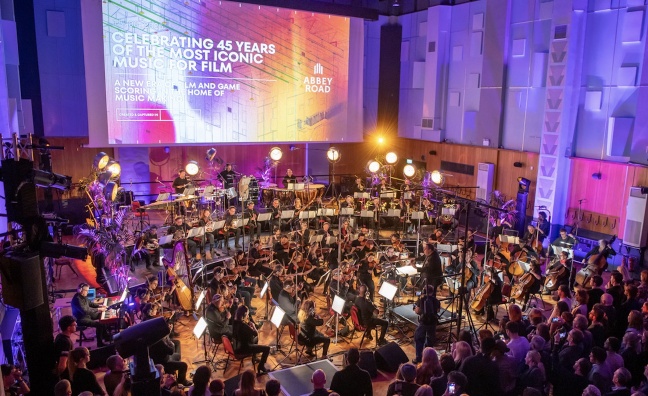
Abbey Road has revealed the reopening of Studio One, following the studio’s closure for the first time in history, as it underwent extensive restoration and enhancement.
The reopening was celebrated with a Synergy In Motion event, a multidisciplinary evening of contemporary dance and music, which saw Royal Ballet choreographer Joseph Toonga create original choreography to the film scores of Daniel Pemberton, remixed and reshaped by Abbey Road's artist in residence, Jordan Rakei.
Synergy In Motion followed an event on March 18 which saw Studio One honour 45 years of music for film, with a live orchestra performing pieces from film scores recorded in Studio One including Raiders Of The Lost Ark, The Return Of The Jedi, The Last Emperor, The Lord Of The Rings and The Hobbit Trilogies, Harry Potter, Skyfall, The Shape Of Water, Barbie, Black Panther and Gravity.
The world's largest purpose-built recording studio, Studio One spans 4,844 square feet and has hosted artists including Noel Gallagher, Little Simz, Sam Smith, Harry Styles, Shygirl, U2 and Celeste. It has also been used for recording for video games like Halo, Call Of Duty, Final Fantasy and World of Warcraft, as well as the Academy Award-nominated and Ivor Novello-winning Marvel’s Guardians Of The Galaxy and the Academy Award-winning Star Wars Jedi: Survivor.
“The reopening of Studio One sees Abbey Road embrace a renewed energy that not only honours our legacy but also looks forward to the future,” said Abbey Road’s managing director Sally Davies. “Last night’s multidisciplinary Synergy In Motion celebration was the perfect way to usher in this new era, with an evening that championed innovation and creativity at every turn.”
Abbey Road’s director of marketing & creative, Mark Robertson, added: “Last night was a celebration of creativity in all its forms, which is at the heart of Abbey Road. For the first time ever, we took boundary-pushing expressive dance into Studio One, by devising a concept that sees the worlds of contemporary dance, film scores and cutting-edge music collide. What appealed about Joseph is that he creates choreography that challenges convention by blending styles from ballet to hip hop and krunk, which felt appropriate for the fusion of Daniel and Jordan’s music.”