Major UK record labels have committed to introduce a £75 per diem and cover expenses for songwriters attending their writing sessions.
The move for daily expense payments by labels has been hailed as a “landmark step to help sustain and support songwriters” by the Ivors Academy, which campaigns on behalf of songwriters. Until now, paying songwriters to work at label writing sessions was down to individual negotiation with many left to cover travel and subsistence costs.
This is the first time this type of payment has been formally agreed with major labels anywhere in the world. The per diem from major labels will be non-recoupable from featured artists.
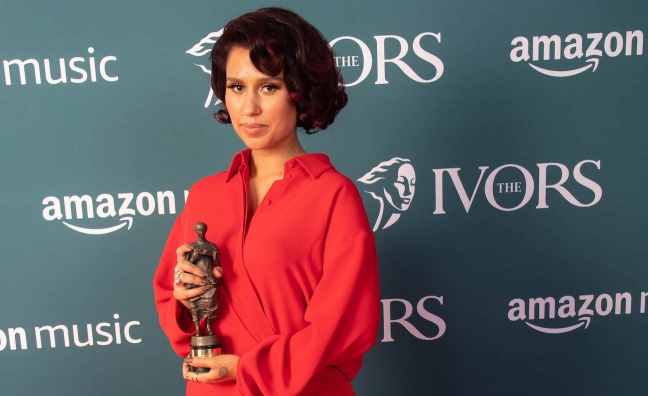
Songwriters including Raye and Myles Smith have called for per diems – daily expense payments – to ensure fair treatment for writers.
At The Ivors awards last year, Songwriter Of The Year winner Raye called on labels to allocate songwriters a share of master recording revenues and a minimum daily allowance to cover travel and expenses when working with artists. She also made similar comments at the BRITs.
The Ivors Academy noted that young and emerging songwriters, particularly those from low-income backgrounds, are being priced out of the industry.
Last summer the government pledged to “address concerns” over music creators’ earnings from streaming services.
"This process has delivered a set of measures designed to boost the earnings of legacy artists, songwriters and session musicians and marks a further step towards ensuring the music streaming market works for everyone," said a DCMS statement.
Whilst the actual mechanics of streaming and remuneration for songwriters have not changed, The Ivors Academy has secured this breakthrough commitment through its participation in the UK government’s Creator Remuneration Working Group. This was alongside other organisations representing musicians, performers, producers and managers as part of the Council of Music Makers.
Outlining the support available, the Ivors Academy said in a statement: “Warner UK and Universal UK have agreed to pay a £75 per diem plus agreed expenses to songwriters attending label sessions. Sony UK will fund a bespoke programme in partnership with The Ivors Academy to provide financial support and assistance to songwriters – with details to be announced soon. Each label will have its own terms and conditions, so writers should confirm the details when the session is arranged.”
In addition to per diem payments, the principles include a new framework for the renegotiation of contracts by artists who signed record deals before streaming became commonplace, in addition to support for the digitisation of their back catalogues so that it can be made available online. This aims to help legacy artists to increase their streaming earnings for their existing body of work.
Culture Secretary Lisa Nandy said: “Streaming has totally revolutionised how audiences discover and enjoy music, and how artists connect with their fans across the globe. But we have heard loud and clear from creators that more needs to be done to ensure they are fairly compensated when their work is used on streaming platforms.
“That is why I am delighted that the industry has agreed these new measures, which will go a long way to making sure our talented artists and creators are properly rewarded for their hard work, while driving growth through our Plan For Change.”
I would like to thank the sector for coming together to drive this positive progress, which will benefit the music industry as a whole
Sir Chris Bryant
Creative Industries Minister Sir Chris Bryant said: “Everyone loves music and it’s about time we really valued the people who create it. Millions of us use music streaming platforms who provide a fantastic service to their customers, connecting users with a wealth of music from around the world.
“But many musicians and songwriters are really struggling and artists simply don’t think they receive their fair share of the profit generated by their work on these platforms. These new measures, which apply specifically in the UK, are an important step in ensuring creators are fairly paid for their work.
“I would like to thank the sector for coming together to drive this positive progress, which will benefit the music industry as a whole.”
The agreed principles have been adopted by the BPI and Association of Independent Music (AIM) and recommended to their UK members. The UK divisions of Universal Music Group, Sony Music Entertainment and Warner Music Group have also committed to delivering them.
The package of reforms agreed by UK labels includes commitments to:
• Disregard unrecouped advances on contracts signed before January 1, 2000, with this rolling forward on an annual basis or bespoke support being offered.
• Provide tailored support to legacy artists to improve streaming outcomes.
• Respond to requests to renegotiate legacy contracts within 60 days, taking a holistic view of each agreement’s history and context.
• Increase session fees for pop and classical musicians.
Major labels would argued that they have already put measures in place for legacy artists and streaming income in relation to unrecouped balances. Sony Music, for example, launched its Legacy Unrecouped Balance Programme four years ago and has paid out millions of dollars to both qualifying artists and songwriters.
As part of the reforms, the British Phonographic Industry (BPI) and Musicians’ Union also agreed to an uplift in session musician fees of up to 40% for pop sessions and 15% for classical to ensure they are more fairly paid for their work.
At the Ivors Academy’s AGM last week, chief executive Roberto Neri called on collective management organisations and music publishers to strengthen negotiations with the streaming platforms on behalf of songwriters to secure a higher value for the song within the music ecosystem.
There is no music industry without songwriters and these payments will ensure that songwriters are not out of pocket when turning up to work
Roberto Neri
Until now, songwriters have often been expected to work for free during sessions, with no guarantee of future income unless a track is commercially released and generates streaming royalties.
“Many invest significant time and personal expense in the hope of a return that may never materialise,” said a statement from the Ivors Academy. “This practice, according to the UK Parliament’s Economics of Music Streaming report, places an unfair burden on creators and presents major barriers to entry, particularly for those from lower-income backgrounds.”
The Ivors Academy has welcomed the introduction of per diems and expenses as an “important step toward a fairer music industry, while emphasising that further reforms are still needed”.
Tom Gray, chair of The Ivors Academy, said: “Songwriters finally receiving per diems is hugely personally rewarding for me after developing the idea and pushing it forward as a policy for many years. No one should provide their craft and labour for free, especially when there’s simply no guarantee of liveable income from streaming royalties. This is an important and long-overdue step that protects the dignity of working songwriters.”
Roberto Neri, chief executive officer of The Ivors Academy, said: "We welcome and wish to thank Minister Bryant for the introduction of per diems for songwriters and his support in securing this agreement. There is no music industry without songwriters and these payments will ensure that songwriters are not out of pocket when turning up to work. We look forward to working together over the next 12 months to assess how this package benefits music makers and ensuring that all creators share in the success of streaming remuneration.
“While securing per diems is a major win and a world first, there is still much to do. These standards need to be adopted globally. We need to see the streaming economy actually value the song, so its creators receive an appropriate share of revenues.”
Songwriters will be able to claim per diems from the UK’s major record labels, with full details of the process and payment scheme to be announced soon by the Ivors Academy. The per diem payment from the UK major labels will be non-recoupable against other earnings.
Songwriters finally receiving per diems is hugely personally rewarding for me after developing the idea and pushing it forward as a policy for many years
Tom Gray
It follows negotiations between The Ivors Academy, the BPI, UK major labels, AIM and the Council of Music Makers as part of the UK government’s Creator Remuneration Working Group.
Sophie Jones, BPI’s chief strategy officer, said: “After five years of detailed scrutiny and analysis, we are pleased to put in place these creator remuneration principles for UK labels in response to specific concerns identified in the UK’s streaming debate.
“Many more artists are succeeding in the era of streaming than ever before – and we are confident that these targeted measures will lead to positive and sustainable outcomes and support for legacy artists, songwriters and session musicians, and ensure that our members’ significant ongoing investment into the development of British talent and the growth of our world leading UK music industry will be to the benefit of all.
“This has been a collaborative process and we are grateful to our members and fellow trade organisations for their expertise and to Minister Chris Bryant and the DCMS officials for their stewardship of this process.”\
Gee Davy, chief executive of AIM, said: “We welcome the government's review of music streaming economics and the continued engagement of ministers and officials in seeking to address industry challenges with stated support for growth and fairness.
“The UK's independent music businesses have long advocated for better outcomes for creators. Initiatives including the Fair Digital Deals Declaration – developed with our Worldwide Independent Network - which has been in operation now for over a decade reflect the community's proactive approach. Most independent labels and related businesses work closely with artists, with many artist-founders, and are constantly seeking new ways to generate value and opportunity, something I observed first-hand as standard practice across the community while working within independent labels."
In a statement, the Council Of Music Makers said: “We greatly appreciate the efforts of the government in seeking to improve the streaming economy for music-makers. Minister Chris Bryant has dedicated a great deal of time and resources trying to agree creator-friendly terms with the BPI and major labels, in an attempt to address unfair remuneration. Over the next year, we will work in good faith to support music-makers to test these initiatives and whether they can deliver meaningful change.
“We will work closely with the government during the one-year monitoring of these measures. In 2021 Parliament’s Culture, Media & Sport Select Committee raised several fundamental issues regarding the streaming business model, calling for ‘a complete reset’. The Council Of Music Makers remains committed to achieving this objective and reaching a fairer settlement for all music-makers and we will now collectively pursue additional legislative measures to achieve positive change for those that create the work our industry is built on.”
The Council Of Music Makers brings together the Ivors Academy, Featured Artists Coalition, Music Managers Forum, Music Producers Guild and the Musicians' Union.
Baron Brennan of Canton, former chair of the DCMS Select Committee which launched the inquiry into the Economics of Music Streaming, said: “Protecting the dignity of British songwriters by putting money in their pockets for writing sessions is a real first, and greater transparency over artist renegotiation is most welcome. I commend Minister Bryant for all his efforts. Further progress is needed on streaming but I’m encouraged by the Minister’s commitment to pursue progress through further talks this autumn on session musician income from streaming.”
The BPI and AIM will issue guidance to all UK labels to ensure songwriters are correctly remunerated when invited by a label to attend a songwriting session or camp.
The introduction of per diems is part of a wider set of reforms that will be monitored over the next 12 months to assess improvements on remuneration for legacy artists, songwriters and session musicians in the streaming economy.
Alongside the government, the Ivors Academy as a member of the Council of Music Makers will monitor these reforms over the next 12 months to measure the improvements to made to creators’ earnings. The government could make a further intervention if the package of measures does not deliver “real change for music creators”.
Labels estimate these changes will deliver tens of millions of pounds in new investment to support creators by 2030.
Research from the UK’s Intellectual Property Office found that a songwriter whose work achieves one million streams per month can expect to earn just £15,288 per year, less than full-time minimum wage.
 FOLLOW