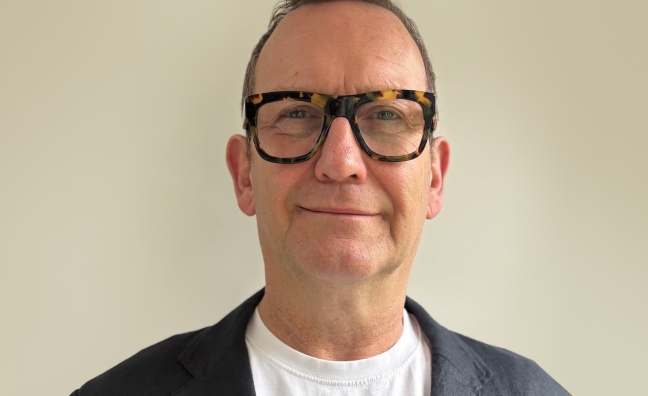
Former Kobalt UK & Europe sync boss David Wille is now the London-based chief exec of Swedish music & tech firm MAIA Universe, which has secured deals with Sony Records UK, Sony Music Publishing and Warner Chappell, plus investment from Max Martin’s MxM.
Here, in an extended online version of our Music Week interview, he talks untapped sync revenue, the power of influencers and AI music...
What problem in sync are you helping to solve for artists, songwriters and rights-holders?
“The volume of demand for sync licences is exponentially growing all the time, because there are new platforms. When you’re running a sync team, you don’t tend to see all those requests that come in. They may then go to [production music libraries] Audio Network or Epidemic Sound, which doesn’t benefit commercially released artists assigned to labels and publishers. So I think we are solving a problem that the sync industry, who I know and love, acknowledges is definitely there.”
How do you complement sync departments?
“It’s really important for me to stress that we have full respect for highly trained, highly experienced people who have this incredible knowledge and understanding of their catalogue. They do amazing work, and we’re not here to replace them. We’re here to assist them to capture that extra value.”
So which part of the sector are you focusing on?
“One of the issues that you have with a lot of people who are licensing music is that they’re time poor, so they’re in a hurry to get the stuff done. They’re also budget constrained but, most importantly, they don’t understand the sync licensing process. So if you’re a sync team, you have to educate people on an ongoing basis about what’s a master, what’s a composition. For smaller deals, that is very time-consuming for a sync team, because really what they want to do are the higher value deals.”
How significant is the amount of value from sync that the industry is losing out on?
We're just trying to capture that value for songwriters and artists
David Wille
“If you look at production and library music, that was a $700 million industry. It very quickly became a $1 billion industry and today it’s probably a $1.3bn industry. That money is being secured because the process on the rights-holder side is a bit outdated, manual and relationship-driven. So the question really is, how much of that do we as an industry want to let leak away to production and library music? We want to bring that value back to commercial artists and songwriters so they can capture that.”
Does maximising this income become more crucial as streaming markets mature?
“[Streaming revenue] is not going down, but the curve is flattening. So the industry is saying, ‘Where can we uncover new or untapped value that we haven’t done so far?’ We think sync is definitely one of those places. The demand is there, the catalogues exist. It’s just a way of bringing them together.”
“Also, we are purely agnostic. We're not a rights-holder. We don't compete with the rights holders in any way, and we have the ability to bring the industry together on the platform without having an agenda. One of the things I love about sync is we’re in this very competitive industry, and yet to get a deal done, we all have to collaborate with our competitors to get the rights all aligned and the fees all aligned, and all that stuff. So we're music people, we come from sync, we come from labels, we come from publishers. We understand the nuances of the business and, like I say, we're agnostic, and we're just trying to capture that value for songwriters and artists.”
Sweden has been at the forefront of the streaming economy. Do you think it’s leading the way in terms of tech solutions for music?
“Yes, the fact that it's a Swedish company, I think is really important. And I think there's a certain design sensibility that comes out of Sweden. If you look at Spotify, and how well that works today, but importantly, how well it worked when you first came across it; you were like, ‘wow, this is amazing’. It's just an amazing design. And I think we have the same with our Swedish team. Every time we present the platform to music buyers and rights-holders, everybody comments on the intuitive nature of the platform, the slick design and the ease of navigation. I think the Swedishness of it is very important.”
MAIA Universe recently secured €1 million in investment, how will you deploy those funds?
“The most important thing for us is to continue to sign more big rights-holders, like the deals with Sony and Warner Chappell. There’s a huge amount of work going on there from those deals to onboard significant amounts of catalogue and to basically market the platform to the music buyers to bring them on. We’ve got things like Single Of The Week and Album Of The Month to market certain artists. So this investment round is really about adding significant amounts of catalogue and bringing lots of music buyers to the platform to license.”
What does hitmaker Max Martin’s MxM bring to the company as an investor?
“The investment is very welcome – everyone knows who Max Martin is. I think MxM’s view, as songwriters and producers, is that they make a lot of music and see only a small part of even their amazing catalogue getting licensed. So how can they get more of it licensed? But most importantly, how can they help other songwriters and artists get access to sync? Democratising it is really important to them in terms of bringing more opportunity to songwriters and artists of all shapes and sizes.”
What kind of scale of repertoire can you make available from big publishers and labels?
“It’s really for them to send us the music that they would like to see on the platform. Globally recognised evergreen copyrights and big contemporary hits they will probably keep for their team to do the licensing. But if you take a big catalogue by a known artist, let’s say there are 10 songs in that catalogue that do lots and lots of business – what about the other 200 songs in that catalogue? You could put those up on MAIA, people will be happy that they’ve got a song by that artist, even if it may not be the biggest hit, and we’re happy to license that to them.”
I would say influencers and the people who manage them, that is a really important place for us to go
David Wille
Sync is a global industry, how are you building out MAIA Universe from Sweden and now the UK?
“The company was born in Sweden, designed in Sweden and it needed to go international. So my background is that, having worked at multiple companies, although I'm based in London, the view is very much, let's get MAIA set up in the UK and the American market, and then we'll bounce off from there into Germany and France and Italy. The roadmap is to fully go out globally. But our roadmap is very much to establish the UK songwriters and UK artists, and then American ones, and then into individual markets for local repertoire.”
Brands are being sued for mistakenly using unlicensed music. Can you help to prevent that?
“We see a way to basically help big brands avoid infringing and to spend money on commercial music that they might not otherwise spend. We’re very much seeing an opportunity there to go to those big brands and say: we can make music available to you. You can license it pretty much instantly and you’re not going to get sued any more. And the rights-holders will be happy to do that, because they get the [sync] opportunities.”
How will you support advertising and marketing on social media and apps such as TikTok?
“Influencer marketing is becoming more and more prevalent. I would say influencers and the people who manage them, that is a really important place for us to go. We know that if you have a bit of social content, commercial music performs better in terms of cut-through and recall and all of those measurements that marketeers like. So there’s a huge opportunity there, and we’re tracking that very closely. I think that’s the future. It’s a really interesting place for a platform like MAIA to be able to offer a solution.”
Finally, how will the sync sector deal with the rise of AI music that’s cheaper to use?
“We don’t have any AI music on the platform, we don’t have any production music or library music on the platform. It’s purely for commercially released artists – what we call real songwriters and real artists. There’s a huge amount of AI music being created. The first question is, has it been legally trained? No one really knows at the moment. So there’s a bit of jeopardy there because the training model hasn’t been properly licensed and that’s still in flux. The second part is that I think that the value of human-created music is going to go up as this sea of AI music arrives into the world.”
 FOLLOW