Creators have united in Paris to issue a landmark declaration calling for the protection of human creativity as artificial intelligence rapidly transforms the cultural and creative landscape.
Adopted during the 100th anniversary General Assembly of the International Confederation of Societies of Authors and Composers (CISAC), the Paris Commitment sets out a series of principles urging governments, technology companies and cultural industries to ensure human creators remain protected, recognised and fairly remunerated in the AI era.
Creators, rights organisations and supporters around the world are now invited to add their names to the Paris Commitment through a public signing campaign here.
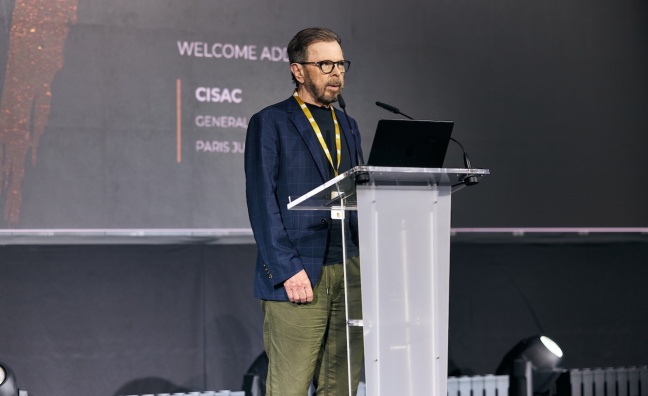
Attendees in Paris – including hundreds of creators, policymakers and collective management leaders – were invited to sign the declaration on stage. Signatories included Björn Ulvaeus (pictured), Youssou N'Dour, Jean-Michel Jarre, Lord Brennan, British painter Adelaide Damoah and French visual artist Rebecca Digne.
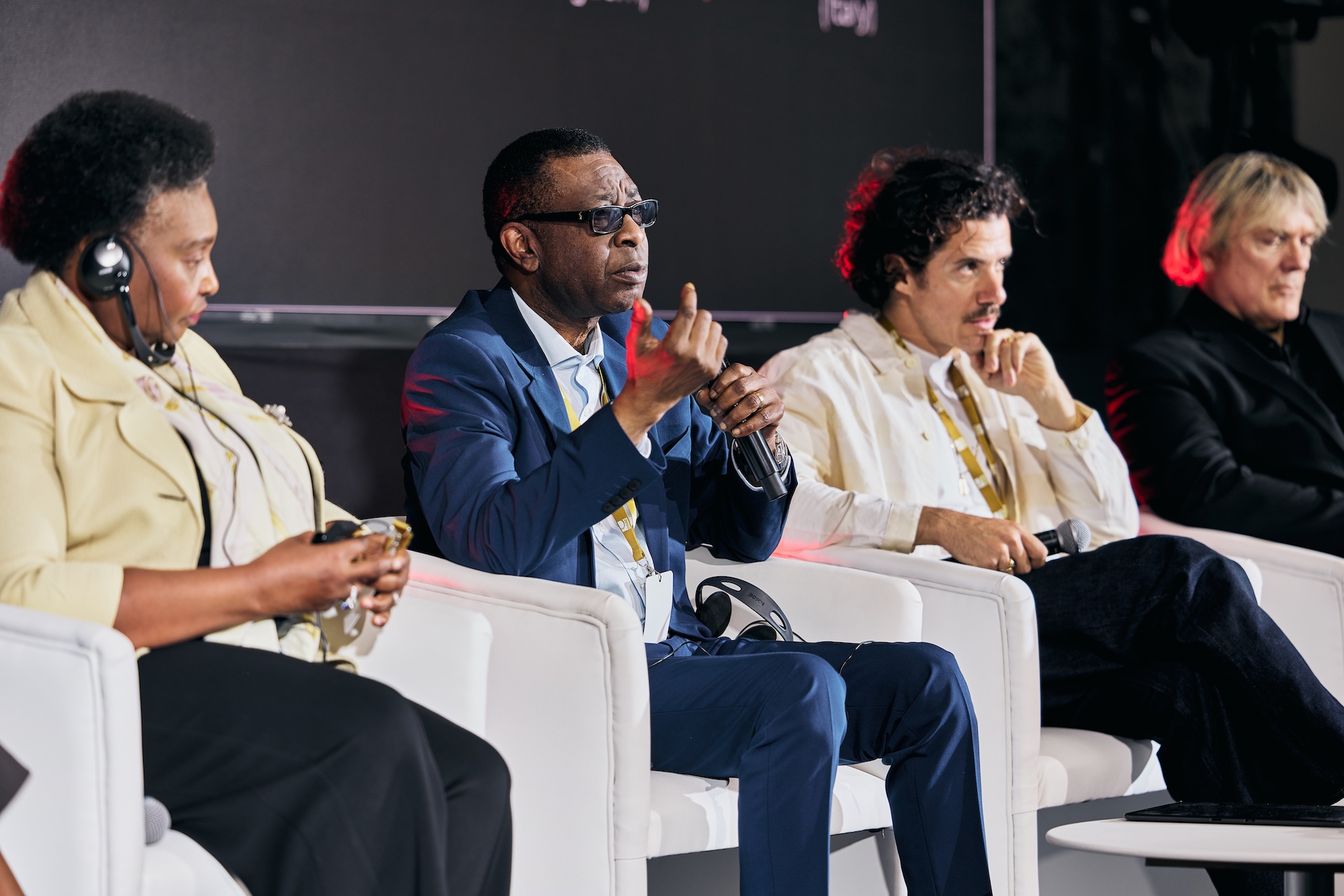
Yvonne Chaka Chaka, Youssou N’Dour, Jacopo Ettorre and Simon Franglen at the CISAC General Assembly in Paris
The declaration was unveiled before an audience of more than 450 creators, policymakers, collective management leaders and cultural industry representatives gathered from every region of the world.
Delegates were shown a video featuring creators from across CISAC’s international network reflecting on the role creativity plays in human life, identity and culture. It preceded the live on-stage signing of the laration by creators from around the world, culminating in a standing ovation from the international audience.
“The commitment comes amid intensifying international debate around the use of copyrighted creative works in AI systems and growing concerns over transparency, consent and remuneration for creators whose works are used to train generative AI technologies,” said a statement from CISAC.
Adopted in Paris, where modern authors’ rights first took shape, the declaration reflects "growing concern among creators that legal and regulatory frameworks are struggling to keep pace with the rapid evolution of AI technologies and their impact on culture, creative industries and human expression", added the statement.
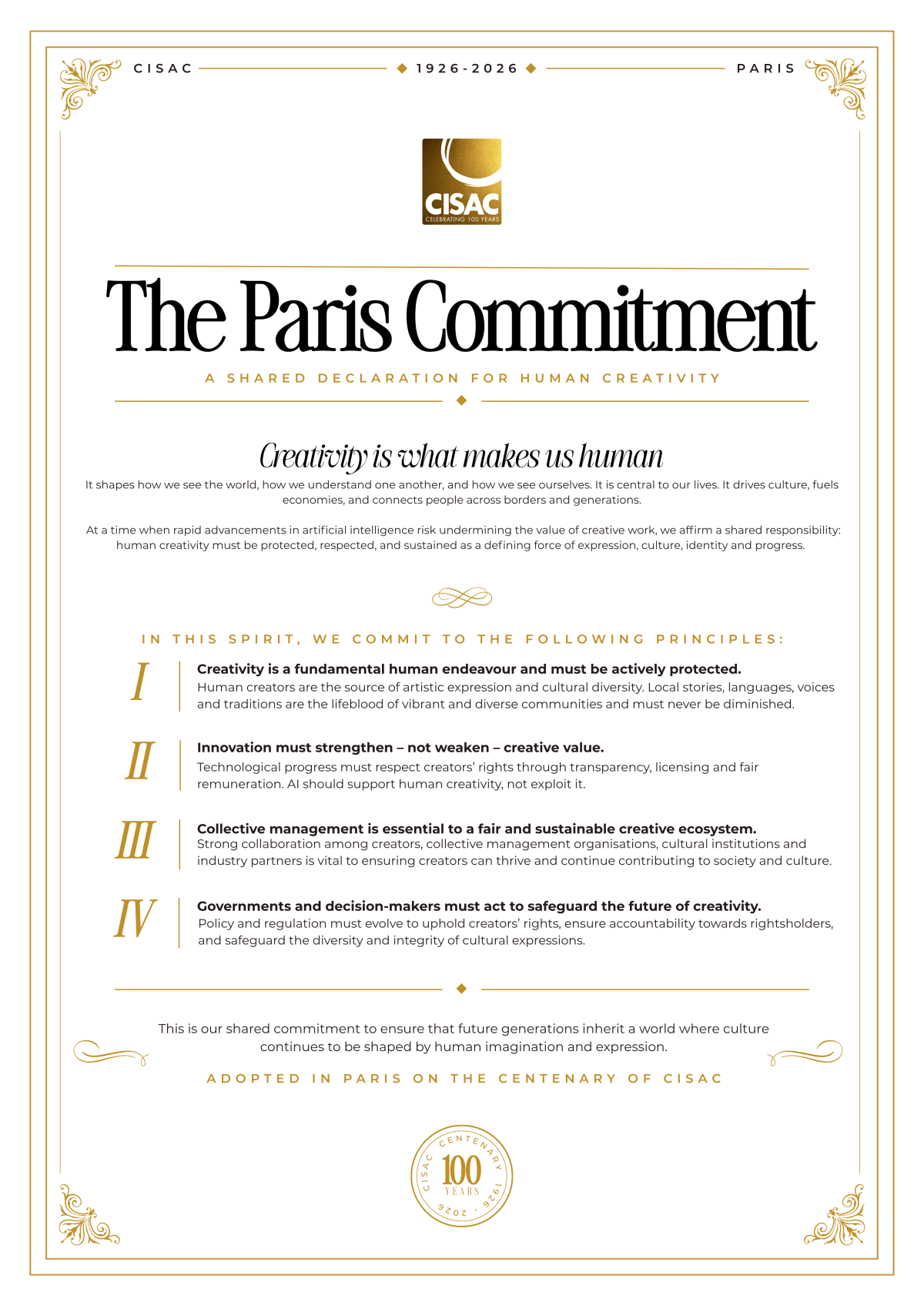
The declaration states: “At a time when rapid advancements in artificial intelligence risk undermining the value of creative work, we affirm a shared responsibility: human creativity must be protected, respected, and sustained as a defining force of expression, culture, identity and progress.”
The document outlines four central principles, including:
– The protection of human creativity and cultural diversity
– Transparency, licensing and fair remuneration in AI systems
– The importance of collective management in sustaining creative ecosystems
– The need for governments and policymakers to safeguard creators’ rights and cultural expression.
The declaration – included in full below – was introduced following a full day of discussions focused on the future of creativity in an AI-driven world.
Speakers included international creators, economists, academics, technology experts and policymakers, who examined the impact of artificial intelligence on artistic creation, creators’ livelihoods and the future of cultural diversity.
The 2026 CISAC General Assembly included creators and cultural leaders from across music, audiovisual, visual arts and publishing, alongside representatives from WIPO, the African Union, the European Parliament, Deezer and leading international cultural institutions.
PHOTOS: Romain Moriceau
 FOLLOW