Sponsor content created with Andrea Stolpe
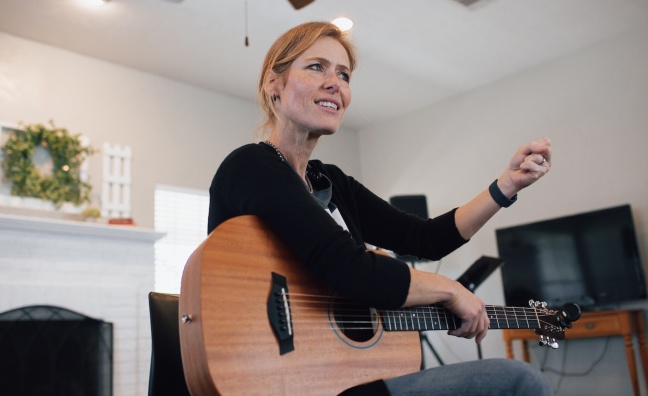
Andrea Stolpe is a multi-platinum creative consultant whose methodology for songwriters and music artists has been taught worldwide. A songwriter with 20-plus years of experience in the music industry, Stolpe has written for such artists as Faith Hill, Julianne Hough and Jimmy Wayne.
Here, Andrea Stolpe shares her insights on creativity ahead of her writing retreats in the UK (March 2026) and Nashville (April 2026)…
Imagine a world where creatives of every kind release their work without expectation.
Photographers post images that disappear after a day. Songwriters share melodies and lyrics that vanish once they’re sung. Writers write words that dissolve like mist, and painters draw their brushstrokes only to watch them fade.
In this world, the point isn’t to keep the expression, but to make it – to send it into the ether simply because it’s what we do. Not for accolades, not for permanence, but because we must. Letting go of permanence, we give up the burden of asking, will this define me? Will this earn me something? Will it prove I belong or have value?
We often talk about creativity as if it only matters when it can be measured, shared and preserved. But the truth is, sustainable creative expression doesn’t require industry, charts, or audiences. It requires only us, showing up with curiosity and letting what’s inside find its way out. At its core, creativity isn’t about preservation. It’s about presence.
The Industry’s Grip on Art
Industry teaches us that art must have a purpose – to generate revenue, build a brand, or position us within a marketplace. It demands permanence. It asks us to frame, package and market what might otherwise be a fleeting impulse. But when creativity becomes a product, we risk losing the very soul of it. We begin to write, paint or photograph not from curiosity, but from obligation.

When I’m writing with the intent of maintaining a career, my songs inevitably risk becoming commodities. Their purpose becomes to feed me – literally and figuratively. I attach expectations to my creative output that are measurable: how many songs I finish, how well they perform, whether they open doors or keep opportunities alive.
As a creative person in the real world, I’m endlessly pining after something that continually slips through my fingers. The practicalities of life bump up against my desire to clasp my fingers around the song I want to write. I’m reminded that I don’t always have the time, energy, or space to chase creativity to the extent I’d need to feel fulfilled.
When Passion Turns to Pressure
When creative expression becomes more like obsession, it can feel like a weight, one heavy enough to make us want to abandon the act altogether. It’s too heavy for a life well lived. And when it becomes the source of tension, with family members questioning our dedication or the money we spend without clear reward, it can drive our music completely into the ground. The very thing that drew us to write in the first place becomes the thing that pushes us away.
It’s no wonder we admire artists who seem to create as if untouched by external validation. Those are the ones who appear to write, paint or perform simply because inspiration strikes, not because the marketplace demands it. They awaken our own wild, fierce and passionate authenticity. They call us back to the spark that made us want to create in the first place – before we measured, before we judged, before industry had its say.
Freedom Within and Beyond the Industry
Some of my best friends working in the music industry are tormented by the pressure to deliver. They long for the taste of making the music their eight-year-old selves once dreamed of, before deadlines, contracts or career strategies entered the picture. And some of my happiest musical friends don’t work in the industry at all. They’re professionals in other fields who spend their free time making the music they love, unrestricted by the need to pitch or promote in ways that feel inauthentic.
If we want our creativity to last a lifetime, it must be rooted in freedom, not industry
Andrea Stolpe
Often when I talk with truly great artist managers, their advice honours the art form itself, despite their need for music they can sell. Their job is to nurture and develop artists to express what makes them unique. They say things like, “Put blinders on and make the music. When you’re done, think about the intention of it. Maybe it’s to perform, to challenge yourself, to embrace the exposure and vulnerability of sharing your art, and to do it for your own growth.”
Reclaiming Creative Intention
As natural as the urge to write songs is to share them with others. That urge precedes the desire to make money or gain notoriety. There are countless ways sharing songs can look, and as artists, we don’t often consider that our way may be different from the masses.
Sometimes it’s as simple as putting your music out in the world without a proper plan and seeing what happens. Maybe it’s dressing in a sci-fi outfit, staging an experimental performance, and leaning into a vision only you could imagine. If that’s your vision, do that.
The point is to get clear on why you want to do it before you fall into the pattern of, “This is what people who make music do, so I guess I should too.” Artists put immense pressure on ourselves to think too far ahead. In doing so, we lose the joy of creating in the first place.
Instead, give yourself permission to explore. You should feel good about the next step you take, and it’s okay to realize what that step is later.
So pause and ask: Where is the hesitation? Sit with it. Consider: What job am I hiring my writing and my production to do? Is it to bring joy? To be a release? To act as a creative outlet in your life?
That doesn’t need to come with expectations. And if you do have aspirations beyond that, that’s wonderful – but make sure they’re yours. Don’t absorb the expectations of others, or of the industry.

If we want our creativity to last a lifetime, it must be rooted in freedom, not industry. Sustainable creative expression grows out of practice, play, and connection. It thrives when we create without the weight of proving ourselves or the pressure of permanence.
That’s the spirit I hold space for in my retreats. This March in the beautiful UK countryside between the rolling Shropshire Hills and the beautiful Wenlock Edge, we’ll claim a place where artists and songwriters can pause the noise, reconnect to their authentic voice, and rediscover the joy of creating for its own sake.
The UK retreats take place on March 9-13, 2026 and March 16-20, 2026. The Nashville retreats are on April 20-24, 2026 and April 27-May 1, 2026.
Through writing, conversation, and community over the course of five days, we'll remember that music doesn’t need permission or permanence. From these moments often comes our best work.
Where we take it from there is our choice and our pleasure to promote and share. If you'd like to join me, click here to learn more.
The act of making is what matters most. Art doesn’t need to stay in the world forever to be valuable. It is valuable because it was made.