Hipgnosis is no more. Following a turbulent time for the music rights investment fund, the company – now privately owned – has rebranded as Recognition Music Group.
The new name and company logo (by Bibliothèque Design) have been unveiled today (see below).
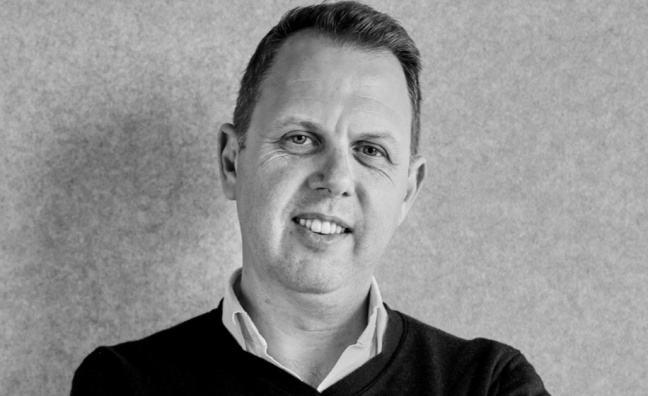
Chief executive officer Ben Katovsky has spoken to Music Week about this different iteration of Hipgnosis, which marks a new era for the company. It follows a successful bid by Blackstone worth $1.57 billion, which shareholders approved last summer.
It comes in the wake of a turbulent period for Hipgnosis Songs Fund, which implemented a strategic review following a shareholder vote. Amid a board room clash between those representing the publicly listed fund and the management arm, a bidding war saw Blackstone trump Concord’s offer.
Crucially, the music rights investment and management company combines the songs and recordings owned by the former Hipgnosis Songs Fund and the Blackstone-backed Hipgnosis Songs Assets, along with Hipgnosis Song Management. HSM was previously a separate entity that worked to drive value from those classic songs and the deeper catalogue. The London-based company, which has around 40 staff, will now be combined under one roof.
The Recognition name is a nod to the many famous hits people will know in the catalogue – including Shakira’s Whenever, Wherever, Fleetwood Mac’s Go Your Own Way, MC Hammer’s U Can’t Touch This, Red Hot Chili Peppers' Can’t Stop, I’ll Stand By You by The Pretenders, Love Shack from the B-52s, Nelly Furtado’s I’m Like A Bird, Don’t Stop Believin’ by Journey and I’m Coming Out by Diana Ross. The list goes on.
In total, Recognition Music Group owns and manages a portfolio of more than 45,000 songs and recordings from over 145 catalogues.
“The newly integrated company will enable Recognition to further enhance the legacy of the songs in its portfolio,” said a statement. “Building on its relationship with songwriters and artists and as a highly capable business for acquiring and managing catalogues, Recognition is well positioned for future growth and to deliver superior returns to its investors.”

Ben Katovsky said: “Today we are setting out a new identity for a new company. Recognition encapsulates the cultural significance of the songs in our catalogue, the supreme talent of the songwriters and artists who created them and the resonance they inspire in fans all over the world.
“We are excited to be entering this new chapter as an integrated company, committed to supporting artists and songwriters, enhancing the legacy and value of our songs and, over time, growing our portfolio with the addition of more stellar songs.”
Qasim Abbas, head of tactical opportunities international at Blackstone, said: “2024 marked a pivotal transition for the company with the Hipgnosis entities coming under common ownership and the completion of a landmark $1.47 billion financing – demonstrating strong investor conviction in the asset class.
“As Recognition, the company is now set to build on its position as a leading independent investor in music rights; owning and managing an incredible portfolio of songs and recordings.”
Merck Mercuriadis stepped down as chairman from Hipgnosis Song Management, following the Blackstone deal for the fund. His only involvement now is working with Recognition on managing some of the catalogues that were acquired.
As a privately owned company, we can expect a lot less drama at Recognition compared to the latter period of Hipgnosis. It will not be obliged to make public earnings announcements, although Katovsky told Music Week that he hopes to “improve the transparency of reporting of music as an asset and how it's performing, so that is the ambition for the right audience – for the financial markets in particular”.
The announcement comes amid concerns about the impact of AI, particularly on frontline artists. Katovsky told Music Week that AI can be an “opportunity provided we get the regulatory framework right”.
Here, Ben Katovsky outlines the ambitions for Recognition Music Group as it enters a new era…
Today’s news follows a tumultuous period for Hipgnosis. What are you hoping to achieve with this rebrand?
“It's a very exciting week for us, an exciting day today to be starting this process, because we’re announcing a new identity for a new company. So you are familiar with the Hipgnosis of the past and perhaps some of the actions that have happened – we took our public fund private last year. As part of that, we took that public fund and the private fund, and we brought those two catalogues together into a single catalogue. We also brought together Hipgnosis Song Management, which was an investment advisor to those two funds. So it didn't own any songs itself, it just provided advisory services. We brought that all into a single group. So we are now a fundamentally different company in that we both own the songs and manage the songs, which was very different to what we were before. What we're trying to achieve is to have an identity that reflects that new company and to show the reality that it is something very different.”
We recognise the talent of the artists that have gone into creating these songs, and that was really the inspiration for the name
Ben Katovosky
It’s a big step to change the company name, why was that necessary?
“As I said, I think it was just important to have a new identity for that new company, because it's a very different company now. And you need some visual and physical manifestation of that, so people are aware of it. And that was really what drove having a new identity.”
How will that rebrand roll out?
“We will be letting our teams know internally [ahead of the announcement], so that they are aware of it. And then on Wednesday morning, we'll be making it known to our songwriters, to our artists, to their representatives so they are aware of it, and then more broadly, rolling it out to the media and general public.”
How would you define this company now? Is it an investment fund, a publisher?
“Recognition represents the quality of the catalogue that we have, and I think that this is something that's truly unique. This is such a high quality catalogue. But not only is it high quality, it's packed full of these high quality songs, right? I think if you were to play somebody the catalogue, it's almost impossible that they wouldn't recognise at least one – but I suspect many – of the songs that we have in it. So you recognise these songs when you listen to them. We just wanted the name to reflect the unique quality of the catalogue that we have, but also recognise the talent of the songwriters. We recognise the talent of the artists that have gone into creating these songs, and that was really the inspiration for the name.”
Going private was a big shift, but it sounds like one of the biggest changes here is bringing in the song management side together with the two funds. What will that mean for you and those songs?
“It just brings a level of simplicity to things. And where you have that simplicity, it allows us to be very focused on managing the catalogue, and ultimately, that's what we want to do – we want to be great custodians of this catalogue. We want to protect and enhance the legacy of these songs. And it allows us to put our attention on really doing that.”
The announcement mentions growing the portfolio. What does growth look like for Recognition Music?
“First and foremost, our attention is on the songs that we already [own and manage] – being great custodians of those songs, protecting the legacy of those songs and enhancing the value of those songs. So that's first and foremost where our attention is. But we do want to continue to grow the portfolio as well, to acquire more. But we're in a very fortunate position here, we already have a large catalogue and a high-quality catalogue, so we're not under any pressure to have to deploy money and to buy things. Equally, because of the size of it, we are able to invest in our people, our capabilities and our teams. So we're going to be a selective buyer – when the right opportunities come along, we will be an acquirer. Maintaining this quality and the nature of our catalogue is something that is important to us. But yes, the ambition is there to grow and to deliver long-term, sustainable growth.”
What roles does Blackstone play?
“They are our primary shareholder. We have a very close working relationship with them, and a very positive relationship. They are very mindful as shareholders as to what the future ambition of this company is – both that focus on the catalogue that we have, but also the opportunity to grow going forward. So it's a close relationship.”
Finally, there is some financial turbulence in markets – what impact does that have on song assets?
“Long term, I don't think it has a negative impact on the value. If anything, it will just prove the attractiveness of investing in songs because people listening to and enjoying music isn’t correlated to the economic environment. Publishing rights deliver incredibly diversified revenue streams – streaming, live performance, sync and so on – and in each of those you have multiple household names operating: YouTube, Apple, Netflix, Spotify, Disney. I could keep on going! I think that there is a very good story here for music as an asset class.”
 FOLLOW