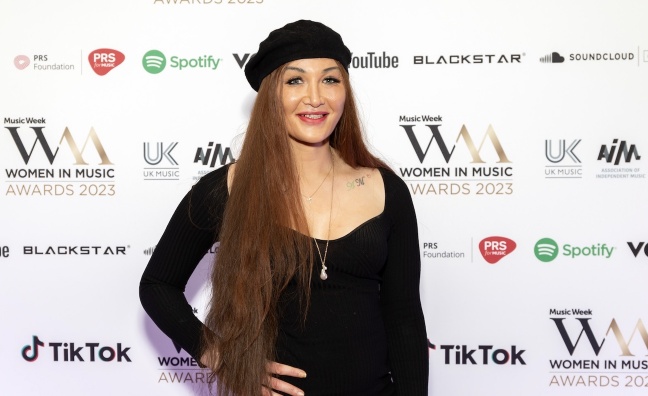
At the start of May, Music Week’s 2023 Women In Music Roll Of Honour inductee Saskhia Menendez will be releasing a transgender charter for the music industry.
“A transgender charter ensures that transgender and non-binary individuals are seen and heard,” she told Music Week. “Breaking down stereotypes and normalising diverse identities.”
In the lead-up to the release of the charter, which has been primarily established for the UK but has the potential for global reach, Menendez has spoken at Eurosonic, Parallel Music Conference, Screen x Screen, Oxford Brookes, NTE and ILMC.
Throughout her years of experience, Menendez has established herself as a leading equality and diversity ambassador, public speaker, artist, researcher, mentor and social change activist. She has contributed as an Innovator at Keychange and a former board member at The F List Music, and serves as a LIVE Diversity Expert panel member. Menendez was also a voting member for the BRIT Awards in 2024 and 2025.
Menendez received a Global Recognition Award in 2024 for her services to music, and was also nominated for the Access All Areas Inclusion and Diversity Award in 2023 and 2024. She has been featured in Candid, discussing misogyny in music, and one of her quotes was included in A Research Agenda for Intellectual Property.
Here, Menendez shares the key aims of introducing a transgender charter to the industry and outlines the ways in which it will offer support to transgender and non-binary communities, as well as dismantle systemic issues at play across the business…
WORDS: SASKHIA MENENDEZ
Reflecting on my journey in the music industry, it has been one filled with passion and creativity, yet fraught with challenges. The absence of financial support and representation for transgender individuals has provided significant obstacles, both professionally and personally. A transgender charter will help to provide the necessary visibility, support and fair opportunities, making it easier to navigate the industry. It will set standards for inclusivity and protection, as well as fostering a safe and welcoming environment from the start.
Such a charter will offer essential resources, including mentorship programmes, training, legal advice and signposting to mental health support services, tailored to transgender individuals' needs. By advocating for equal opportunities and addressing systemic discrimination, the charter will level the playing field, recognising talent and hard work, regardless of gender identity. Creating a safe and inclusive environment is paramount. The charter will set standards to address harassment, discrimination and exclusion, ensuring that transgender individuals feel safe and valued. It will establish clear industry standards which will drive meaningful change, fostering a more equitable and respectful industry culture.
Looking back on the past year, it’s encouraging to see some progress towards proportional representation for underrepresented and disadvantaged communities across the music industry. There has been a noticeable increase in awareness and advocacy around issues of diversity and inclusion, and more industry stakeholders are recognising the importance of proportional representation and are vocal about their support for these initiatives. Several organisations and record labels have launched diversity and inclusion programmes aimed at supporting underrepresented artists and professionals, with initiatives including mentorship programmes, grants and platforms designed to elevate diverse voices. There has been a gradual increase in the representation of diverse artists at major music festivals, award shows and in media coverage, which is crucial for normalising diversity and showcasing the talents of underrepresented groups. Some companies and organisations within the industry have made public commitments to improving diversity and inclusion, with pledges to specific goals for hiring practices, artist signings and executive leadership.
While there are positive signs, however, the industry still struggles with making sustained and systemic changes. Many initiatives are in their early stages, and it will take time to see if they result in long-term impact. There is a need for better data collection and transparency around diversity metrics. Without clear data, it’s challenging to measure progress and hold organisations accountable for their diversity goals. Efforts to improve diversity must consider intersectionality, ensuring that initiatives address the multiple dimensions of identity that individuals may experience. This includes recognising the unique challenges faced by those who belong to multiple underrepresented groups. True representation goes beyond tokenism. The industry must ensure that underrepresented individuals have meaningful opportunities for advancement and are not just present for the sake of appearance.
Organisations within the industry should adopt clear and comprehensive diversity and inclusion policies that address the needs of LGBTQIA+ individuals, and these policies should be enforced and regularly reviewed to ensure they remain effective and relevant. Establishing safe spaces within the workplace and at industry events where LGBTQIA+ individuals feel welcome and supported is also crucial – this can include gender-neutral restrooms, LGBTQIA+ affinity groups and clear anti-discrimination policies. Regular training and education programmes should be conducted to raise awareness about LGBTQIA+ issues, combat prejudice, and promote understanding and acceptance. These programmes should be mandatory for all employees, from entry-level positions to top executives.
Developing mentorship programmes that connect LGBTQIA+ individuals with industry veterans who can offer guidance and support is essential, and creating networking events and opportunities designed to foster connections within the LGBTQIA+ community will also help. Ensuring fair representation of trans and non-binary artists and industry professionals in media, marketing and industry events is necessary, and actively seeking out and promoting the work of LGBTQIA+ artists and professionals can make a significant difference. Allocating funding and resources to support LGBTQIA+ initiatives, including grants, scholarships and development programmes for emerging artists and professionals, will provide much-needed support. Supporting organisations and charities that work with LGBTQIA+ communities is also vital.
Adopting inclusive recruitment practices that actively seek to hire LGBTQIA+ individuals across all levels of the industry is important, and providing equal opportunities for career advancement and development will ensure a more inclusive environment. Creating platforms and opportunities for LGBTQIA+ artists to share their work and tell their stories, and collaborating with LGBTQIA+ communities to ensure their voices are authentically represented and heard, are necessary steps towards inclusivity.
Music has the ability to raise awareness about social issues and bring attention to the experiences and struggles of marginalised communities. It can challenge societal norms and stereotypes, offering perspectives and pushing the boundaries of what is considered acceptable or mainstream. LGBTQIA+ artists, in particular, can use their platform to challenge traditional notions of gender and sexuality. Music often brings people together, creating a shared cultural experience that can transcend differences and unite people from diverse backgrounds – festivals, concerts, and other musical events can serve as spaces where diverse communities come together to support each other.
Music can influence public opinion and, in turn, affect policy and social change. Songs that address political and social issues can inspire activism and mobilise people to push for change. It provides a platform for marginalised voices to be heard, and empowering those voices can lead to greater visibility and recognition for underrepresented communities. Music can serve as a historical record, documenting the struggles and achievements of marginalised communities over time and can capture the zeitgeist of a movement and preserve the cultural heritage of a community.
Since the Misogyny In Music Inquiry to the Houses Of Parliament in 2022, there have been several notable developments in the music business, however the government chose not to adopt any of the recommendations made – which was sad to see. Following the inquiry, there has been a change in government and I am hoping that there will be an increase in government initiatives aimed at addressing discrimination and promoting equality for transgender individuals. Some policies specifically target the music and entertainment industries, encouraging inclusive practices and providing funding for diversity initiatives. There have been steps toward enhancing legal protections for transgender individuals, and some regions have seen the introduction or strengthening of anti-discrimination laws and hate crime legislation that includes gender identity and expression. High-profile government officials have also made public statements supporting the rights of transgender individuals.
More music industry organisations have developed and implemented diversity and inclusion programmes, which include mentorship, career development, and mental health support. There has been a small increase in the representation of transgender and non-binary artists and professionals in media, music festivals, and award shows and new support networks and alliances have formed, providing safe spaces and resources for transgender individuals. These networks facilitate peer support, advocacy, information sharing and career advancement. Some industry bodies have established standards and best practices for inclusivity, encouraging record labels, promoters and other stakeholders to adopt these guidelines.
Despite progress, the implementation of inclusive practices and policies can be inconsistent across different organisations and regions. Ensuring widespread and uniform adoption remains a challenge and achieving deep-rooted cultural change within the industry takes time. There is still work to be done to shift attitudes and eliminate prejudice and bias, and economic barriers continue to affect transgender individuals disproportionately – access to funding, fair compensation and opportunities for advancement are ongoing issues that need to be addressed.
The momentum generated by the Misogyny Inquiry and subsequent initiatives is promising. There is a growing recognition of the need for systemic change, and many industry leaders are committed to driving this forward. Grassroots organisations and advocates play a crucial role in pushing for this and holding both the government and industry accountable, and their efforts are vital in maintaining pressure and ensuring continued progress. Younger generations also bring new perspectives and drive further cultural change.
Changes across the industry since 2022 have been encouraging and indicate a positive direction towards greater inclusivity and support for transgender and non-binary individuals. However, sustained effort and vigilance are required to ensure that these initial gains translate into long-lasting, systemic change. We hope that stakeholders across all areas will join in this journey towards a more inclusive and equitable environment for all. I am hoping that record labels, production companies, artists, event organisers, venues, industry bodies, media, and educational institutions will sign up to the charter, which seeks to create a more supportive and understanding environment for transgender people in all aspects of the music industry.