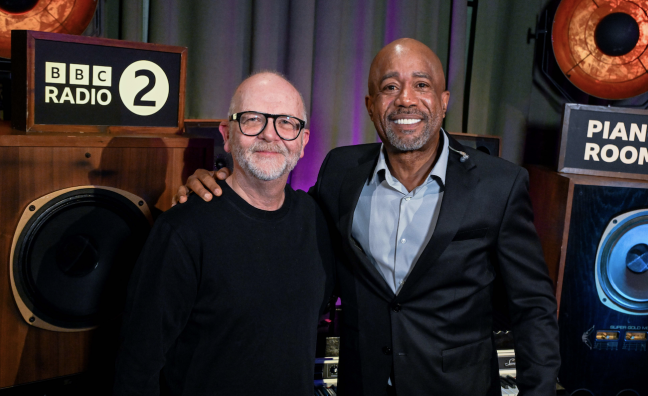
Jeff Smith has encouraged artists and their teams to "get their teeth into" Radio 2's Piano Room, which he says presents a unique promo opportunity to the industry.
Smith, who is head of music at Radio 2/6 Music, sat down with Music Week at BBC Maida Vale Studios to reflect on a month that has seen Darius Rucker, Pulp, Jessie J, Laufey and many more perform alongside the BBC Concert Orchestra.
The exec (pictured above with Darius Rucker), suggested that, five series in, the industry is cottoning on to the singular pull of the Piano Room, which sees artists perform with the 25-piece orchestra at Maida Vale, with sessions going out live on air on Vernon Kay’s mid-morning show and via BBC Sounds, iPlayer and on YouTube.
I'm not necessarily saying that people will plan campaigns around it, but there's an opportunity to do that if they want to
Jeff Smith, BBC Radio 2
“It's about having a returning feature that keeps coming back and then, gradually, the labels are very much aware of it,” he said. “We help with that, because we present them with figures from radio, online and TV and just nag people a little bit sometimes about what we do at Radio 2, and how important Piano Room is and how big it is on this very big radio station.”
“So I think they're starting to appreciate it more and more as the years go by,” he added. “And certainly it's becoming easier to attract artists to it and to get their teeth into something like this.”
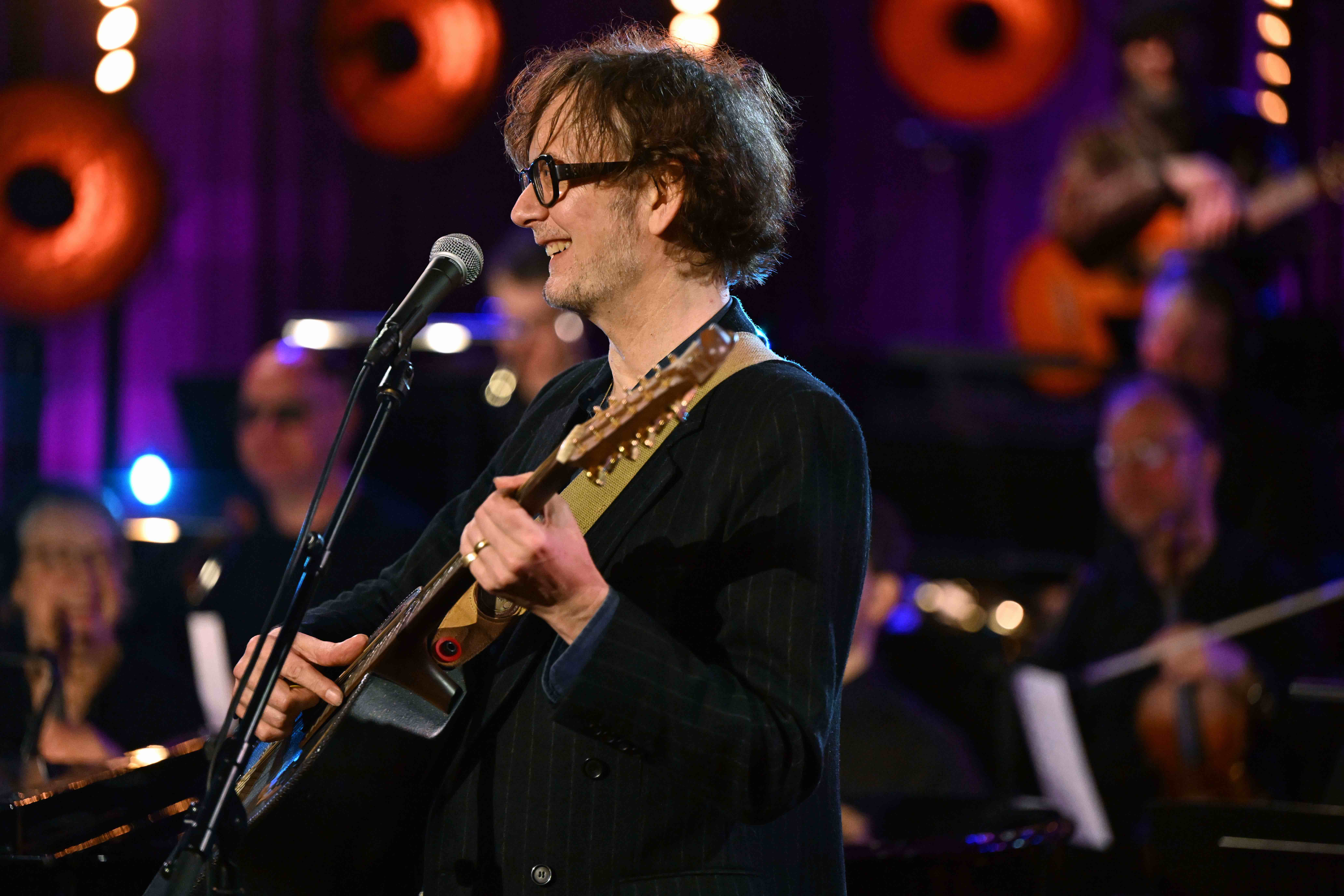 Pulp in the Piano Room
Smith called the fifth season of Piano Room Month “a tremendous success” and “certainly our most talked-about yet”. Jessie J played the last edition of this year’s series yesterday (February 26).
“Seeing Piano Room content thrive across platforms and reach audiences who may never have discovered BBC Radio 2, or these artists, before has been incredibly rewarding,” said Smith, who also reflected on past performers including Olivia Dean, Raye, Depeche Mode and more.
Music Week quizzed the former Radio 1 head of music about the evolution of Piano Room – which started in the BBC’s Wogan House building on Elton John’s old Steinway – and its changing role in the business...
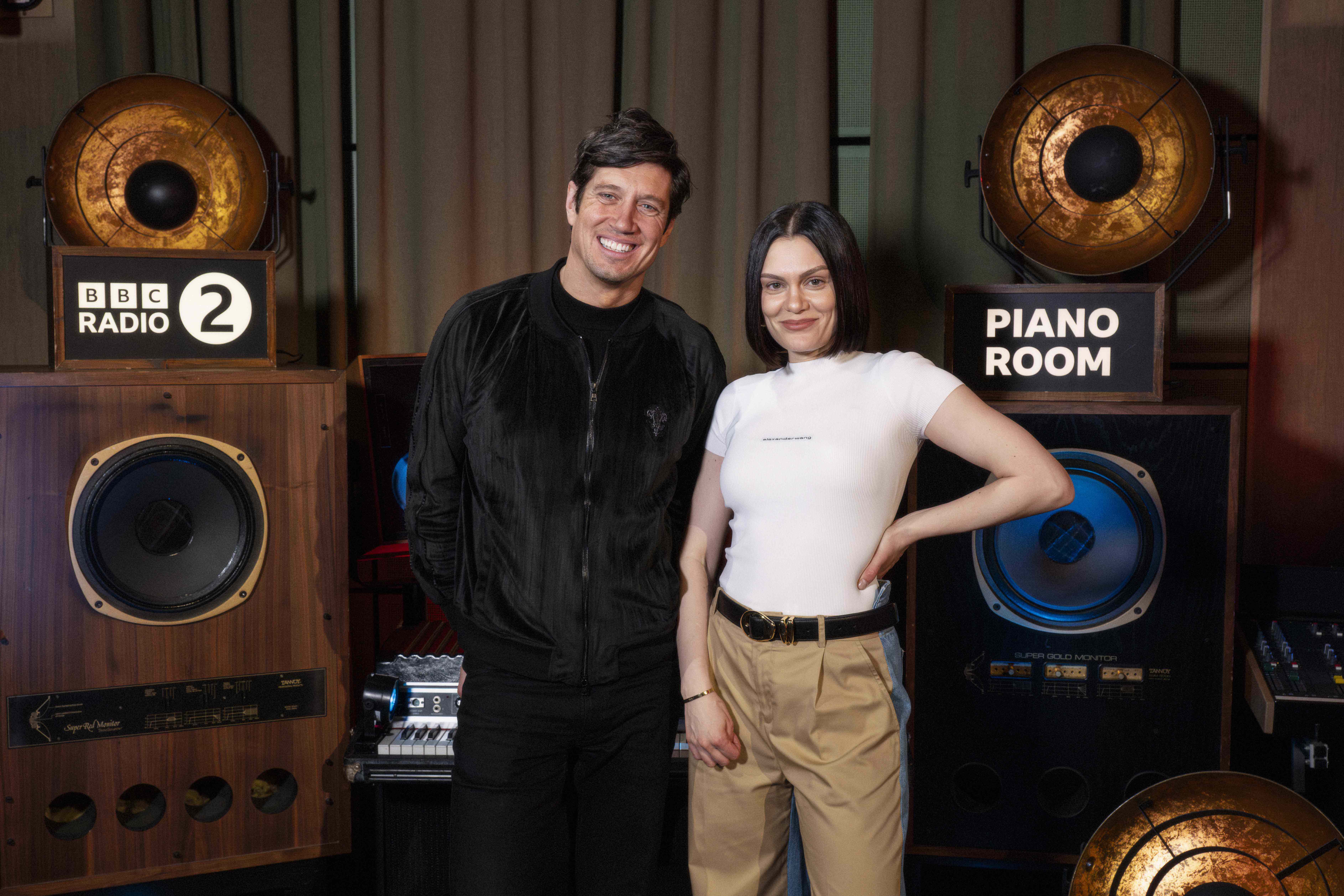 Vernon Kay and Jessie J
How far in advance do you book acts to play?
“I've got a few holding positions for next year already. One of my real ambitions for all our events, but particularly this one, is to create unique moments and bring back artists maybe we haven't seen for a while. We had that particularly last year with 10cc. A way of judging this for us is how the response is, not just to the massive Radio 2 audience for Vernon’s show, which is huge, it’s our biggest show, but also how the wider world responds, people who aren't necessarily totally aware of what we do at Radio 2, or what Piano Room's about. For example, I’m Not In Love by 10cc has 3.8 million views on YouTube which is one of our biggest. Bruce Hornsby from the year before is on 2.5m views, that was fantastic, as was Andrea Bocelli’s version of Ed Sheeran's Perfect. One of our biggest band ones was Depeche Mode, their performance of Walking In My Shoes has over 8m views on YouTube.”
And how have you found dealing with artists and their teams in the booking process?
“It’s an opportunity to be on Radio 2 and have a massive impact on a massive scale, but also to present a different perspective of an artist. I remember working with Depeche Mode’s team and I don't think it's giving too much away to say this, but they were quite nervous about doing it. Artists do get nervous about doing what is quite an intimate event. People know they're hitting 6.7m listeners through Vernon’s show and nearly 13m listeners on Radio 2, so it's a big deal. And you’re performing with an orchestra. I know Depeche were quite concerned about that because they’d not done anything like it before. But it was one of the most outstanding performances I've ever seen. We’ve come from the top floor of Wogan House, to Maida Vale, with the BBC concert orchestra, which we added in 2022. This is the fifth season, and it seems to have worked, doesn't it?”
The line-up features acts at various stages of their careers, how do you make it work for everyone?
“One that was really exciting for me this year was Labi Siffre. The classic song he did, My Song, has been really successful on TikTok and the record label was telling me he's doing 7.5m streams per week on Spotify of his catalogue. It's interesting that new generations are discovering artists who are in their 70s and 80s, but what’s still really important is the music and the songs. That's really what we do at Radio 2 and what Piano Room is about, people finding something new and exciting to discover in artists that maybe have been around a bit. And then also, hopefully, we find some newer artists that have got something different. I mean, she's not super new, but Laufey is amazing at bringing back that swing, crossover jazz sound. It's really a great opportunity to do something more spectacular for artists.”
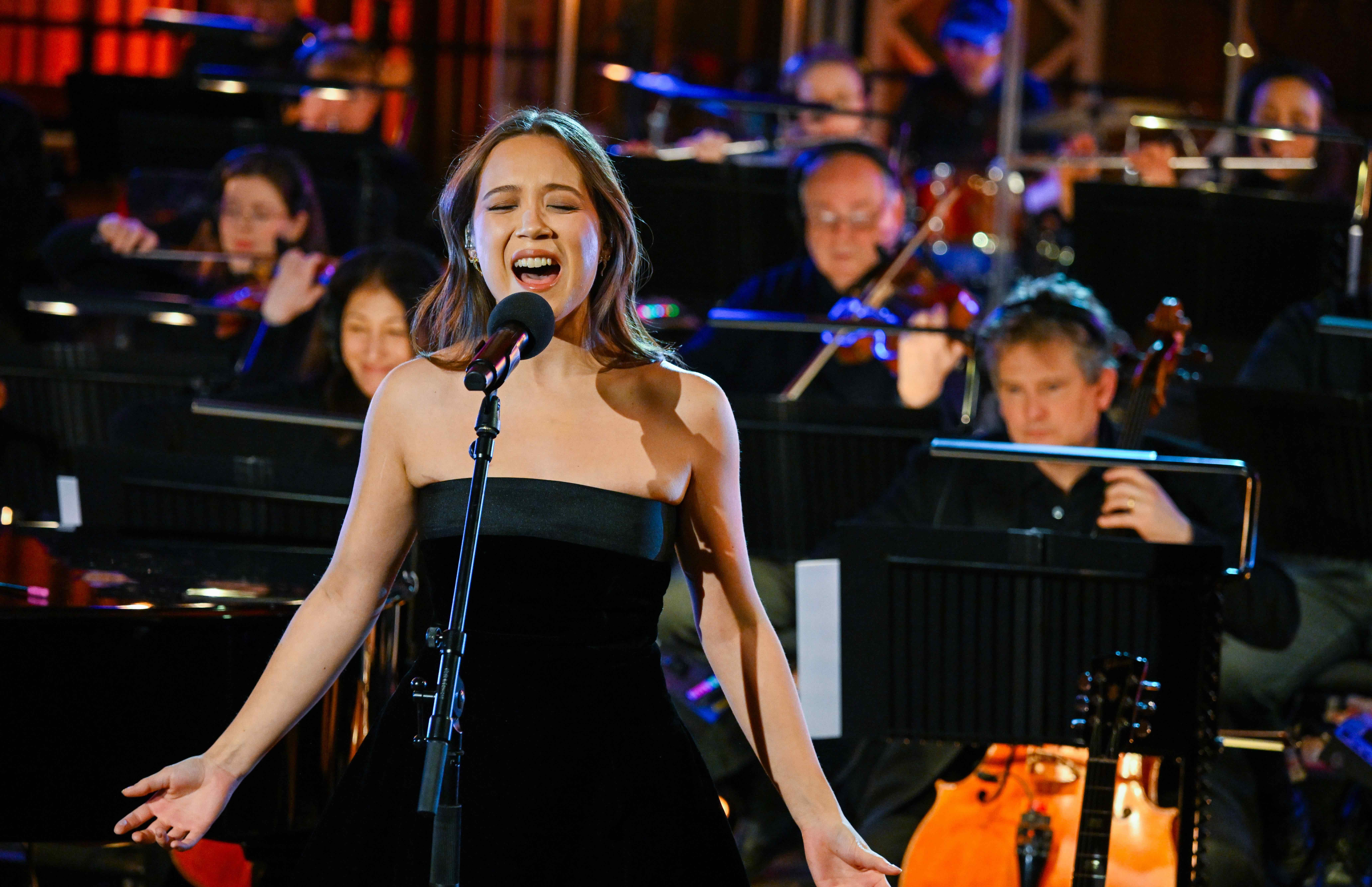 Laufey performing for Radio 2's Piano Room
What do you think makes this stand out amidst other promo opportunities for artists?
“It’s an opportunity to perform with a 24 or 25-piece orchestra, which isn't always easy to come by. We’re lucky enough to have four of them in total, but this one, the BBC concert orchestra, is amazing and so versatile and flexible. Artists work with us on the arrangements, we collaborate. It can be a singer and some backing vocalists, or they can bring a band. Pulp had the whole band with them and the orchestra, and it was hard to get them all in one room, but we got them in there. It’s about their ambition, too. When we had Raye in 2023, it was one of the first times she'd performed with an orchestra, and we learned afterwards that it was one of the experiences that really focused her on appearing with orchestras. Olivia Dean was similar, new artists can cut their teeth working with a great orchestra, and I think it tests them too.”
What was it like working with Raye on her Piano Room appearance?
“I think we all saw massive potential. From Radio 2's point of view, a lot of the songs that came through in her original manifestation were features, or she’d feature on a dance track, which isn't necessarily the big kind of playlist thing for us. No, what struck us, was the strength of the new songs she was coming with because we’d just had that taste of it where she'd gone out on her own. It was about capturing that. Artists do want to be ambitious with their sound, their music and their songs. So to put them with an orchestra, whatever the age of the artist is, it seems like a no-brainer in a way. They take to it like a duck to water. Raye got it straight away. We knew it when we'd heard that first solo album, there was that sense of potential for orchestration. I felt that about Olivia as well.”
Why does an act like Olivia Dean work for your audience?
“There's always the power of the songs and the power of performance, but making a body of work is something Olivia’s really got into quite quickly, certainly with The Art Of Loving. I think there's a real sense of it being everybody's current favourite album. I remember the ’80s and it reminds me of Sade and Lisa Stansfield, who we have had on the Piano Room, and she has that amazing vocal, with a real understanding of audiences and what they would like to hear, and of making the hits and making the songs that people want. I think Olivia and Raye are following in those same footsteps and making bodies of work, great albums, that people can consume like they used to, and hopefully – certainly for the labels – they will buy the records on vinyl, buy them on CD.”
Raye got it straight away – we knew it when we'd heard that first solo album, there was that sense of potential for orchestration
Jeff Smith, BBC Radio 2
What do you think the industry thinks of the Piano Room now?
“Having been head of music at Radio 1 and worked at various music radio stations, my experience of working with the industry is that it takes some time to get comfortable with a new concept. When we started Live Lounge at Radio 1 in the late ’90s, it was my idea to take a space in what was Yalding House that we just didn't know what to do with. There was this thing out in the States called Star Lounge, which I took the idea of a little bit. And we started doing that on Simon Mayo’s show and then it gravitated to Jo Whiley’s show. We put it in that mid-morning slot, so it had a regularity and people knew it was part of their promo plans. What we've done with the Piano Room is a similar thing, particularly doing it across a month in February, because people know when it is and they can work out where they're going to be. I'm not necessarily saying that people will plan campaigns around it, but there's an opportunity to do that if they want to. It’s the same when we do Radio 2 In The Park.”
Do you have a message for managers and labels about what they can do to work with Radio 2 any better?
“We have great relationships with lots of management, agents and artists. I would just say, ‘look at Piano Room and the potential that could be there for your artist, and just let's have a chat about it.’ Because sometimes it's just about an opportunity to make people feel more comfortable with it and let's develop from there. Piano Room is one thing and with Radio 2 In The Park we do another, which is that big audience factor, television exposure, scalability for labels and artists and management. They should just contact me and we can take it from there about how we might work best together!”
How do you see the concept evolving?
“We’ve done this with Pink and Texas, where we’ve extended it for TV to six or eight songs rather than three, and we'd love to do more things like that. We've also experimented with a commercial format called Piano Room Live, which we did at the Manchester Opera House and we’re going to come back with this year. To put it in the context of a live event space and still keep that kind of Piano Room-ness with the strings is something to build on and extend over the years. So that would be one of my ambitions, to get up to as big a venue as we can do for something like that, and that could be something we broadcast as well.”
Read our interview with Vernon Kay in the new issue of Music Week.
 FOLLOW