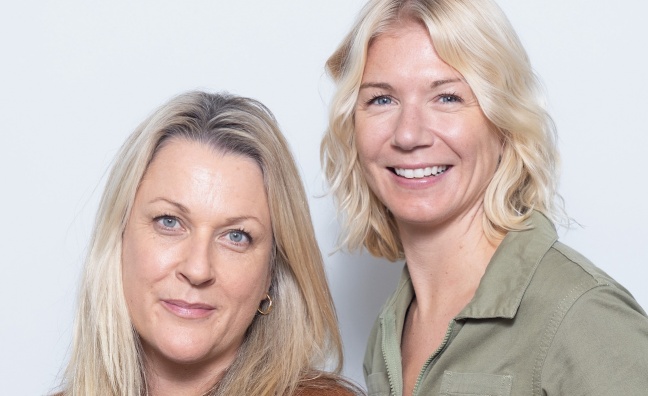
In a jointly written viewpoint for Music Week, Pippa Evers (director of TV and content) and Emma Bailey (head of TV and content) from DawBell’s TV division explain why they believe television can still be a perfect fit for music campaigns with hundreds of opportunities still remaining every year.…
It’s been a turbulent year for TV. MTV UK has quietly shut down its music productions, and ITV Daytime is cutting the budgets of its biggest morning shows. Gone are the days when an X Factor performance would send you straight to No.1. You might ask: has television had its heyday?
In reality, as recorded music becomes increasingly saturated, TV is still the perfect avenue for rights-holders to break away from algorithmically-driven consumption and tap into new audiences.
The numbers back it up. A recent YouGov poll found that 73% of Brits still tune in to TV daily (versus 21% listening to radio and 9% listening to podcasts), with over a quarter of live TV viewers sticking around for over three hours a day. That sustained attention, as opposed to ‘mindless doomscrolling’, presents valuable creative and commercial opportunities for artists and labels.
TV remains one of the most powerful artist discovery tools out there. Mainstream shows like Strictly Come Dancing, Jonathan Ross, The Graham Norton Show, Love Island, Sunday Brunch and Later… With Jools Holland put new music in front of large, varied audiences who otherwise might never go looking for it.
These pivotal discovery moments can place artists in front of a host of potential new fans.
Take new artist Jalen Ngonda; following a performance on The Graham Norton Show, he sold 4,000 tour tickets and sent his album Come Around and Love Me to No.1 on both iTunes and Amazon in the UK. Unexpectedly, it also went to no.2 on iTunes in Australia when the international repeat aired a few weeks later.
Similarly, CMAT’s performance of Have Fun! on Jools' Annual Hootenanny led to a 337% daily surge in streams for this song. Following this, her entire catalogue saw a major boost across all streaming platforms, with average daily streams peaking at 124.5k on January 2 and remaining consistently above average thereafter.
According to our calculations this year, there were more than 300 TV performance slots available to artists, excluding festivals and documentaries, showing opportunities are still plentiful
Pippa Evers & Emma Bailey
Increased visibility aside, TV appearances translate into real commercial results. Well-timed slots on mainstream shows, while often requiring a budget, can surpass any initial investment. Following an interview on The One Show, Take That racked up over 20,000 UK pre-orders for their last album – that was on top of the usual fanbase activations.
Subsequent performances on Later with Jools Holland, Graham Norton and Strictly Come Dancing contributed to a No.1 album with the biggest first week of sales of the year by any UK artist.
Brand new act Jerub, after performing on BBC One’s Children in Need, entered the OCC’s Midweek Singles chart at no.18 without any other drivers. Elsewhere, his YouTube views spiked by 22,000, his iTunes demand was up 42%, streams of his There Til the End single were boosted by 100,000 on Spotify and remaining headline tour tickets sold out.
Whilst passive listening typically dominates across DSPs, TV presents an opportunity to reach engaged audiences who speak with their feet.
TV doesn’t exist in isolation either; it fuels the wider media cycle. An impactful interview on a flagship show sends ripples across news outlets, social media and streaming platforms.
Yungblud’s recent Laura Kuenssberg interview, which preceded his latest No.1 album, garnered 1.2 million views and a 26% audience share via its initial TV slot, but an extended version was aired on BBC News Worldwide, on the homepage of BBC iPlayer, appeared as a write-up on the BBC Online homepage, was pushed out as a newsflash on mobile phones, and was picked up by Radio 1 Newsbeat, and reported on by many other online news outlets. Clips from the interview went viral on social media (18.5m-plus impressions), generating an enormous multi-million reach worldwide, all whilst telling his story in his own words.
The TV industry is evolving, but audience appetite persists. Flagship shows on UK TV still pull in millions of viewers, and a single placement can be transformative.
According to our calculations this year, there were more than 300 TV performance slots available to artists (excluding festivals and documentaries), showing opportunities are still plentiful. TV slots give other departments such as press, radio, live, and marketing both confidence and content.
For rights-holders, embracing TV will continue to be essential for reaching wider audiences and building fanbases, while those who overlook it miss the chance to be seen and heard in a saturated, algorithm-driven landscape.