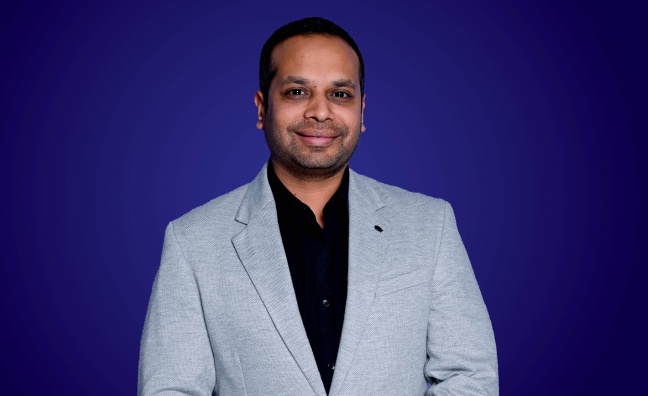
Ahmed Hussain is on a mission to make sure that the work of BBC Asian Network does not go unnoticed by the music industry.
Hussain is head of the station, which reached 584,000 listeners each week in Q4 2025 according to RAJAR's figures.
Last year he oversaw the station’s move from London to Birmingham. The relocation embedded the network closer to one of its key audiences while continuing to reach listeners across the UK. Today, 42% of Asian Network’s national listenership tunes in from the Midlands.
The move was part of the BBC’s Across the UK plans. All Asian Network shows were broadcast from Birmingham a year ago today (April 28). At that point, Asian Network Breakfast with Nikita Kanda, The New Music Show, Pritt, Nadia Ali and Bobby Friction joined the Asian Network shows and DJs already broadcasting from the Mailbox, Birmingham.
To mark the first anniversary of the station’s relocation to Birmingham, Hussain shares his no-nonsense message to the music business…
What specific role do you want the Asian Network to play under your leadership?
“I want it to be, and it is, a cultural home for British Asian music, stories and perspectives. I want us to continue serving third-, fourth- and fifth-generation British Asians who wear many badges. One weekend you could be at Glastonbury raving, and the next weekend you can be at a Mehndi dance doing a Bollywood routine. That is our audience. That is who we talk to. We break talent early, and we will continue to break talent early. We are a very well-run network, and that’s thanks to every single person who works for it, because the station knows what it needs to do to serve that audience. I often refer to the station internally as a family, but externally, it’s a community.”
The station’s move to Birmingham is the biggest thing to happen under your tenure, perhaps in its whole history. What did you think when it was first mooted?
“When it was first announced, everyone thought, ‘Oh my God, why us?’ But as you break it down, it makes sense. The truth is that licence fee payers are right across the UK, not just in London, and there has been a focus on London. The BBC is doing a lot more across the UK – not just in Birmingham, but Manchester, Cardiff, Scotland… It didn’t happen immediately, which was good because it gave us time to breathe and work out the lay of the land. If you’ve ever moved house, you’ll know the headache that brings – now imagine trying to move a radio station. And so where we are now, a year since the move, is a place where everything’s properly settled, which is really nice. Having all the presenters in one place opens up so much collaboration and ideas from everyone.
“Then from a cultural point of view, it’s a nice environment because you’re seeing people – it’s about collaboration and personal relationships, and that’s really shone through. While there’s a move to the new BBC site in Digbeth in two years’ time, I think in The Mailbox, where we’re based at the moment, the wider impact is notable. Asian Network has brought something to The Mailbox, and the people already working there have benefited from the fact that 100% of Asian Network, a national station, is actually coming from there now.”
We break talent early, and we will continue to break talent early
Ahmed Hussain
This was one of the BBC’s most significant regional investments in years – why do you think they chose to invest so heavily?
“Originally, Asian Network was based in Leicester, and we always had a foothold in Birmingham, so it’s kind of coming home. When you look at the demographics of the West Midlands, it’s one of the biggest opportunity audiences for Asian Network, and we have seen an increase in a couple of our RAJAR quarters of people listening from the Midlands. But then if you look at the pockets of the audiences that we’re talking to –concentrated in big urban areas – the Midlands is massive for us in that sense. Birmingham sits in the middle of the UK, so now we can do things easily further up north. We still do things in London and the South, but it’s just easier to get to. For Birmingham-based shows like Nikita Kanda’s [Asian Network Breakfast and the Certified mid-morning slot] and Jaz Singh’s 3-6pm show, we can get on a train before or after their slot and go and record something in London or Manchester, then come back.
“Also, as part of the move, a lot of our content was commissioned out. So it meant that independent suppliers could pitch for our shows. We used to have one independent supplier supplying to Asian Network. We now have seven. So, we had 16% of our schedule supplied out, as in, not internally produced. That figure is now 54%. So, we’ll hire staff in Birmingham for the BBC, but because we’ve got external suppliers pitching for programmes, they’re also hiring people and setting up bases in the Midlands. That helps because it’s investing in the area.”
Are people in the industry doing enough to support and grow Asian music in general?
“No, they’re not. I think people know that it exists. In the recent census, 10% of the UK population is of an Asian background. That’s a big number. Now, I’m not saying all that 10% will listen to Asian music, and I’m not expecting them to, but are labels doing enough to support Asian music? I’m very clearly saying, ‘No’, because if they were really interested in that, they’d be coming and having conversations directly with us. Our music team already tries to have some of those conversations, but you need to be understanding what we’re doing. Put time in my diary and talk to me. That one conversation can go a very long way.”
What practical tips can you offer about how to get the most out of the station?
“Please don’t be afraid to come and speak to us. Have a listen to us. If you’ve never listened to us, do so, because I think you’ll be pleasantly surprised at what we do and how we do it. At the end of the day, the industry is there because they want to support artists, but there’s also a business side of it as well. How can we fit into your area of business? And if we can’t, and you’re interested, what conversations can we have to move that forward?”
And what should artists and managers be doing if they want the station’s support?
“Again, please do listen to the station. Are we right for you? For example, we don’t play classical Asian music, because that’s not what we do. The second thing is, if you’re a new artist and you want to get your track on the radio, upload via BBC Introducing. We supported over 1,000 artists last year, and that’s just one of the smaller figures I’m giving you. Go to BBC Introducing, upload your track and you could be playing in a tent at Glastonbury, just remember that. The third thing I’d say is, please talk to our music team. There’s a proper method to it, if you want to come in and have a conversation about what tracks you have coming, what shows, the story… If you upload your track to BBC Introducing, that platform is massive, and Asian Network may not be the only one that picks it up.”
Subscribers can read Ahmed Hussain's full interview with Colleen Harris here.