Interview by Karen Bliss
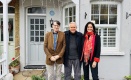
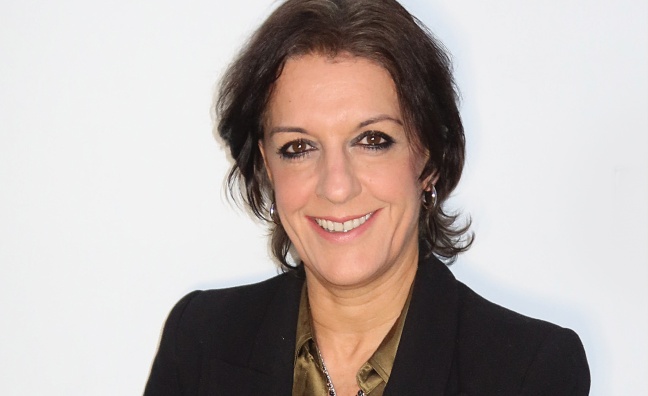
After 35 years in the business, Riverman Management founders Alex Weston and Dave McLean were awarded the title of Managers’ Manager at the A&MAs late last year.
Following Weston’s rousing speech at the Artist & Manager Awards, she spoke to Music Week for the Aftershow feature in our latest edition – and we now present an extended online interview.
Here, Alex Weston reflects on her intrepid industry career, from promoting the first grunge gigs in the UK with Nirvana, Pearl Jam and more, to building a long-lasting bond with Placebo and working with David Bowie…
You [and partner Dave McLean] were recognized with the 2024 Manager's Manager Award at the Artist & Managers Awards. What’s your perspective on why you were chosen for that?
“We’ve just celebrated 35 years of Riverman, and while I’m not good at self-congratulatory stuff, winning at the Artist & Manager Awards meant that I sat back and thought about [our time] managing Bryan Ferry in Roxy Music, David Sylvian, who was one of my heroes growing up, Placebo and Wild Beasts. Some of my favourite bands in the world never made it; they didn’t get the lucky breaks that a lot of bands have. I think every manager on the planet can say that. We’ve managed some incredible artists including Evaline, Expatriate and Colour Of Fire, and I would put all three of those in my favourite artists but for whatever reasons it didn’t happen. I take as much pride in the albums that we created with those artists as in the ones who have released very successful albums.”
How has management changed over that time?
“Back when we started, it was very much simpler; these days you have to have knowledge of all the different areas of working with labels and publishers, and also streaming, social media, tech and algorithms. Historically, we haven’t set boundaries because you become family. You take care of artists. We’re experts in dealing with difficult artists. We’ve picked them up off the floor. We’ve taken them to hospital, or called the ambulance or cleared up the mess that’s left behind. It’s what you take on when you start to manage an artist and it’s part and parcel of what we do.”
What was your reaction, as promoters in the late ‘80s and early ’90s, when you first heard Nirvana and Pearl Jam?
“We started working with all of those artists – and not just those; we did all the Sub Pop bands, but also a lot of the other much smaller grunge bands. Those bands you mentioned, Nirvana, Alice In Chains, Soundgarden… they weren't big when we started working with them. We kind of grew with them. But that's where my heart is. It still is. I was always into live bands and live music and those were the most exciting of them, and to this day really because it was just very natural and it was very real and it was very honest and no pretensions, no manufactured nonsense.
“I took enormous pride in working with those bands and then gradually they grew and grew. I remember, we had Nirvana opening up with Mudhoney headlining, Tad in the middle. Literally, within a few months, Nirvana were headlining the same venue. It was such an exciting time. That music, I don't know if there would be anything quite like that again because it was just real and honest and it doesn’t exist in the current era of social media and streaming and TikTok.”
Historically, we haven’t set boundaries because you become family. You take care of artists
Alex Weston
What’s your memory of Nirvana’s memorable appearance on Top Of The Pops?
“It was their first Top Of The Pops appearance and we were all so excited that they were on because we had a show the same night at Sheffield. They went off and did it. They came back to the gig and we sat in the catering room and watched it, the band and all of us. That was when we heard Kurt singing in that ridiculous very low voice that he'd never sung Teen Spirit in before, but chose to do that on national TV, Top Of The Pops, which summed them up really. They just didn't care about doing the right thing. They just did what they wanted to do. That was pretty typical of them. I can only say that all of them were absolute sweethearts and Kurt was very quiet.”
And what do you remember of the first Pearl Jam show you did?
“They did their first show in London at the University of London Union and, again, they were just sweethearts. Eddie Vedder climbed up to the top of the PA stack at ULU and I'm going, ‘Oh, my god, he's gonna fall,’ but, of course, he didn't. He just jumped into the crowd. In those days you could get away with it. I loved all of those bands. I would kill to go back to that feeling then and experience that.”
Placebo is the reason you got into management. You had a successful concert promotion business. What was so special about Placebo?
“It was 29 years ago. Bill Lloyd, he's like the additional member of the band, gave us a demo tape when we were promoting. It had Nancy Boy, Teenage Angst, Bruise Pristine on it. We met the band and put them on a load of tours that we were promoting. There was clearly star potential. We've met a lot of artists, but they clearly had it, all three of them actually were different in their ways. Robert Schultzberg was the drummer at the time and, obviously, Brian [Molko, frontman] was an extraordinary character and Stef [Stefan Olsdal, bassist/guitarist], the same but clearly not like anybody I've met before. They had star quality written all over them and the songs, the music was different – it was incredibly exciting.
“Back in those days, we had the ability to get to know them and allowed time to develop a relationship with them and just hang out before we committed to saying we'll manage you, or them committing to saying we want you to manage us. We pursued working with them on a live front and having them tour with us on various bands, and, in the end, it was a no-brainer. These days, you've got to quickly jump in with both feet and you have no time to meet anybody because if you don't do it right there, then somebody else will.”
It's rare for a management team to be with the same act for so long. Is it hard to keep a relationship going that long?
[laughs] “It has its ups and downs. Because ultimately they know that we are always going to have their best interests at heart, so however much we probably get on each other's nerves and however much I irritate them or they irritate me, ultimately, they know that I'm going to do the best job for them and make the right decisions for the band and for their business. So I think there's an element of trust there and better the devil, you know, I suppose. They know everything about us and we know everything about them.
“And we've worked really hard at the international and the live sides [of the business], we've worked extremely hard to maintain that. What we have in the UK is sort of, I guess, kind of out of sight, out of mind, isn't it? But we still headline festivals globally all over Europe, Asia, Eastern Europe, Latin America. It's maintained this peak throughout really. I think you can put us in the same category in terms of those big rock artists who stood the test of time and are still able to headline festivals, whether it's The Cure or U2 or Depeche Mode or Foo Fighters, [Red Hot] Chili Peppers, they've all been around 20, 25, 30 years and there's nothing of that ilk or genre to replace those artists. But we work hard at it. We work hard at still building in territories that perhaps we would have given up on a long time ago and, in fact, [Canada and the US]are currently two markets that we feel really reinvigorated by.”
There was an enormous amount of young female managers who wanted to talk and wanted advice
Alex Weston
What are the plans in North America?
“We want to play again in America and Canada – the band specifically want to. But up until about five years ago, we just couldn't go there because we had the rest of the world to focus on. And North America, you’ve got to be there all the time and play, play, play. So, it's been, I suppose, a bit left out. But right now, it's exciting the band again, which is kind of weird after 30 years that you can still get excited about a market. We still feel like that with everything that we do with Placebo.
“With every artist, It's about breaking new territories. Building a career in one market matters, whether it's a massive market or whether it's a small market, It doesn't matter. If you can break that market, that gives you a career in one market from which to expand into other markets. That's always been quite a big thing for us.”
Can you share an memories of the band working with David Bowie?
“We did quite a lot with him. It was ’96. David heard about Placebo from a demo tape from our agent, Steve Strange, at the time. Morrissey pulled out of supporting him and he asked Placebo. Placebo were pulling 40 people in clubs in London and we said yes, obviously. It was just the three boys, myself, and the tour manager, driver, sound guy and we went and played arenas with him. It was spectacular and incredible to have him spend time with the band and give them the benefit of his experience and encouragement. He was so encouraging. He did a lot of work with him. He came on stage with the band at two shows in New York. They did 20th Century Boy on stage at the BRITs. We played his 50th birthday party at Madison Square Garden in New York.
“We did a single with him, which was the second album title track, Without You I'm Nothing. It wasn't a single but he called up one day and just said, ‘I love this track, I want to put it out as a single, I've written a vocal harmony’... ‘Well, the album’s already been out, David,’ and he said, ‘I really want to do this,’ and we were like, ‘Well, okay.’ We're not gonna say no to that. So, we flew to New York and walked into the studio, [there’s] Tony Visconti. That was the first time we heard what he'd done. He was in the vocal box. He was just singing it and we all just sat there mouths wide open, going, ‘Oh my god, this is amazing.’ We eventually put that track out as a single, but the label at the time, Hut, decided not to make it chart eligible for some extraordinary reason, but it would have been No.1.
“There have been a lot of amazing experiences. Robert Smith has joined Placebo on stage and we've done stuff with The Cure. Michael Stipe came and did a track [Broken Promise] on the Meds album, which we recorded in London. Frank Black joined them on stage. They did a cover of a Pixies song. There’s been a lot of really fun collaborations along the way.”
With the award from the MMF and FAC, how do you reflect on the last 35 years in the industry?
“To be honest, when Annabella [Coldrick] asked me if I'd accept the award – it was me and Dave McLean, my business partner – I didn't want the attention. I didn't want the focus and I didn't want to have to deal with it. I didn't want to have to write a speech. And then, I wrote a speech which was quite negative about the industry because that's how I feel about where the industry is at currently. And then Angus [Blue], who works with me, was like, ‘Maybe you should talk about some positive things that you've done?’ That makes sense – they're not giving me an award for the struggles of the industry; it's an award for achievements. So, I had to rewrite it and focus on achievements, as opposed to what I feel about what’s going on in the industry right now, which is not positive and not happy. And I really get angry about it, but you are banging your head against a brick wall.
“So I did mix it up a little. I touched on a couple of things in my speech. And then just talked about some of the positive things. Afterwards, there was an enormous amount of young female managers who came up to me and were really blown away and wanted to talk and wanted advice. And it made me actually stop and think, maybe you should actually think about what you have achieved and how difficult it has been and where you are now.”
Finally, what's coming up in 2025?
“I can't really talk about all the big things. They're under wraps at the moment. One is with placebo. Another is with Dougie Poynter from McFly, who I manage for all his stuff outside McFly. What I can talk about is Placebo’s 30th anniversary of their first album release. We're going to do some exciting things around that. There's no plan to tour in 2025 but they're going to be working on new material.”