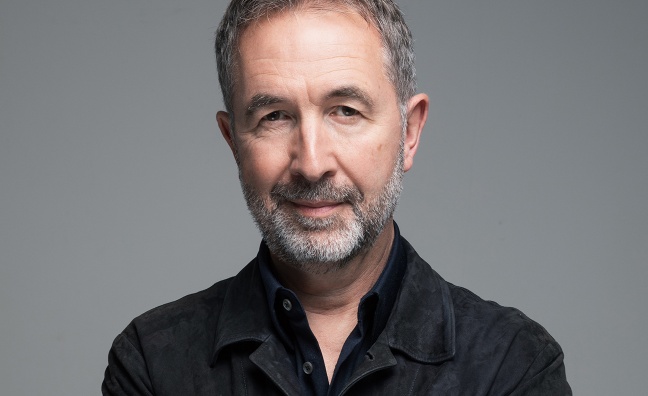
Quite simply, the UK music industry would not be where it is today without the tireless contributions of Ian McAndrew, who has had a hand in some of the biggest homegrown success stories of modern times. From Arctic Monkeys, Royal Blood and Fontaines DC, to his early wins with Travis, Tasmin Archer, Craig David and more, the managerial mastermind and CEO of Wildlife Entertainment has built a career that glitters like gold. And all that without mention of his pioneering work to stop ticket touting with the FanFair Alliance. In celebration of all he has achieved, McAndrew won The Strat at the Music Week Awards 2025 and, to mark the occasion, we joined him at his local to tell the story of a truly incredible career and to discuss management, industry politics and the value of independence…
WORDS: NIALL DOHERTY
PHOTOS: PAUL HARRIES
If there’s one thing that sums up Ian McAndrew’s approach to artist management, it’s the time when he decided he didn’t like his name being listed amongst the credits on his act’s record sleeves and decided that Wildlife Entertainment, the company he joined in 1989 and took ownership of two years later, should be there instead.
There are two major principles at the core of McAndrew’s management style. One is that a manager should operate in the shadows and at the side, never in the limelight. The other is that the whole operation is a team endeavour. “That’s why we just put Wildlife Entertainment on records,” he says. “It more honestly reflects the team spirit that I’m trying to encourage and promote. That’s how I look at it.”
It's a warm, sunny day in mid-April as McAndrew takes a seat in the pub garden of the Wildlife local in Parsons Green, west London. As the recipient of the prestigious Strat Award at this year’s Music Week Awards, there is currently cause for the affable, considered McAndrew to take an uncharacteristic step into the spotlight. He’s just come from the photo shoot to accompany our cover story and can’t recall having ever done one previously. For McAndrew, operating as the man behind the scenes is not a neat line to make himself look like some sort of mysterious Svengali – it’s been the MO that has guided him through four decades as one of the most successful managers in music.

Originally making a name for himself with the BRIT Award-winning singer-songwriter Tasmin Archer and platinum-selling acid-jazz crew The Brand New Heavies in the early ’90s, McAndrew has gone on to be the man pulling the strings behind some of the biggest indie-rock superstars of modern times, the humble architect helping guide Arctic Monkeys, Travis, Royal Blood, Fontaines DC and more to such huge success.
Winning the Strat, he beams, is a major honour.
“I was totally unprepared and surprised when the call came,” he says.
He sees it both as recognition for the sterling job the Wildlife team have been doing for years and for what’s coming next, but if he had to pinpoint a reason why he thinks the Strat is being bestowed on him, he thinks it would be because of the acts Wildlife has been able to attract and nurture over the past 30 years.
“It’s obviously about the artists, it’s about the longevity of their careers,” he says. “The thing that connects all Wildlife artists is their songwriting and the thing that I'm most interested in is the songwriting. When I think of Tasmin Archer or Alex Turner or Fran Healy, or Grian Chatten and Fontaines DC, the thing that they all share is an excellence in the craft of songwriting. That’s the foundation of Wildlife and what the success of the company has been based on and I like to feel that this award recognises that.”
Upon learning that he’d won the Strat, McAndrew promptly ordered Tony Stratton Smith’s memoir to find out more about the industry trailblazer that the award takes its name from. McAndrew likes reading about managers from the ’60s and ’70s, fascinated by what strong and fiercely-independent characters they were. He contrasts it with the way he thinks the music business needs to operate in 2025.
“It’s much more of a team-orientated business today,” he reasons. “There are so many different facets and things going on that you need to have skill sets in such a variety of different areas.”
The era of the lone genius, he states, is gone.
“To think you’re going to possess all those skills yourself is a little bit arrogant,” says McAndrew. “If you’re going to have a management business where you’re going to represent five or six artists, there’s not really any sense in trying to present yourself as a one-man operation. The whole benefit of having a team is that you're providing a much broader, more effective service to your clients and that's fundamentally the purpose of what it's all about. We're here to offer a very professional, comprehensive management service, and that's more effectively provided with a team.”
If McAndrew will take plaudits for anything, it’s that he is an expert at assembling a good crew.
“If I was going to give myself any credit whatsoever, it has been in identifying good people and bringing them together to operate as a team,” he ventures. “In a way, that’s what I feel my role is almost, and it’s not limited to the office and the management team, it’s also reflected in the hiring of tour personnel, tour managers, crew teams.”
Wildlife has always maintained a relatively small roster – as well as Arctic Monkeys, Royal Blood and Fontaines DC, their current line-up also includes Kae Tempest, Wunderhorse, Miles Kane, Isaac Gracie, Willie J Healey and The Last Shadow Puppets – but McAndrew says the number of staff has grown exponentially despite the amount of acts remaining the same.
“It’s reflective of the fact that managers do a lot more work now than we ever used to so we have to employ a lot more people,” he says. “We're covering things like the social media stuff and we’re very involved in the touring activity in a much more significant way.”
This year’s Strat Award winner has reinvented how managers of indie guitar bands and alt-rock acts need to function in the here and now and emerged as the cutting-edge, forward-thinking ringleader behind Wildlife’s monumental success. His work to fight secondary ticketing with the FanFair Alliance, which he helped launch in 2016, further proves his commitment to fighting for good.
“For the first time, there’s now a united belief that we’re going to put a cap on ticket resale,” he says, remarking on the progress the organisation has helped forge.
With that, it’s the time to look back over McAndrew’s triumphant career, survey the current landscape for musicians and managers and more.

Let's start with the Wildlife roster. What can you tell us about how it has come together over the years?
“Well, the thing about building any management business is that once you’ve attracted some key cornerstone clients, the next clients are easier to get, because they’re attracted to the idea that you’re building this pool of excellence. Once you’ve got some years behind you and you’ve demonstrated that you can have success with different kinds of artists, that helps, because it’s about building trust. What I’m most proud of, honestly, is that most of the artists that we’ve worked with at Wildlife started their careers at Wildlife, so Tasmin Archer, Travis, Craig David, Arctic Monkeys… they all were young when we first met them. It’s been really satisfying and rewarding on many levels to be involved in the long journey and career that those artists have enjoyed and continue to enjoy.”
You have extensive experience with young artists who have achieved significant success very quickly – what's the key to staying on top of that when it happens?
“The ones that most evidently spring to mind are Arctic Monkeys, who scored a big, massive hit with their debut release and debut album. Success also came very quickly to Royal Blood. When you have young artists like that, they are full of exuberance, they’re full of spirit, they’re full of ambition to make music and be creative and go out and do what they want to do, and as a manager you want to facilitate that but you also have to be prepared to say no a lot to certain things. You don’t want to saturate a situation, you don’t want to burn out, you’ve got to be measured.”
Arctic Monkeys always seemed to be very good at ring-fencing themselves from any outside interference…
“They were fantastic. They had a sort of self-governance which really equipped them brilliantly and continues to equip them. I think that’s reflected in the upbringing that they’ve enjoyed, the family upbringing that they’ve enjoyed, a very strong sense of who they are, and very strong relationships with each other as a group. It equipped them to deal with the massive, unimaginable amount of attention that they quickly received. How they were able to navigate that and deal with that is so commendable.”

Is there a particular moment you can pinpoint when you realised they were taking off in a big way?
“I think it was evident quite early on. My then-colleague Geoff [Barradale] and I used to go to small shows around the north of the country and you’d walk in and the place would be absolutely packed. The thing that was most evident about them was that the audience would all be singing the words to the songs. Everyone knew every word of every song, and that was kind of remarkable. There was such a strong and palpable connection between the audience and the band. It was electric. You just knew there was something really important going on.”
Looking further back, you joined Wildlife in 1989 and had your first flush of success with Tasmin Archer and her hit Sleeping Satellite. What did you learn from that period?
“It totally highlighted the power of radio at that time. Radio was key and the success of that record was driven by trying to harness the support of radio stations around the country, regional radio and national radio. That was the strategy that led to the chart success and her success. The live thing followed, it didn’t precede it. It was driven by radio. Craig David, years later, similarly was driven by the radio thing. Bands like Arctic Monkeys, or more recently Fontaines DC or Wunderhorse, it’s not been driven by radio. It’s driven by live connection, by fans.”
Speaking of Fontaines DC, they have broken through impressively, and had the biggest-selling new independent record of last year in Romance. What do you think is the main reason for that success?
“It fundamentally comes back to the basics, which is a very defined and unique songwriting style, a band that shows great conviction and belief, great performance, a great live act. You go and see them play live, it’s an undeniably exciting band to watch, [they have] all the ingredients you need to build a career.”
You must have seen the same qualities in Travis, who you enjoyed a long relationship with. What are your main memories of the success of their second record The Man Who?
“I’ve got to give credit in terms of the huge sales success of that record to Andy Macdonald because he’d started Independiente and Travis were really his first major signing to the label. We signed to Andy before he’d even established the label and it was a great leap of faith for him and us to get together because there were lots of labels then that were interested in the group. He was very bold in a marketing sense, spending money in the support and marketing of that record and it just kept getting to No.1. It kept going back to the top of the charts. It was a very dominant album, selling lots and lots of records. It was an amazing time.”
What’s it like for you at that moment where your artist is blowing up big? What’s going through your mind?
“You get a bit protective, a bit paternal, you get a little protective feeling that grows inside you, that you need to take care of this situation. That responsibility grows once you start seeing success like that. Touring, which inevitably follows, exerts a great deal of pressure, that treadmill of activity. The biggest concern then at that point is the welfare of the people, welfare of the band, also the welfare of the crew and the team around the band. Everyone deals with things differently and you’ve got to accommodate those differences and those tolerances in the style and decisions you make as a manager about how you’re going to move things forward.”
The discussion around mental health and wellbeing in music has progressed notably in recent years. Has it changed how Wildlife goes about things?
“There’s a higher sensitivity to recognising issues before they become too serious and maybe there’s more pre-emptive action or pre-emptive measures that you consider. It’s also just keeping an eye on things. Some bands thrive playing live and enjoy it and actually, some of the problems start when they stop, not when they’re doing it. When it ends, it can be a little bit discombobulating when you go back to civilian life. I think that can be where issues present themselves more so you’ve got to be aware of all that stuff. There’s a lot greater sensitivity today than there ever has been.”

With a few exceptions, most of your artists have been on independent labels. Why’s that been such a big part of your career?
“I think in my early experiences, maybe with Tasmin with EMI Records, I couldn’t help but recognise the political nature of big labels. Lots and lots of people, lots of artists, there was definitely a priority system within the label’s structure, where those artists that offer the best chance of success get the support and perhaps those a little bit on the fringes don’t. That always made me a little bit anxious about the prospects of success on major labels. I’ve always preferred the more boutique situation where you’re just a bigger fish in a smaller ocean-type mentality.
“Clearly, there’s obviously pros and cons to that. Sometimes there’s a lack of investment, or there can be a lack of resources. That certainly wasn’t the case with Independiente. We’ve had a fantastic relationship with Domino with the Monkeys over a long career, which has been absolutely amazing, as well as Partisan and more recently Beggars and XL Recordings with Fontaines. There is something slightly more satisfying in having success with an independent label because you are an underdog in a way. You’re not supposed to have big success on independent labels.”
You took a different route with Royal Blood, who signed with Warner. What was the reason behind that choice?
“Fundamentally, it relies on enthusiasm. In the case of Royal Blood, Warner were just super-duper enthusiastic. And Max Lousada demonstrated great commitment and gave us a lot of freedom to do what we wanted to do. It felt like it was absolutely the right decision. I’ve enjoyed working with Warner.”
Have you ever considered setting up a fully-fledged Wildlife label?
“We’ve often talked about it. Over the last eight or nine years, I’ve been joined by my close friend and colleague Emma Greengrass and Emma has been a hugely important part of the team at Wildlife. We’ve often spoken about, ‘Should we migrate to become a label?’ There was a point where we had Fontaines, Arctic Monkeys, Royal Blood all out of contract and it offered us an opportunity to think, ‘Well, we could now set up Wildlife Records.’ We were tempted and attracted to the possibilities but then it comes back to a fundamental managerial mindset, which is that we’re not rights owners here, we are representatives of the group. Our focus is management. That’s what I love. That’s what I know. It’s what we’re about.”
What are your thoughts on the current landscape for breaking bands?
“It’s very challenging. It’s never been easy breaking a band but it feels harder now than it ever has done. There isn’t the kind of obvious media platforms that historically you would start with. For example, weekly music magazines were always the starting point, you got some chatter going within that community and then you moved on from there and radio was very much a discovery thing at that point and you had commentators that would be talking about new bands and new music. You don’t really have that now. Now, it’s all very much reliant on social media, which is a platform on which people can create user-generated content and share their favourite music but there’s much more an abundance of stuff to get through.”
And what do you think is the biggest challenge facing managers today?
“The economics of the business are very challenging. There’s not the level of investment available for emerging artists that there once was, getting the support to tour and do all those sorts of things that we used to do is much harder. There’s not the same level of investment resources and that falls on managers more and more now. You always figure out ways, ‘How can we support the artist financially to help them do what they need to do?’. Economic freedom and financial independence doesn’t happen artistically until you’re quite some way down the road. It can be many years before that opportunity presents itself so you’ve got to figure out ways that you can continue to support an artist while still creating good things, good imagery, good music.”
Do you see enough young managers coming through?
“There are some terrific young managers. The MMF have done an amazing job. Under Annabella Coldrick’s leadership, it’s grown into an organisation which is providing fantastic resources, support, community, connections, education and consequently there’s a better calibre of young managers today than I think there’s ever been. They’re better equipped, they’re more informed, they’ve got the correct values, there’s a greater professionalism. I’m always very keen to meet young managers and to learn about what they’re doing, to talk about their artists and what they’re doing and what challenges they face.”
Beyond management, you were involved in setting up the FanFair Alliance. How do you reflect on the work it has been able to do so far?
“I’m hugely impressed with the work that Adam Webb has done in bringing that organisation forward. I think the measures adopted in Ireland, where they banned resale, have demonstrated what a transformative effect that’s had on the live industry. The consultation paper is offering recommendations that we were making in 2009, it’s the same. It’s a cap. There’s a 10% cap on resale to do away with the profiteering and the terrible, quite corrupt practices are going on in the ticketing sector and it’s an effort to completely reform that. It’s been frustrating but I’m more confident than I have been, maybe because we’re with the Labour government, possibly that there’s a more empathetic and sympathetic ear now in Westminster. I’m hugely proud of everything that FanFair Alliance has done. I’m really pleased to be part of it.”
What else do you think the industry really needs to address?
“There’s so many little things that bother me. The practice of multiple formats, all the zillions of formats that artists release, this old shark game that we play where there’ll be so many different versions of an album, a blue one, a black one, a green one... This idea of inducing fans to buy the same record multiple times in order to achieve a good first week chart position, that whole practice isn’t thinking about the consumer, it’s thinking about the chart position. I’ve been banging on about this for ages, saying we’ve got to stop this nonsense. It gives an unfair advantage to those artists and labels that are prepared to create and produce so many different formats of a record. It’s not environmentally sound, it’s not ethically sound. It’s a marketing game that has got a bit out of hand. I’d like to see the charts review the eligibility of all these different formats and restrict it to maybe two or three album formats.”

Where do you stand on the state of the grassroots scene in the UK at the moment?
“Rightly, there’s great support for grassroots venues. Independent Venue Week and the Music Venue Trust are organisations I hugely respect and support. We need these venues. Truthfully, it’s the scene that supports the venues in it as much as the venues themselves, and there is a new scene growing again of great guitar and live bands, and people are interested in going out to see them again. Covid had a massive detrimental impact on the live business and there’s been a great lull in signing alternative guitar bands, but there are positive signs that there’s an emergence of great guitar music and I’ve definitely sensed that there's a real enthusiasm and appetite for labels to get involved in it again – that's reflected in more new bands getting signed now than ever. That’s going to help grassroots venues because we’re going to start seeing another culture develop around them that we experienced ourselves back in the ’90s and early 2000s. In the interim, giving help to venues, whether it be in the form of an amount of money on tickets, is something I support. There’s been a lot of debate about whether it should be effectively a subsidy that is applied. I think we see that happen in other countries, in France for example. I think it’s important that we help subsidise and maintain grassroots music venues in the UK.”
Finally, what does the future hold for you and Wildlife?
“Well, the only thing I did feel a little uneasy about with the Strat was that there’s a suggestion that awards like this represent some kind of Lifetime Achievement thing. It dawned on me, ‘Oh, I’ve got to that point, I’m that guy’ and I certainly feel myself and Wildlife are becoming like a fine vintage wine. We’re just getting to being a really great drinking age and I think this is the point where we’re really firing on all cylinders. I certainly don’t see this as the conclusion of something. It’s a fantastic recognition but I think it’s a recognition of the team. It has to be if I’m going to adopt a team spirit.”