Unit1 Studio, an independent producer of immersive concerts, launched last year with big plans for the sector.
The company said it has pioneered new developments in VFX and AI-enhanced CGI that will bring down costs and speed up the production schedule.
Unit1 will partner with promoters and venue owners to present and host avatar concerts.
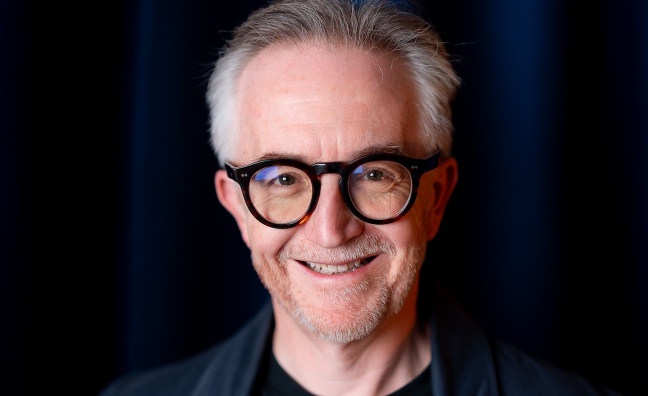
Chief exec Barney Wragg is a former CEO of Andrew Lloyd Webber’s Really Useful Group (now LW Entertainment).
London-based Unit1 Studio launched with a KT Tunstall avatar – an artist Wragg worked with previously at EMI – as a showcase for its technical capabilities.
“Nothing is ‘real’, everything on the screen is a synthesised, three-dimensional model,” Wragg said of the lifelike avatar of the singer-songwriter.
Here, amid huge excitement about the technology, Wragg tells Music Week about the huge potential to expand the nascent market in avatar-based concerts….
The main opportunity for this technology appears to be working with estates of artists and bands who are no longer touring. Are there any other areas?
“I think the biggest commercial opportunity is people who are no longer touring. That's where we see the majority of interest in what we're doing. As a result of doing this with KT, we've had early stage conversations where [active touring acts] are going, ‘there are geographies that we can't tour in and there's fans in these markets’. So I think there is an opportunity for that where people can go down and have that live experience, or the closest thing you can get to a live experience. But that's a new and embryonic part of what we're doing. The bigger part of it is really those non-touring acts. That's where we expect to see the majority of the business.”
What are the challenges creatively and financially for avatar-based productions?
“When I worked for Andrew Lloyd Webber, you became acutely aware of the economic challenges of staging these big new theatrical productions. So if you look at a Broadway show now, it's probably a $30-35 million risk that you're putting on there. The challenge is you've got to have an understanding of your artist, and you've got to have a story that's going to allow you to get access to the capital to make those shows happen. The old rule of thumb for Broadway and for West End live shows was that you need to be able to reasonably have a plan that says, within a year, at 70% attendance this show can break even, so that somebody who's investing in it can take a view of the risk. That’s a sensible amount of audience [threshold] and thereafter, if the show runs into year two, year three, and so forth, you’re into profit and making money back.
“That's been our guiding light in this. Your next challenge is, how do you build a business that can holistically create that immersive experience that seamlessly binds together what's on screen with what is in the environment, and that works with the artists. So we have taken a view that we are producers, and when we engage with artists, we engage with their team. Most of the artists that we're talking to, major legacy artists, have got lighting designers, set designers, costume designers, sound designers and tour managers who've been with them in some cases for decades. And those people have a real understanding of what an audience wants, how it's got to work, what the artist wants. So we really see ourselves as this conduit between the world that [an artist] might have been in for the last 20 or 30 years of touring, now becoming this immersive avatar-type show. It's a big creative, technical and commercial challenge. There’s a lot of work to do but that’s our USP.”
There's no limit to what we can do, where we can go. In conversations that we're having with artists, some of them have got some really interesting ideas
Barney Wragg
How significant do you think the opportunities are in this immersive space for music?
“It's massive. And if you think about what's happened in the last 10 years with catalogue values because of passive income, where we're seeing these mega deals for masters, publishing and name and likeness rights – this is another form of passive income. Once the show's created, it's not like being on the road, it's just going to sit there. It's like theatre, except it's even more passive than theatre. So these are hundreds of millions of dollars of opportunities here to do these shows. If you just look at ABBA with one venue, $2 million a week is an astounding amount of money for them to be grossing.”
What about the costs for these projects?
“What we're doing is saying, actually, let's solve that problem for the beginning and then you're into profit much more quickly, which is enormously beneficial for the artist and the rights-holders. And then it makes sense for investors to come on board to support those shows.”
How do you expect this new area of the business to grow in the coming years?
“It's going to take time, but this is going to become something that becomes a lot more commonplace. We're already at a point where our technology allows us to move into much smaller venues [under] 800 seats, which means your overall cost is lower. So that starts to open it up to other types of shows you can do. You can't help but be a music fan in this business, and everybody you talk to has got a gig they wish they had been to. Then you start to get into classic jazz shows, shows from smaller acts. Those things start to become a possibility, as well as the big stadium-selling, arena-selling acts that you immediately think of.
“It's interesting how streaming has changed people's engagement with music, and the amount of catalogue that younger demographics [consume]. It's a place for them to be able to discover an artist that was maybe born decades before them, and then find a way to engage with them in live [avatar-based performance] as well as just listening to the stuff.”
Finally, how important has ABBA Voyage been in this area – and can you go beyond a traditional concert-style performance with this technology?
“What those guys did, the forward-looking risk that they were prepared to take to put that show on, is astounding, and that's opened a series of doors. What we've done is take that forward, I think, to make it more commercially viable. I think in terms of what ABBA did, it really is a game-changer and I really do take my hat off to them. In terms of where you can go with this, I mean people talk about time travel tourism. There's no limit to what we can do, where we can go. In conversations that we're having with artists, some of them have got some really interesting ideas. We're not constrained by the laws of physics in the same way that you are when you have to try and get everything into a truck at the end of the night.”
 FOLLOW