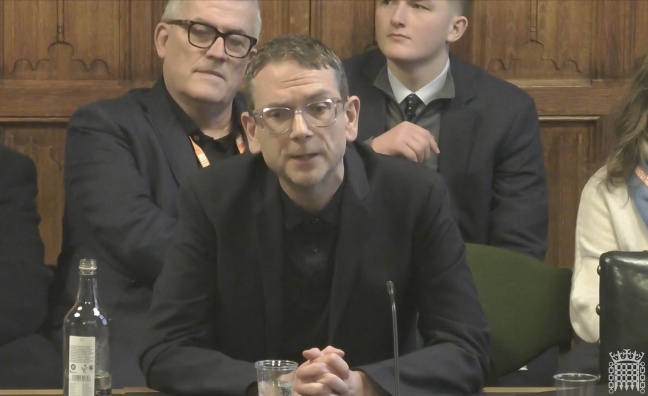
Ticketmaster UK MD Andrew Parsons has defended dynamic pricing during a select committee hearing in Parliament.
The Business and Trade Select Committee hearing coincides with the ongoing consultation into secondary ticketing, which is also seeking evidence around dynamic pricing.
It follows controversy around the use of the model on the Oasis UK tour, which some fans claimed had meant they paid significantly more than anticipated for tickets at checkout – up to around £350 per ticket, more than double what they had expected. Ticketmaster does not set those prices, which are determined by artist teams and the promoter.
Asked by committee chair Liam Byrne MP if Ticketmaster was “basically ripping off fans”, Parsons denied that was the case.
“No, I don’t believe so,” he told MPs. “The services that we provide, we work closely with event organisers to be able to sell tickets at the prices that they have determined in advance, after lots of consideration, lots of thought, I don’t think anybody should think that anyone – be it an artist, event organiser, theatre show, whatever that may be – hasn’t gone into that without a tremendous amount of thought as to what that price may be.
“It’s obviously one of the great levers that they have in terms of being able to sell tickets and make sure that they are able to fill the rooms that they need to. And they are also very much invested in the long-term careers of artists to ensure that they can go on touring, on the road, where they make a majority of their money now, where that would have [once] been from recordings. So I think a lot of thought goes into it and, in the main, they are very fairly priced.”
Byrne cited examples of fans paying more than they expected at the checkout for a show by Harry Styles – describing it as a “bait and switch”.
However, Parsons challenged the “illusion” that dynamic pricing meant fans were paying a different price during the online checkout process. He denied that Ticketmaster technology was reacting to the market for tickets as they went on sale on their platform.
“We don’t change prices in any automated or algorithmic way,” Parsons told MPs. “Prices are set in advance with event organisers and their teams at the prices that they want them to be available. I think in certain instances, because of that fact, some of the cheaper tickets which may be available will inevitably sell through most quickly, meaning that the tickets that the fans see at a later date will be at a higher price, which can give the illusion that those tickets have changed price. But they have not – we can be very clear that there’s no technology that’s driving any price change. The price that you see on the Ticketmaster website is the price that the event organiser wanted that to be, including all fees, and that’s the only price that we will ever display.”
We can be very clear that there’s no technology that’s driving any price change
Andrew Parsons
Pressed on the examples of fans complaining about the expected price of tickets increasing at the online checkout, Parsons responded: “It’s very, very rare that a price would change during an on-sale.”
Amid the row over the Oasis tour, which prompted the government to add dynamic pricing to its secondary market consultation, it was often overlooked that dynamic pricing is used to reduce prices in order to help boost demand for unsold tickets for certain tours.
“In most instances where prices do change – because they will over the life cycle of an event – they actually tend to go downwards rather than up, as whichever event it may be needs to ensure that the event is selling through at the rate that they would need,” Parson explained.
“I very much understand why we are here and why there is the interest in those top level prices, and which do capture so much of the headlines,” he added. “They are a small minority of the shows that we are selling. In fact, some research does show that around 75% of the tickets that we are selling at the moment overall are under £35. So I think it would be misleading to take the view from this that in some way all tickets are overpriced.”
He also noted that 90% of shows sold via Ticketmaster do not sell out.
When Byrne presented evidence of Lana Del Rey tickets that cost between 2.5 and four times the lowest price, Parsons defended the different tiers of ticket prices set in advance.
“There’s plenty of evidence to suggest that if we’re not able to be capturing that value, which the artist is doing in those instances, then the money is going to go and those tickets are going to be captured and gobbled up by touts and made available on resale sites, within minutes of an on-sale in many instances,” he told MPs. “And when that happens, it’s bad for fans: it’s continuing to build out this secondary business, which makes no input back into the creative industries and that nobody benefits from. And we think it’s absolutely right that artists should be able to price a small amount of the tickets at a higher price to keep overall prices down, and to be able to capture some of that value away from the secondary market.”
Parsons also welcomed the secondary ticketing consultation.
“We are greatly encouraged that the government has elected to take on this issue,” he said.
However, with the consultation seeking views on secondary ticket parameters with a resale uplift of up to 30%, he added: "30% still gives the opportunity for touts to be able to be running a business in that manner".
He stressed that the secondary market is “different” to questions over dynamic pricing. He referred MPs to “highly dubious” paid listings on search engines that purport to be a legitimate seller at prices that are not the set price.
“The resale sites are occupying the top of Google, they are dragging consumers directly in without any knowledge they are not even the primary seller in most instances,” he said.
While Parsons gave a robust defence of Ticketmaster’s integrity and the operation of the platform, he faced further questions about fees on tickets – with Byrne highlighting concerns raised by The Cure’s Robert Smith and Neil Young.
“All I can say to that is that all of our fees are absolutely clear right the way from the outset, as they obviously should be, and that there are no surprises in that regard,” insisted Parsons, who said their average fee was 11% of the face value.
He noted that Ticketmaster doesn’t retain all of the fee base, part of which can include other elements such as venue facility fees.
“I think the fee base within the market is very reasonable,” he said.
 FOLLOW