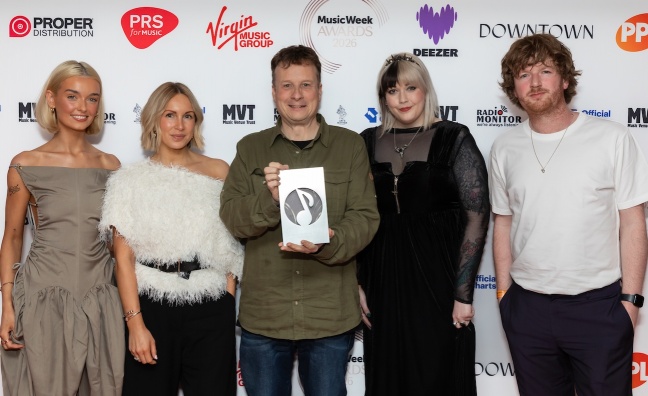
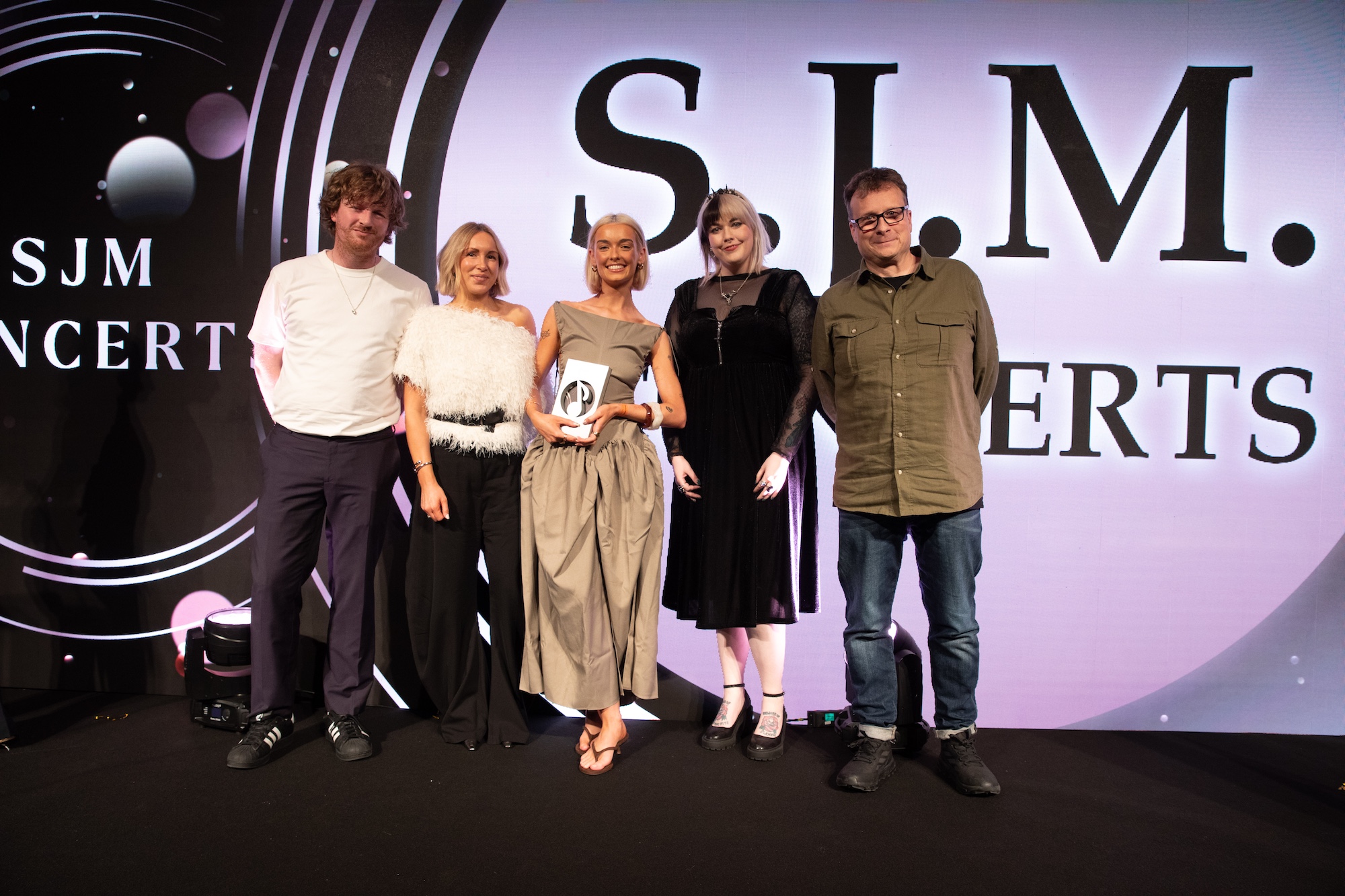
SJM retained their Live Music Promoter title at the Music Week Awards 2026.
It followed an incredible year with a culturally defining reunion for Oasis and a then record-breaking Wembley Stadium run for Coldplay.
At a time when so-called ‘blue dot fever’ has become an industry talking point amid a series of tour cancellations in the US, SJM promoter and director Matt Woolliscroft tells Music Week that’s not affecting business for them in the UK…
What was it like working on the Oasis reunion tour?
“Exhausting, exciting, amazing, terrifying! But ultimately, the shows spoke for themselves. It's not the biggest tour we've ever worked on, but in terms of impact and noise, it's the biggest thing we have ever, or will ever, work on I think.”
Can you describe the experience of being at the heart of the Oasis Live ’25 tour?
“Really positive. Once we were up and running, once people understood what it was – really in the first five minutes in Cardiff, it just became clear how good it was going to be, how much people had waited for it, how much excitement there was. I think everybody who was really involved with it closely, including probably the people on the stage, didn’t know [what to expect]. I knew it was going to be good; I didn’t think it was going to be that good. I didn't think people were going to be crying in their seats as they were watching the show. But that's what happened.”
Is it different when you work on something that you know is likely to be a one-off?
“No, because I'd like to think that, for all the staff that work for SJM and the people involved in shows, different shows and different artists can do amazing things. We are a cog in the machine of making amazing things happen. The audience reaction to Oasis was very amplified and very overwhelming. But you get that on lots of concerts, lots of different genres and lots of different artists”
How did it feel breaking a record with Coldplay at Wembley Stadium last summer, albeit with Harry Styles set to break it again in 2026?
“That was amazing, because I think they left a lot of tickets on the table. They did 10 [shows], but they did 10 very, very easily. And they are brilliant at what they do. Their shows are amazing at every level. They've developed and grown as a band, and they do so every time they tour, it seems. They work really hard and they really care about what they deliver.”
It appears that the top end of the market is doing well. What would you say, overall, about the health of the live business in the UK?
“It is generally pretty decent. But as always, if you over-price something it won't necessarily sell. If you over-book something, people won't necessarily come back. I know there's been a bit of press recently about tours not doing well, particularly in America, but generally business is pretty decent for us. We've just had The Prodigy tour – and we had their music on as we walked up [to collect the award]. That's their biggest tour they've ever done. They've sold more tickets, more quickly, playing to more people than they've ever done in their career, which is not bad going for 35 years in. James Arthur, at a completely different end of the market, just did his biggest tour he's ever done as well, and he's at 10 years-plus into his career.”
Is there a greater interest in residencies with artists just focusing on a few cities for touring schedules?
“That's obviously what a lot of people are doing. I think it is something that's happening at the moment, possibly reflective of the exceptional facilities like The O2, Co-op Live, Wembley Stadium, which means that artists do like to do that. The economics of touring means it is – self-evidently – more cost effective. But I wouldn't say it's a long-term trend that I think is here to stay.”
It worked extremely well for Radiohead’s global tour at the end of last year…
“Yeah, it was just how they wanted to tour. They don't do very much at all, and that's how they wanted to present it. You know, doing it like that gives artists a lot of control over the presentation of the show, which varies from artist to artist in terms of how important that is. But for them, that was really important. Somebody else [at SJM] worked on that one, but everyone who saw it just said it was another level of show.”
And it must have felt good for Radiohead to break an attendance record at The O2?
“Yes, and to break it every night! So each night, they got more people in. It's pretty exciting to do that, to be honest. Radiohead have got very good people who work for them and they manage the production”
Do you think other acts will break the record with a similar configuration?
“Other people have done [The O2] in the round. I think the nature of the demand for Radiohead means that it's going to be pretty difficult to beat that record. Maybe a solo artist on the stage in the middle of The O2 – if Bruce Springsteen did it acoustic, you might have a crack.”
What have you got coming up this summer that you're particularly excited about?
“Take That, Foo Fighters, three nights of My Chemical Romance at Wembley, Robyn at The O2. Also, the Wythenshawe Park shows we do with Live Nation and Parklife, Alexandra Palace Park, the Castlefield Bowl shows, Sounds Of The City In Leeds... It's a consistent year – last year was an insane year!”
PHOTOS: Renni Panner/Paul Harries
 FOLLOW