To mark its 25th anniversary, Music Beyond Mainstream has unveiled its new touring programme for 2026 drawing on a range of international talent.
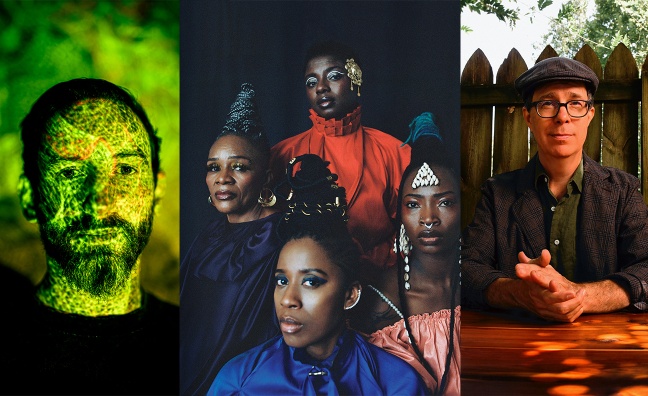
The season features electronic music pioneer Max Cooper, Arooj Aftab performing with the London Contemporary Orchestra, African Soul Rebels bringing together Amazones d’Afrique and Gasper Nali, and singer-songwriter Ben Folds.
The organisation said it was aiming for “a landmark year of innovative, genre-defying performances”.
Founded in 2001, Music Beyond Mainstream (MBM) is a network of 11 of the UK’s leading concert halls, dedicated to showcasing diverse artists, voices and experiences from around the world. Over the years, the network has welcomed artists including Anoushka Shankar, John Grant, Richard Hawley, Jerry Dammers, Tony Allen and Paloma Faith.
The network includes Brighton Dome, Poole Lighthouse, Bristol Beacon, Warwick Arts Centre, Basingstoke Anvil, Birmingham Town Hall, Gateshead Glasshouse, Liverpool Philharmonic Hall, Edinburgh Usher Hall, Manchester Bridgewater Hall and Nottingham Royal Concert Hall.
Here, Tamsin Austin (director of Fire Station Sunderland and a founder and independent director of MBM) and Richard Haswell (head of programme at Liverpool Philharmonic) reflect on the achievements of the venue network, share its unique ethos and look ahead to the anniversary line-up…
Music Beyond Mainstream is marking its 25th anniversary. What are the origins of the organisation?
RH: “Around the turn of the century a number of people moved into key roles in concert halls from arts centre and festival backgrounds, keen to take more control of their programmes and to deliver some more diverse and interesting programming into their venues. This thinking became the basis of MBM; quite simply a group of like-minded venue programmers who were meeting regularly at conferences and festivals and conscious that we were all seeing lots of work that never toured outside of London. We decided we wanted to create a circuit for that work and to produce new projects and add an expanded curated element to our respective programmes.”
TA: “In 1999 I was working behind the scenes developing programming for the yet-to-be-opened Sage Gateshead, now The Glasshouse. I spent a lot of time calling agents, promoters and other venues, picking brains on how to get the best breadth of programming at scale in a major venue. It struck me that there was often little control over the quantity or quality of activity coming into a venue and it was also clearly very difficult to land great artists to appear in your venue for your city. So, I decided to see if I could make some changes to this. I have since spent a lot of my working life developing relationships with agents, artists and promoters and believe in building strong promoting divisions in venues. Finding a group of like-minded people and venues became key to this thinking and to the foundations of MBM.”
RH: “Embracing the ethos is fundamental to membership – that’s why some of the venues are not necessarily the obvious choices. Basingstoke Anvil and Poole Lighthouse for example have been unrelenting in their support right from the start – and it has meant those venues have taken some programme risks that have not only raised some eyebrows but also added some great – and unexpected – shows for the towns.”
How will MBM be marking the anniversary this year? Will there be any specific birthday events?
TA: “We are delighted with the four tours that are out on the road this year. After a bit of hiatus after Covid where so many of our member venues were only focused on surviving, it is brilliant to see live music thriving again, and with that, some incredible tours out on the road with some really interesting artists making really great work. So, these will be a cause for celebration for us. Beyond that, we normally get together at Christmas for a good knees-up and a few drinks, so we’ll likely be doing our celebrating once this tranche of tours are over.”
RH: “We’re really excited to have MBM-produced tours back on the road – that’s a celebration in itself!”
Music Beyond Mainstream has definitely played a role in increasing UK audiences’ exposure to global music over the last 25 years
Tamsin Austin
What is the ethos behind MBM and the shows under its banner?
TA: “One of the driving forces behind MBM tours is to support artists to make great projects and collaborations happen that might not have happened otherwise, or been a struggle to make work as part of a commercial tour. They are often projects that fall outside of artists' recording and touring cycles and are instead special projects that are commissioned, sometimes with additional financial support or are supported independently by the member venues themselves.”
RH: “Over the years, we have worked with some incredible artists like Paloma Faith when she collaborated with jazz and big band leader Guy Barker on the Symphonic Grace tour. with. We produced and toured several tours under the African Soul Rebels banner featuring standout artists like Tinariwen, Amadou and Mariam, Baaba Maal and Femi Kuti. Early on we were particularly happy with a tour with the Gotan Project, which did very well – that really felt like we were pushing the boundaries of possibility for our types of venue.”
TA: “We have also worked with soul queens like Mavis Staples, New Orlean’s jazz greats who have since passed like Allen Toussaint. Two personal favourites were a wonderful tour paying homage to the music of the late Sandy Denny which featured incredible singers including Maddy Prior, PP Arnold and Joan Wasser, aka Joan As Police Woman, and a fabulous tour with John Grant, where we commissioned orchestral arrangements of material from his beloved Queen of Denmark and Pale Green Ghosts albums and toured with Royal Northern Sinfonia.”
RH: “The forthcoming tour with Max Cooper is a great example. An electronic music show is not an obvious choice for primary seated venues, but we have worked closely with his team right from the start. It’s a totally immersive experience that we’re sure will be great and bring a whole new audience for both the artist and the venues. We’re also delighted to be reviving the African Soul Rebels brand with a new tour headlined by Les Amazones D’Afrique.”
What do the venues within the network share in terms of their approach to programming concerts and the types of artists? Do you partner with any international venues as part of your work?
TA: “The main requirement to become a member venue is to have a very proactive approach to programming and promoting. Our members are not just diary managing, they are actively seeking out high-quality artists to play at their venues and to bring world-class performances to their city and audiences. Member venues are expected to play an active role in looking for opportunities and making connections with artists and agents and broker relationships.”
RH: “We don’t have a formal relationship with international venues, however many of our member venues are connected to international venues through other networks and it is sometimes through these networks that ideas can develop. As always with the music industry, it is usually that conversation in the bar at 3am at a festival or conference that 18 months later comes to fruition as a tour.”
Who do you collaborate with to bring international artists to the venues?
TA: “MBM is the producer and the relationship is with the agent and the artist. The member venues are the promoters and take the risk on the shows. We do of course collaborate with other promoters and non-member venues, and some projects do tour to other non-member venues, like the Ben Folds tour for example where Serious are promoting the London date.”
RH: “Clearly some artists have existing relationships with promoters which are upheld and respected so sometimes collaboration is needed to get the best result for the tour and the artist. MBM aims to enable special projects to reach more regions in the UK and not interfere with mainstream recording/touring cycles – we’re not in competition with anyone; it’s about making new things happen. Our unsung heroes have been our general managers – for many years Alistair Wilkinson, and now Sue Collier, who is doing a great job.”
The forthcoming tour with Max Cooper is a totally immersive experience that we’re sure will bring a whole new audience for both the artist and the venues
Richard Haswell
Can you mention any highlights from the last 25 years? Has MBM been key to helping bring any artists, genres or influences to the stage in the UK?
TA: MBM has definitely played a role in increasing UK audiences’ exposure to global music over the last 25 years. We rode the early resurgence of Latin American music in the early 2000s for example and were instrumental in bringing a lot of music from the African diaspora during the 2000s, touring major artists such as Hugh Masekela and the Mahotella Queens, Oumou Sangare and Salif Keita, to wider UK audiences.”
RH: “MBM has also never been afraid to experiment with pushing the boundaries, particularly with cinema and live music. This included us presenting Jessica Curry’s video game score Dear Esther in a live context, touring Pere Ubu performing their own score to a 1953 classic sci-fi film, It Came from Outer Space, and new film works to accompany Tindersticks’ The Waiting Room album. We’ve always enjoyed bringing diverse music to bigger stages in the UK and making someone’s crazy idea happen… at scale!”
What are you excited about in the latest season of shows? And in particular what are your expectations for the Ben Folds Paper Airplane Request Tour?
RH: Rob Challice at what was then Coda – then Paradigm, now The Team – was a very early supporter of the network and really got what we were trying to do – our very first tour was Orchestra Baobab, which we produced with him. So, it’s great that 25 years on he still wants to work with us as we have been able to collaborate on the Ben Folds tour. Our expectations of that one are quite simple – great shows, different every night – and full houses!”
How challenging is it for venues within the network at a time of rising costs? Do you have any funding support?
RH: “The model for the network is a mixed economy – some tours are wholly commercial; others have needed Arts Council support to be viable. Over the years we have had a fair degree of success with that funding. The forthcoming tour with Arooj Aftab and the London Contemporary Orchestra is a case in point; no one could make that work fully commercially.”
TA: “Touring work with public funding does bring its own challenges – the expectations of funders for education work and audience development are high. That can lead to some challenging conversations with agents and artists – it can be a different language – but we always get there in the end.”
Have you had broadcast partnerships to air performances or is that a possibility?
TA: “We have a great new relationship with BBC Introducing and are excited to be working with them to programme the support artists for this tour. We also have interest from BBC Radio 3 for some broadcast opportunities around this tranche of tours.”
RH: “We’re always open to more!”
How can MBM develop and grow further in the years ahead?
TA: “MBM is an incredible peer-to-peer venues network. We have all learned an enormous amount from colleagues across the network and made some great friends and this is one of the reasons the membership has remained so stable over the years. It is hard work leading venues. We all face our own challenges, but it is so useful to have a ‘phone a friend’ on hand when negotiating a tricky show or facing a difficult situation operationally or financially.”
RH: “We are all very focused on delivering the best programmes we can for our cities and venues and many of us have spent our careers carving out this path. We all love making great events happen and MBM has been a great way for a new generation of venue leaders to cut their teeth and gain support from across the network. All of us are delighted we have survived Covid and have four tours back out on the road.”
TA: “We’re also excited for the next generation of venue-based programmers and promoters who will benefit from being involved in this network, learning how to navigate and thrive within the music industry that we all love.”
PHOTO: (L-R) Max Cooper (credit: Ella Mitchell), Les Amazones D’Afrique (credit: Karen Paulina Biswell) and Ben Folds
 FOLLOW