Should the live music sector follow the example of football by giving fans a bigger say?
That’s the conclusion of a fan-led review of live and electronic music published today (April 17) by the Culture, Media and Sport (CMS) Committee of MPs.
The report calls for music fans to be given more representation in policy, consumer rights and decision-making with the establishment of a government and industry-backed Music Fans Association.
The recommendation for the new body, similar to that representing football supporters, follows almost a year of engagement across the country with music fans and industry stakeholders. The independent review was established with the aim of improving the sustainability of grassroots music and safeguarding the success of the wider UK music industry.
The review draws inspiration from fan-led reviews in football, including Dame Tracey Crouch’s review of football governance and Karen Carney’s review of Women's Football. The Independent Football Regulator (IFR) was established last year to protect and promote the sustainability of English football, for the benefit of fans and the local communities.
According to the fan-led review, the government should provide initial seed funding for a Music Fans Association, with the music industry taking on the role of long-term funding partners.
A national body representing fans could also take the lead on engaging with stakeholders across the live and electronic music industry, local authority music boards, devolved and UK government to assess progress on Fans’ Charter recommendations.
According to the report, many fans want to have greater representation at the national level, either an ombudsman or trade body. Such a body could work like the Football Supporters’ Association (FSA), which is funded by English professional football.
“It could help to enable greater representation in live and electronic music policy and decision-making across a range of challenges that affect fans and on which they can offer their insights to the industry and policymakers,” stated the report.
A respondent to the review said: “This fan-led review is really important but there should be a trade body that represents fans. Fans should have a seat at the table and be represented alongside artists, venues, record industry and songwriters. A collective voice for fans is more important than ever and – music like football fan associations – consumer rights and legislation is not protecting fans from predatory practices by hugely profitable corporations.”
The publication coincides with the US court jury’s verdict on monopoly practices by Live Nation and its ticketing company Ticketmasters. It also follows regulatory investigations into secondary ticketing and dynamic pricing in the UK.
“For fans, live music is more than a consumer choice, it is a way of life,” stated the report. “Although the wider economic value of music is important to them, they also want to support the local artists and the independent venues that are a cornerstone of their communities.”
The review, which was chaired by former MP and musician Lord Brennan of Canton, calls on all those with an interest in the sustainability of live and electronic music to commit to a new Fans’ Charter. It sets out nearly 50 recommendations under seven key principles of celebration, ticketing, grassroots, safety, accessibility, transport and voice.
Key recommendations range from those for the government to implement, such as introducing legislation to ban the resale of tickets above face value, through to practical suggestions aimed at improving the experiences of fans at large and small venues, such as ensuring the provision of drinking water and the availability of ear plugs.
The review also calls for the UK government to embed the ‘agent of change’ principle in planning legislation in England. This would ensure that when new homes are built near music venues the responsibility to ensure that noise is not a problem would fall on the builder rather than the venue.
Other measures to support the grassroots sector include a mandatory levy on large events if the current voluntary system proves inadequate; large venue contracts allowing artists to perform in smaller venues to strengthen local scenes; local authorities to encourage temporary repurposing of unused buildings as live and electronic music spaces; and councils having a cabinet member with music specified within their portfolio.
The live and electronic music sector should adopt a presumption against the use of exclusivity practices such as ‘radius clauses’, according to the report.
It’s time for all involved in music to turn the volume dial up to 11 in favour of the fans
Lord Brennan
The review also addressed tiered and dynamic pricing.
“Where strategies such as tiered pricing are used in the sale of tickets for live music events, they must be clearly communicated in advance and applied transparently,” stated the report. “Following the CMA investigation the industry should continue to resist the introduction of dynamic surge pricing for gigs. The government should strengthen consumer protections by requiring clear, upfront information on refund policies and suitable insurance options at the point of ticket sale on online platforms.”
The report called on the live music industry, working in partnership with disability-led organisations, to standardise accessible ticketing across all platforms and providers. Where possible, venues should work towards allocating a minimum of 2% of their total capacity to wheelchair accessible spaces.
Safety recommendations include venues, festivals and promoters providing clear, visible signposting and safe reporting mechanisms for fans who experience or witness harassment, assault or other concerns.
Live Nation and its subsidiary Ticketmaster engaged with the review and informed the Committee that they did not set ticket prices, which were instead decided by artists and their management teams.
Live Nation added that most of the revenue from ticket prices went towards production costs and paying artists rather than to promoters or ticketing platforms. Ticketmaster also commented that, since the Competition and Markets Authority’s (CMA) investigation into the way it handled the Oasis ticket sale, it had committed to setting a high standard for the ticketing industry with clearer pricing displays and in-queue availability updates. It also referred to its continuing development of protections against bots and touts.
In addition, Ticketmaster argued that their service fees in the primary market have remained stable, increasing by only 1% since 2015.
According to LIVE (Live Music Industry, Venues & Entertainment), the live sector was worth £6.7 billion in consumer spending in 2024, and employed over 230,000 people in permanent and casual work. In its own report, the Night Time Industry Association revealed that electronic music generated £2.47 billion in total measurable economic activity in 2025.
Today’s recommendations from the independent fan-led review show the potential of putting the power in the hands of those that truly understand and love live and electronic music
Dame Caroline Dinenage
Speaking ahead of today’s review launch event at the Le Pub live music venue in Newport, South Wales, review chair Lord Brennan said: “Over the last year we’ve given a voice to fans of all different music types and genres from across the country and they’ve told us loud and clear that often they feel neglected and ripped off.
“Sharp commercial practices and impersonal service are now all too prevalent in the music world and point to an industry that fails to treat its fans, the lifeblood of the sector, with respect.
“Our new Fans’ Charter sets out a practical and achievable way ahead that everyone, from ticketing platforms to venues, from artists to promoters, from managers to councils, can sign up to, to help secure the long-term future of live music.
“From establishing a proper representative body to give fans more clout and ending the ticketing rip-off, to improving access for disabled gig goers and venue safety, it’s time for all involved in music to turn the volume dial up to 11 in favour of the fans.”
As well as a national survey which received 4,144 responses, the review included roundtable events across the UK and information gathered from fans through DIY engagement packs.
The review was one of the recommendations from the predecessor CMS Committee’s report on grassroots music venues, which raised urgent concerns by venue operators, touring artists and independent promoters about the financial security of grassroots music. When the government did not take up the recommendation, the current committee asked Lord Brennan to conduct an independent review.
The Committee has urged the government to respond to its latest findings.
Music fans are the lifeblood of our world-leading music industry
Tom Kiehl
Dame Caroline Dinenage MP, chair of the CMS Committee, said: “For too long, the views of fans have been treated as background noise, despite those that attend gigs, concerts and festivals having an under-valued importance in the UK music scene and a unique insight, including on how to ensure its successful future.
“Today’s recommendations from the independent fan-led review show the potential of putting the power in the hands of those that truly understand and love live and electronic music. We look forward to all those with an interest in securing a sustainable industry engaging with the findings and taking on board the views of the most important people in music.”
Adam Webb, campaign manager, FanFair Alliance, said: "FanFair Alliance warmly welcomes today's recommendation by the Culture Media & Sport Committee that legislation to ban the resale of tickets over face value should be introduced without delay and robustly enforced."
The Committee will be holding an evidence session later this year with Lord Brennan to discuss the review and has urged the Government to respond to its findings.
Click here to read CMS Committee member Vicky Foxcroft on why changes are needed on routes into music.
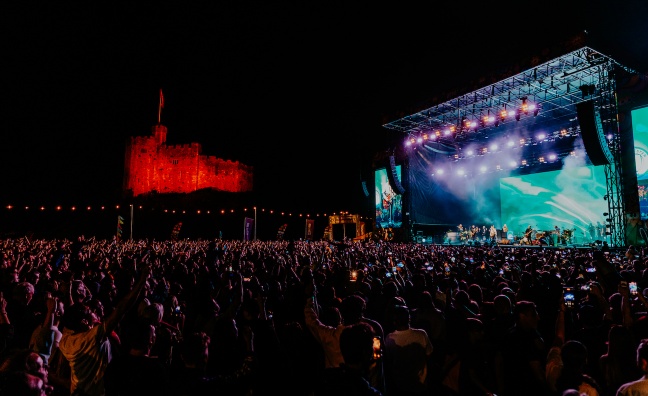
PHOTO: Noel Gallagher's High Flying Birds at Cardiff Castle in 2024 (Mike Lewis Photography/Redferns/Getty Images)
 FOLLOW