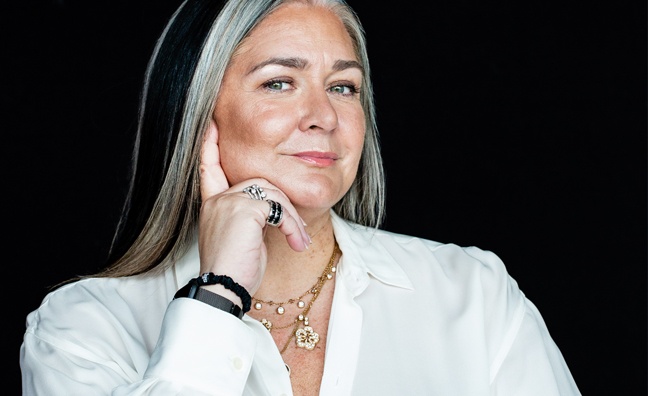
CAA's co-head of global touring Emma Banks has credited festival bookers for taking a leap of faith to usher in the new generation of headliners.
Banks, whose roster includes clients such as Katy Perry, Muse, Hozier, Red Hot Chili Peppers, Florence + The Machine, Kylie Minogue, Lorde and Green Day, told Music Week back in January that 2025 would be the year of new headliners, and so it has proved.
This year will see first-time headliners at Glastonbury (The 1975, Olivia Rodrigo) and Reading & Leeds (Hozier, Chappell Roan). In the past week, Sleep Token made their headline debut at Download, while Charli XCX made her UK bow as a festival headliner at new event Lido, where she also curated the bill.
“The old guard are still enormous, the acts that have been festival headliners for decades, some of them have moved on and will play their own stadium shows or arena runs,” said Banks. “We’ve talked for so long about, ‘Oh, there’s no new generation of headliners,’ but, quite frankly, if you don’t let an artist be a headliner, they’re not a headliner."
A smattering of artists are also headlining UK stadiums this summer for the first time, including Dua Lipa, Lana Del Rey, Blackpink, Stray Kids and Catfish And The Bottlemen.
“The artists that are doing well are not going anywhere, they’re here to stay," said Banks. "And the acts that are playing multiple arenas, stadia, headlining or being the penultimate act at festivals, they give huge amounts of encouragement and hope to the next wave of artists."
If people at a festival are interested in pop, Black music, R&B and not really out-and-out rock bands, then don’t put the rock bands on
Emma Banks
Speaking in the July issue of Music Week, the trailblazing agent and 2024 Strat winner acknowledged that festival promoters had to be brave to force change.
“They’ve had to take what may have looked like a risk, but in many cases hasn’t been a risk at all and go, ‘OK, this artist is enormous culturally at the moment,’” she said. “It’s about reading the room. There’s still room for the classic artists, but if people at a festival are interested in pop, Black music, R&B and not really out-and-out rock bands, then don’t put the rock bands on. Curation is key."
When asked where genre figured in, Banks said: “I think it just has to be good. One week, everyone is all, ‘Rock is dead’ and the next minute there’s Sleep Token and Ghost and all of these artists doing huge business."
Bringing up Hozier's sold out Finsbury Park concert last year and his upcoming Reading & Leeds headline slot, Banks noted the whether an act chooses to do their own show or a festival is decided on a case-by-case basis.
"The demographic at the Finsbury Park gig was young, but potentially Reading & Leeds skews even younger and fingers crossed, you get some new fans from that,” she added.
Banks, who co-founded the London outpost of US firm CAA with longtime colleague Mike Greek in 2006, suggested that contemporary audiences were more receptive to new blood being elevated than in the past, adding that it was important for festival lineups to reflect their crowd.
“It’s about capturing an act at the right moment and making sure their fanbase wants to go to a festival,” said Banks. “Reading & Leeds has never been younger, and there are more young women there."
Record labels are still massive supporters of music and developing artists and sometimes get an unfair rap for not doing enough
Emma Banks
She continued: “Young people see clips of shows on Instagram, TikTok or YouTube, or you’ve got artists playing gigs in Fortnite and livestreaming on Twitch – all of these things which just didn’t exist before. It makes live music much more attainable and something that people want to do.
“Artists like Olivia Dean, Chappell Roan, Gracie Abrams, Charli, Dua Lipa, they are singing about real things. I think young audiences are really enjoying the honesty that they are getting from their idols."
On the economics of touring, Banks suggested that record label support when it comes to live activity can vary.
“As a commercial company, you can’t be spending money if you don’t expect any return,” she said. “Record labels are still massive supporters of music and developing artists and sometimes get an unfair rap for not doing enough, but these tour support bills can spiral upwards very quickly."
As a result, the contribution of £1 per ticket to the LIVE Trust from stadium and arena shows is integral to ensuring the next wave and the next wave of headliners can break through, said Banks.
“It’s why the LIVE Trust is so important, putting money back into the grassroots – and that’s not just music venues, but managers, artists, all of the up’n’comers and the places that give them a home are crucial,” she added.
Subscribers can read the full feature on new headliners in the July issue of Music Week.