AEG’s Global Partnerships research & insights team has published a new report on the impact of fans on the live sector.
For the Live Effect study, they surveyed 3,000 UK adults aged 18-plus on their live music habits.
According to the report, Gen Z leads the way in terms of how strongly they identify with artists whose shows they are attending.
Paul Samuels, president, Global Partnerships at AEG International, said: “Live music brings people together like nothing else – and passionate Gen Zs are giving a whole new meaning to the word ‘superfan’. Throughout a busy summer of live events, we have seen fans embrace their shared love of specific artists and genres, with many going to extremes to make their experiences more memorable and mark themselves as part of fan communities.”
The live events industry is critical to the UK economy – and drives a large amount of tourism.
According to the AEG report, 70% of consumers have attended a live event – music, entertainment or sport – in the past three years. Live music events are the most popular with UK consumers with 60% attending at least one gig, festival or concert in the past three years – and 16% seeing six or more shows in that time.
Live music brings people together like nothing else – and passionate Gen Zs are giving a whole new meaning to the word ‘superfan’
Paul Samuels
In the UK, AEG Presents launched new UK festival Lido in 2025 featuring Charli XCX, as well as selling out All Points East with Raye and staging another successful run of BST Hyde Park featuring Sabrina Carpenter, Olivia Rodrigo, Noah Kahan and more. Lewis Capaldi is confirmed for 2025 and will headline the new Roundhay Festival.
Here, Music Week dives into some of the key findings from the report…
BANDING TOGETHER
According to The Live Effect, fans’ sense of identity is tied to music and their favourite artists, with 79% agreeing that live music creates a sense of community that digital entertainment cannot match.
For many, this shared identity creates feelings of belonging and emotional connection, with 70% saying they have felt ‘at home’ among people who understand them at a live music event. Furthermore, 63% reported making an immediate connection with strangers at live events, and 53% felt more understood by fellow fans than by people in their everyday lives.
This strong sense of community was combined with feelings of excitement (70%), joy (63%) and even euphoria (32%) at live events. Even during times of economic uncertainty, research showed that 46% of fans would prioritise spending on live entertainment.
For Gen Z music fans, purchase excitement for live music events matches that of travel (67%), indicating how important gigs are within their social lives and communities.
“The impact of live music, both on the economy and peoples’ lives, stretches far beyond the events themselves,” said Samuels. “It drives a sense of community and belonging, with exceptional experiences creating lifelong memories that few are prepared to sacrifice, even in times of financial difficulty.”
SUPERFAN SUPPORT
Three in 10 (29%) of those surveyed admit that they have dressed in a way that identifies them as part of a fan community, with Gen Z and Millennials most likely to embrace the community spirit (41% and 33% respectively).
Artists including Taylor Swift and Oasis, as well as genres such as K-pop, were highlighted in the study.
Nearly half (48%) of live attendees identify with the fan communities of their favourite artists, saying that they feel strongly connected to other fans, or that being a fan is part of their identity. This is more common among Gen Z (65%) and Millennials (61%).
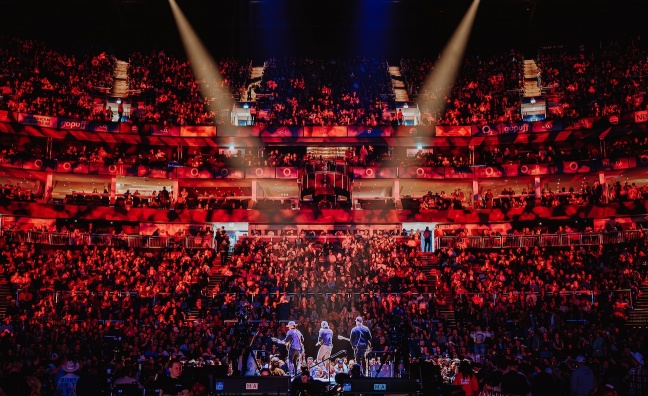
The research showed that across K-pop (40%), country (33%) and metal (37%), fans have dressed in a specific way to fit in with the community. The report identifies trends including wearing Brat green at Charli XCX shows, bald caps at Pitbull and cowboy hats at Country 2 Country Festival (pictured).

Other fans – particularly among Gen Z – have gone further. One in five (21%) Gen Z music fans have made or bought a homemade sign to get an artist’s attention, while 16% have queued overnight or over five hours for tickets or entry, and 15% have called in sick to work.
In terms of social media, 18% of Gen Z fans and 20% of Millennial fans say they have created content during a show.
One in 10 (12%) Gen Z superfans have gone so far as to get a tattoo related to an artist or their music, with metal, folk and K-Pop fans the most likely to have been inked (17%, 16% and 15% respectively).
PURCHASING POWER
When it comes to parting with their disposable income, live entertainment is the third highest spending priority for fans, second only to holidays and hobbies.
Nearly half (46%) of ‘active’ entertainment consumers prioritise spending on live entertainment, even during times of economic uncertainty, increasing to 55% among Millennials.
Live entertainment is among the last things live event attendees would give up if they were experiencing financial pressures, after luxury grocery items, dining out, fitness memberships and international holidays.

Only 22% ranked live entertainment in the top three costs they would be prepared to cut, ranking eighth out of 14 categories.
“In times of recession, sometimes we need a little joy and excitement in our lives, which is why so few fans are prepared to curb their spending on live entertainment in the face of financial hardship,” said Samuels. “We saw this after the Covid-19 pandemic, when demand jumped up as soon as the restrictions were lifted, as fans embraced the chance to enjoy seeing their favourite artists and catch up with family and friends.”
RISE OF COUNTRY
C2C Festival has expanded from a two-day London-based event to a huge three-day multi-city festival, driven by a growing community of country music fans.
With 144,000 fans attending across five venues earlier in 2025, demand continues to grow among those who share the passion for all things country.
The sense of community is driving huge demand in some genres, with high engagement providing a unique opportunity
Will Dowdy
“The sense of community is driving huge demand in some genres, with high engagement providing a unique opportunity,” said Will Dowdy, vice president of Global
Partnerships, AEG Presents. “Partners who want to target this niche and passionate group can get in front of fans as they celebrate their shared interests, helping to make experiences even more memorable, and for the brand to be remembered in turn.”
SUSTAINABILITY AS STANDARD
AEG said it is committed to making its venues and events more environmentally friendly.
Sustainably was built into Lido – AEG’s newest London festival – with policies designed to reduce its impact across power consumption, waste management and carbon emissions.
The event in the summer was powered entirely by renewable energy, with Massive Attack’s event being 100% battery powered.
Initiatives at Lido included infinitely recyclable cans, reusable crockery for crew-catering and enhanced vegan and vegetarian options.
“As the festival continues to grow, the next step will be collaborating with a naming partner who shares the values of its audience and AEG, helping to take sustainability to the next level,” stated the report.
Last year, The O2 hosted the world’s first carbon-removed event with The 1975, with the venue also offering 70% plant-based menus, biodegradable packaging at food outlets that can be processed alongside food waste, and a reusable cup scheme.
The survey found that 59% of live music attendees agree that it is important to them that live music events are environmentally sustainable, with Gen Z and Millennials leading the charge (68% and 67% respectively).
The value placed on protecting the environment means that fans are even willing to pay more for a live experience that aligns with their values on sustainability. Three in five (61%) in Gen Z and a similar proportion of Millennials (58%) are willing to spend more on tickets for shows that support sustainability initiatives.
PHOTO: C2C at the O2 Arena in 2025 (credit Luke Dyson)
 FOLLOW