Women In CTRL today publishes its latest Seat At The Table report, which records the first simultaneous decline in both gender and intersectional representation on UK music trade association boards since tracking began in 2020.
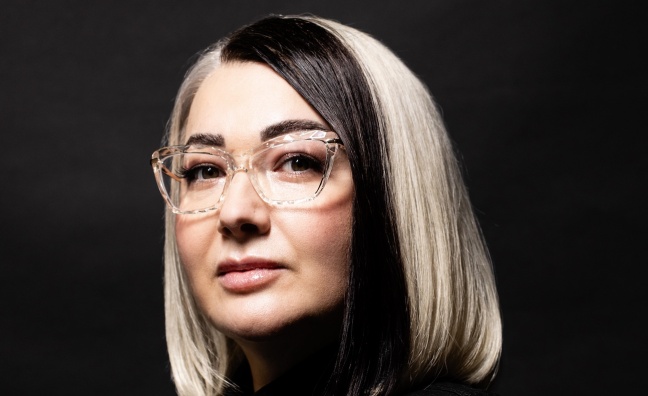
Here, Women In CTRL founder and CEO Nadia Khan shares insights on the report and reveals what the numbers don’t show…
In 2020, Women In CTRL published the first Seat At The Table report. Women held 32% of board seats across UK music trade associations. Women from global majority backgrounds held just 3%.
Six years on, gender representation has risen to 49%. But the 2026 Seat at the Table report, published this week in association with the BPI, records something the sector has not seen before: the first simultaneous decline in both gender and intersectional representation since tracking began.
In 2024 the music industry reached 50% women's representation on trade body boards for the first time in history, a milestone we rightly celebrated. The 2026 data shows it did not hold. Women from global majority backgrounds now hold 11% of board positions, down from 16%. The intersectionality gap, the distance between overall gender representation and the representation of women from global majority backgrounds, has widened to 38 percentage points, up from 36 in 2024 and 29 when we started measuring.
In 2024, the sector collectively met both UK Music 10 Point Plan targets, but in 2026 neither is met collectively. The lesson from six years of tracking music industry boards is clear: progress that is not embedded into governance structures does not last.
The UK music industry is often cited internationally as a leader in diversity commitments. The data suggests the next challenge is ensuring those commitments are structurally embedded.
Without structural embedding, change is unstable and reversible. A historic milestone means very little if it can be undone in a single board renewal cycle. The reversal in these figures shows that the sector’s progress remains fragile.
INTERSECTIONALITY AS THE FOUNDATION
Intersectionality has been at the foundation of the Seat At The Table methodology since the beginning. We have always measured gender and ethnicity together, because people hold multiple identities simultaneously and those identities shape access to power in compounding ways.
Gender representation ranges from 38% to 71% across the eleven organisations tracked in the report. Global majority women's representation ranges from 0% to 27%. Three organisations still have zero global majority women on their boards. For two of them, that has been the case for six consecutive years. Across all four editions of the report, no global majority woman has held a CEO position in any of the eleven organisations analysed.
The reversal in these figures shows that the sector’s progress remains fragile
Nadia Khan
The Annenberg Inclusion Initiative's 2025 study of 2,793 executives across 106 global music companies found that 84% of top leadership roles were held by white men. The proportion of underrepresented top executives actually decreased since 2021. Women of colour held just 5% of the most senior positions. The pattern is consistent on both sides of the Atlantic: gender progress is real, but intersectional progress is stalling or reversing.
These patterns are not unique to the UK. Across global music institutions, progress on gender representation is visible, but structural pathways into leadership for women from underrepresented backgrounds remain limited.
Celebrating gender parity while representation for global majority women declines is not progress. It is evidence that the gains made by the sector have not reached those facing the steepest barriers to leadership.
WHAT THE GOVERNANCE SHOWS US
Seat At The Table has tracked governance alongside representation since 2020. The 2026 edition highlights organisations that have made significant changes to their governance frameworks and what those changes reveal about how progress becomes sustainable.
The Musicians' Union proposed the creation of reserved seats on its Executive Committee for underrepresented communities, activated when representation falls below census proportions, with members of each community electing their own representatives. It has also established a Members' Assembly with diversity built into its structure, and launched a Future Leaders Programme. These are not peripheral initiatives, they are central to how the MU is ensuring its democratic structures reflect the full breadth of its membership.
The BPI amended its articles of association in 2019 to include Article 44, requiring that the diversity of the business and of society be given due consideration when nominating and electing Council members. Alongside this, it adopted a Council Code of Conduct and took practical steps to demystify election processes. In 2020, women made up 43% of the BPI Council. Today it is more than 60%, with global majority women's representation rising from 7% to 20%. BPI is the only organisation currently meeting both UK Music targets.
The Ivors Academy established a 40-strong Senate as a route into governance, introduced term limits for Directors, created an independent director role, and used its Advocacy Accelerator to ensure global majority creators were represented at board level. In 2024, it adopted gender-neutral language throughout its Articles of Association.
Three different models with one common principle: embedding equity into the structure of the institution itself, so that progress does not depend on whoever happens to be in the room at any given time.
WHAT THE NUMBERS DON’T CAPTURE
Through this research I have spoken with women who ran for board positions five times before being elected, and others who did not know board roles existed or that they were eligible to stand until someone told them directly. I have found board members who held seats for over 30 years in organisations with no succession planning whatsoever. Routes to the boardroom remain opaque and what happens inside boardrooms remains largely invisible.
When access to boards remains limited and the routes in remain opaque, there is little incentive for the underlying culture of governance to change
Nadia Khan
A headline figure of 49% women does not tell you whether those women have authority or whether the system was built to include them. When access to boards remains limited and the routes in remain opaque, there is little incentive for the underlying culture of governance to change.
Cultural commitment without structural embedding produces volatility. A change of leadership or a round of board renewals can each undo years of progress if there is no constitutional protection in place. The organisations where progress has reversed are not those lacking commitment. They are the ones where that commitment was not yet written into their governance.
BUILDING THE INFRASTRUCTURE FOR CHANGE
If the first generation of Seat At The Table was about measurement, this next phase is about building the infrastructure for sustained change.
Alongside the 2026 report, two initiatives aim to support governance reform across the sector. The Seat At The Table Governance Advisory Council brings together senior leaders from across the music industry to share best practice in board governance with the wider sector.
The SATT Boardroom Navigator is a free public resource for participating organisations, mapping how to access board positions: election calendars, eligibility criteria, practical guidance. One of the most significant barriers to diverse board composition is opacity. If you do not know how a board works, you cannot stand for one.
The music industry has spent five years on pledges and targets and cultural commitment. That work matters. But what the Musicians' Union, the Ivors Academy and the BPI have each demonstrated is that progress becomes durable when it is written into the constitution, not just the culture. Governance reform is the next frontier of this work, not just for UK music trade bodies, but for any institution that wants its commitments to outlast the people who made them.
We have spent six years asking who sits at the table. The 2026 data tells us we now need to focus on the structures that determine whether they get to stay.
Nadia Khan is the founder and director of Women In CTRL and the creator of the Seat At The Table programme. The 2026 report launches on March 10 in association with the BPI.
The 11 organisations tracked in the Seat At The Table series are: AIM, BPI, FAC, Ivors Academy, MMF, MPA, MPG, Musicians' Union, PPL, PRS for Music, and UK Music.