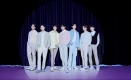
Ahead of this month’s SMTown Live arena show in London, SM Entertainment co-CEO Daniel Jang has discussed plans to build on the K-pop giant's 30-year legacy.
SMTown Live 2025 comes to The O2 in London on June 28, marking the company's first European event since 2011.
The show will feature a 16-strong bill including newly launched girl group Hearts2Hearts and DearAlice, its first UK act and the focus of last year's BBC show Made In Korea: The K-pop Experience.
“We’re really hoping for DearAlice to set great milestones in the UK market,” says Jang. "I personally met the members when they were in Korea in training and they are great individuals and have great potential as a group."
 DearAlice (credit: Max Giorgeschi)
“It’s an honour to be a part of the SM family, and we feel blessed to be the first UK act to work with them – we can’t wait to show what we can do,” said DearAlice.
SM has been countless multiple K-pop successes such as Aespa, Boa, Red Velvet, NCT 127, NCT Dream, Riize, Girls’ Generation, Super Junior, Shinee and Exo.
“Throughout SM Entertainment’s 30-year history, we feel we have achieved major moments in the history of K-pop itself,” Jang told Music Week. “We want to continue the legacy and we want to make sure the artists are ready.”
“We’re so grateful for all the love we’ve received from fans around the world," said Aespa. "We’ll keep working hard to return that love and show people the many different sides of us. We’re always grateful for the support of the artists who came through SM before us, it gives us so much strength as we move forward. We’ll work hard to do the same for those who come after us.”
 Aespa (credit: SM Entertainment)
NCT Dream said: “We literally grew up in SM; now, we’re already heading towards our 10th year at SM, and the company itself has turned 30! It feels weird to have a lot of artists coming up behind us, too – it is great to experience the different generations and the diversity of the music.”
Under Jang and co-CEO co-CEO Dmitry YJ Tak, the firm has created a slogan – ‘the culture, the future’ – as a banner for their ambitions as it celebrates the landmark anniversary.
“It represents the past 30 years of SM Entertainment, and also it is about looking into the next 30 years and beyond,” said Jang. “K-pop culture was built through SM Entertainment and we were one of the very first to establish the genre. The slogan represents our dedication and commitment to the next era, that we’re trying to make K-pop even stronger. That’s one of our biggest missions as a company."
After finding the right potential artist, we put them through a sophisticated system of training
Daniel Jang
The business reported a 5.2% increase year-on-year in group revenue for Q1 2025 and recently invested more than US$4 million dollars into its publishing subsidiary Kreation Music Rights. It also increased its stake in fan engagement-focused company DearU Co to 45.1%.
“We launched our SM 3.0 business strategy after thinking about how we could nurture our artists and the artist development process in order to see direct results in streaming and physical sales, as well as areas such as IP licences, merchandising and concerts," said Jang, speaking in the July issue of the magazine.
"Another key goal is to expand our presence and invest in the global market. So all of that came together as a business strategy to develop the company and to add value for our shareholders."
Jang detailed how SM's training programmes are set up, explaining that the system starts by discovering potential artists and going through "many channels for the casting process of trainees".
"[Western] bands usually build fandom from playing small venues and recently, SM and other large K-pop companies have been doing the same thing," he said. "We do in-person auditions, global auditions, street casting and social media casting, too.
"After finding the right potential artist, we put them through a sophisticated system of training, developing their vocal skills, dance skills, languages, and other essential skills for them to develop into an artist. After that, we look at developing their concept, musical direction and then at that point we go into musical production.”
When we launch an artist, we already have a very solid fanbase that supports the artist
Daniel Jang
He added that the system is designed to "empower aspiring artists and to give them the best potential and possible foundation for them to succeed".
"What sets K-pop apart from the traditional Western ways of developing an artist – where you start in very small venues – is that major K-pop companies, including SM, invest heavily in music videos and social content, even from the moment an act debuts," said Jang.
"With the system that SM has built, fans have a certain level of expectation. Once we launch a new artist, they feel like it is going to meet their expectation because we have a very long legacy of artists, content and music. So when we launch an artist, we already have a very solid fanbase that supports the artist, which is I think the biggest difference.
"Although there are some artists who can generate that kind of support through TikTok or through the boost of having one hit song and some touring, I think [our system] is what distinguishes K-pop from other genres.”
 Riize (credit: SM Entertainment)
Growth in the live business (and accompany merch sales) is also important, including this month's O2 Arena date for SMTown Live 2025.
Riize, who part of the SMTown Live 2025 line-up, said: “We’re really excited to be performing on stage in London for the first time at SMTown Live. It means a lot to finally see our UK fans in person, and we’re especially thrilled that we’ll have the chance to perform songs from our first full-length album, Odyssey, which came out last month. We hope to make it an unforgettable experience by connecting with everyone through our music and energy.”
SM's operations also cover publishing, records, management, production, distribution and promotion.
“At the very beginning of K-pop, things were very similar to the Western market where everything was divided: record labels and management were separate," said Jang. "SM started out by discovering artists, but with K-pop, it was not just about music, creative or performance; everything had to come together.
"That’s why we started to discover artists and train them through a very sophisticated training programme. [For it to be successful] we needed to find the music, then create and produce the album itself and, after that was completed, we also needed to manage the artists. So it naturally happened that we needed all of those roles in one company and that’s how K-pop got to where it is right now.”
Moving forward, Jang said SM was most focused on three areas of the business.
“The three main pillars, or the engine, would be our casting and training system, A&R, where we develop the music, and management," he said. "It became very important for the company to take the role of guiding the artists, to sometimes be a teacher and develop them in the right way. It’s different managing one artist or one singer, compared to managing a group with six or seven members in it, so all of that is very important for us to maintain the company’s success.”
The full interview with Jang can be read in the July edition of Music Week.