WORDS: ALEX RIGOTTI
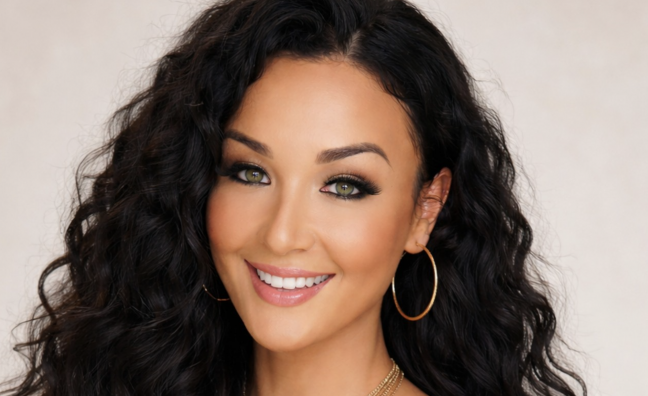
Saskhia Menendez has called for the music industry to sign up to the Global Trans Charter and support trans people working in music.
Music Week speaks to Menendez just as she arrives back from the Women In Music Global Summit in Toronto, Canada. Thanks to her Trans Charter For The Music Industry, which she launched last May, Menendez was invited to speak about her experiences navigating the music industry as a trans woman. Since introducing the charter, more than 921 people have signed up across 34 countries.
“It was amazing,” she tells us. “I met so many amazing people from different walks of life. I was also talking about the trans community and music as a whole: what are we looking at improving and how could we make things better for people.”
Alongside hosting her own podcast, Music Industry Insights Worldwide, Menendez has contributed to Keychange as an Innovator and is currently a LIVE Diversity Expert panel member. She was also formerly on the board of directors for The F List Music.
She was inducted onto the Music Week Women In Music Awards Roll Of Honour in 2023 for her activism and work in diversifying the industry and improving visibility for the trans community in music. Earlier this year, she also submitted written parliamentary evidence documenting the misogyny that trans women face in the industry.
Now, Menendez has spoken to Music Week about the aims and impact of the charter so far, emphasising the importance of action and connection in improving working conditions for the trans community in music.
“The global trans charter exists because values without structure do not protect people,” she affirms. “This gives the industry something practical to stand behind. It's a framework, it's policy and it's also supporting people”.
To begin with, why do you think people are so interested in signing up to the Charter now?
“Because it offers safer working environments, fair access to opportunities, respectful language and policies. I think it's also about giving a clear route for support and safeguarding, ongoing learning, but also protection, because we need safeguarding. We can't just have a free for all, but that's what's happened to the trans community.”
What are your ambitions with the Charter?
“I think it's a five-year plan and I think it's about also understanding that this is for labels, publishers, live music, festivals, music education, training bodies, management, agencies, studios, media as well. We work so closely together, we can share the values and goals – but we all need to be on the same page. Otherwise, it becomes a mess.”
You released the Charter last May. How has the response been from the industry so far?
“I don't think it's just about a massive response, I think it's about authenticity. It's about connection and supporting the community. And it doesn't matter where you're from, it's about you as a person. But you have to feel safe, respected but valued. And I think sometimes we miss some of these things. And we also forget about the people themselves. I want that to come back to the music industry. That's one of the things we're lacking right now – it's the connection part. And it takes time.”
Where do you see that disconnection happening the most in the industry?
“I think the majority of it comes from class and background and ego – I'm not a fan of egos at all. Class is a major issue because of your background, where you come from, and money has a massive impact on who is able to make music, who is able to be involved. That’s the main issue for me. Most of us actually lack financial support. We have barriers, we lack funding, we lack opportunity. And I think it's about building our own opportunity.
What I'm trying to do is take down the barriers and build bridges to make people feel welcomed, included, but also listened to
Saskhia Menendez
"Now, the thing about the trans community is, we're used to having no opportunity whatsoever, so a ‘no’ to me isn't a problem. However, sustainability is the issue, so they're both interlinked. I come from a background that's been very disadvantaged that's not always understood. Both my parents are deaf. They can't hear music, but they can feel it. And I think that's the difference; it's cutting across a lot of different intersections. What you have to do is build that bridge for everybody, and it's really difficult. There's too many barriers. What I'm trying to do is take down the barriers and build bridges to make people feel welcomed, included, but also listened to.”
How would the Charter address the barriers you’re talking about?
“We've had so much progress in diversity, inclusion and equity. However, we still have unsafe working environments, informal discrimination, and gatekeeping. Since we had the Supreme Court ruling last year, I find it quite shocking how we get treated: the misogyny, the discrimination, the lack of opportunities, but also the way the media represents us as people. We're seen as a threat, as bad people. That is not true at all. We have to speak up. We have to tell the truth, we have to call people out. It doesn't matter how many positions they have. They need to be told that you're doing the wrong thing. And if no one says anything, then I'm conforming to their nonsense, which I don't want to do.”
You said you've had some difficult conversations with people working in the industry in relation to the Charter. Are you able to elaborate?
“I think cultural issues are one thing. There's certain cultures that are very open. There's certain cultures that are very closed. Some cultures are in the middle, but you've always got people in those cultures that will say 'absolutely not', you know what I mean? And that's the brutal thing: it's not cutting across the board in any way. I wouldn't name any names, but what I will say is this: I'm on the ground, I listen to what people say. For me, it's about understanding those differences and finding a line in the middle. It's about understanding where people come from.”
We're seen as a threat, as bad people – that's not true at all, we have to speak up
Saskhia Menendez
How can the initiative support people on a practical level?
“Well, it's a global network – we've got 921 sign-ups already across 34 countries. What we're trying to do is build a global network of support, so it's not just about one territory or one country. This is global. We're such a small minority of the whole population: 0.5% in the UK and most up to 1%, or 2% if you're pushing it. So we need to make sure on a global network we've got each other's backs. We know what's going on here, so it’s about asking, ‘How can we help you?’”
Do you have any guidance in terms of how people can offer allyship and support for either the Charter or for trans people in general?
“Well, come along, listen to what I have to say. Come and meet me in person or look at the Charter itself. Listen to Music Industry Insights Worldwide – we've now got 200 episodes from everywhere in the world. It's not been supported, it's not been sponsored, it's all been for free. Everything I do is for free. Everything I've done has not been about money. It's been about community first, but also listening to other people.
“You can tell your friends if you know someone that knows about it or is in the community. Please share it worldwide because it is a worldwide movement. We've had loads of traction from Australia to Canada to the States – even Croatia, China. Hopefully I'm going to Japan soon, I can't wait to go there. I’ve never been there before, but I'm looking forward to it. These people, they're very open-minded and accepting. I wish the UK would take a leaf out of these people's books and learn understanding. We're just trying to be ourselves.”
How can you measure success for the project?
“Since I came to the industry in 2021, I've been pushing for data. What they've done is they've measured the trans, non-binary and intersex people all in one group. Where's the data and how are we going to break that data down? How are we going to make it intersectional? They've pushed on intersectionality, but they won't push on the data. Without that, we can't measure anything. And I think that's the problem we face at the moment: until we get the data, we can't measure where we're at and how we're going to improve.”
Finally, what single thing would help most right now?
“Funding. Everything I've done is for free. Everything I've done, I've done by myself and with collaborators – I've got a great team of collaborators and support.”