The UK’s creative industries have launched a campaign to highlight how their content is at risk of being given away for free to AI firms.
Music Week has reported on the music industry’s concerns with the Labour government's AI consultation process. It follows the launch of the government consultation in December that proposes introducing an exception to copyright law for AI training for commercial purposes. It would mean rights-holders having to formally opt out of their works being used for AI training. The consultation closes today (February 24).
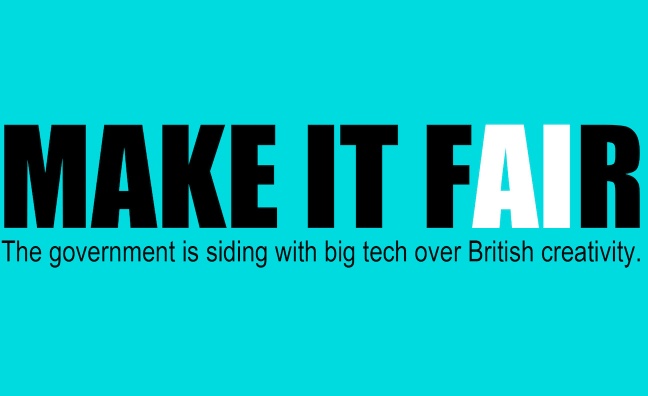
The Make It Fair campaign was developed to raise awareness among the British public about the “existential threat” posed to the creative industries from generative AI models, many of which scrape creative content from the internet without permission, acknowledgement and without payment.
“The impact on creative businesses and individuals throughout the country – who collectively generate over £120 billion a year towards the UK economy – will be devastating if this continues unchecked, or worse still if the government legitimises this content theft,” said a statement.
It follows the Daily Mail campaign against the AI proposals launched last week with many prominent supporters including the three major music company CEOs.
Regional and national daily news brands are running the same cover wrap and homepage takeover.
The campaign cover wrap states: “MAKE IT FAIR: The government wants to change the UK's laws to favour big tech platforms so they can use British creative content to power their AI models without our permission or payment. Let's protect the creative industries – it's only fair.”
The British public are being urged to write to their MPs and back the creative industries.
Dr Jo Twist OBE, CEO of the BPI, said: “We stand behind today’s Make It Fair campaign, which calls on government to protect human creativity in the age of generative AI. Britain's creative industries have been rightly recognised by government as one of eight priority sectors for economic growth. They are worth £125 billion per year to our economy, employ over 2.4 million people, and are the source of immense cultural power on the global stage.
“The sweeping changes to copyright law currently being proposed would completely undermine this growth opportunity, essentially making it legal for international AI firms to plunder the UK’s music, books, film and more, all for their own profit and without the need for authorisation or compensation. Creators and rights-holders would in theory be given the option to 'opt-out' of having their work used to train AI models - but other markets have shown that opt-out schemes are unworkable in practice, and ineffective in protecting against misuse and theft.
“The UK's gold-standard copyright framework is central to the global success of our creative industries. We understand AI’s potential to drive change including greater productivity or improvements to public services, but it is entirely possible to realise this without destroying our status as a creative superpower.”
We stand behind today’s Make It Fair campaign, which calls on government to protect human creativity in the age of generative AI
Dr Jo Twist
UK Music chief executive Tom Kiehl said: “This plan poses a huge threat to our emerging young talents and their chances of becoming the next generation of UK superstars like Adele, Ed Sheeran and Dua Lipa who are such a vital part of our soft power influence across the world.
“Our creative industries are united against these deeply damaging proposals to let AI bots plunder the work of the UK’s creative talent. We want to be part of the Government’s growth strategy, yet this plan to tear up our existing copyright rules would allow that growth and value to be freely siphoned away to tech giants.
“The UK music industry contributes £7.6 billion a year to our economy and supports 216,000 great jobs. It would be a reckless act of economic self-harm to let tech giants steal the work of our fantastic music creators without permission or payment.
“Tech giants talk about training their systems on the work that has been created through the blood, sweat and tears of UK artists as though it’s a harmless enterprise when in reality it amounts to the Great Train Robbery.”
Bjorn Ulvaeus, ABBA co-founder and singer songwriter and president of CISAC, the global confederation representing over five million creators and songwriters, said: “There is no way we can or should stand against AI. I am using AI models myself, and these are wonderful tools that can enhance creativity. But this progress must never come at the expense of creators’ rights. And this is not just an ethical issue, it’s economic good sense because the whole concept of copyright has immense impact on culture, jobs and the economy. We can’t let that be watered down by poor regulation of AI."
Owen Meredith, CEO of News Media Association, said: “We already have gold-standard copyright laws in the UK. They have underpinned growth and job creation in the creative economy across the UK – supporting some of the world’s greatest creators – artists, authors, journalists, scriptwriters, singers and songwriters to name but a few.
“And for a healthy democratic society, copyright is fundamental to publishers’ ability to invest in trusted quality journalism. The only thing which needs affirming is that these laws also apply to AI, and transparency requirements should be introduced to allow creators to understand when their content is being used. Instead, the government proposes to weaken the law and essentially make it legal to steal content.
“There will be no AI innovation without the high-quality content that is the essential fuel for AI models. We're appealing to the great British public to get behind our Make It Fair campaign and call on the government to guarantee creatives are able to secure proper financial reward from AI firms to ensure a sustainable future for both AI and the creative industries.”
In response to the Daily Mail AI campaign, a government spokesman said that the creative industries would be consulted.
“The UK's creative sector is truly world class which is why we’ve launched a consultation to ensure the UK copyright framework offers strong protections with regards to AI,” he said. “That’s because the current regime is holding back both sectors from realising their full potential – and that cannot continue. We are consulting on a new approach that will ensure creators have real control and transparency over their works, with appropriate access to data for AI innovators.
“No move will be made until we are absolutely confident we have a practical plan that delivers on our objectives – and as they have done throughout, the Technology Secretary and Culture Secretary, along with ministers from both departments, will continue to meet a wide range of representatives from both the AI sector and creative industries.”
 FOLLOW