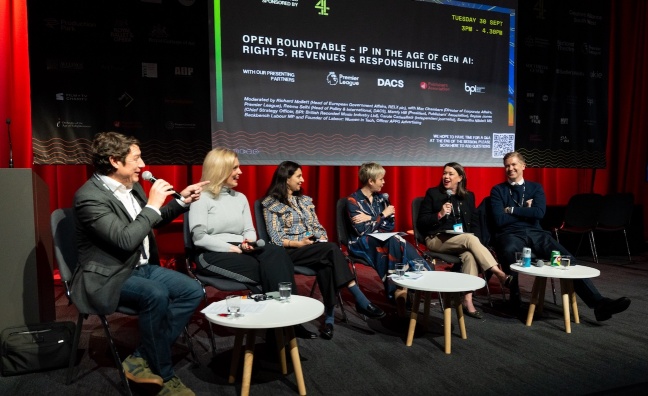
Leaders from across the music and wider creative industries attended the Labour Party conference in Liverpool.
Trade body execs have discussed the impact of British creativity on the global stage, the importance of protecting intellectual property (IP) in driving investment and innovation into the UK’s creative industries, and the continued need for government support.
BPI leaders Dr Jo Twist OBE (CEO) and Sophie Jones (chief strategy Officer) participated in panel discussions, pushing the message that the UK government should protect IP and explore how best to support a positive business environment for the music and wider creative industries.
BPI CEO Dr Jo Twist OBE joined a flagship panel discussing British Creativity on the Global Stage, with colleagues from the Motion Picture Association (Emilie Anthonis) and Publishers Association (Caroline Cummins), as well as Baroness Dinah Caine to explore the challenges and opportunities facing the UK’s creative sectors.
Twist welcomed the inclusion of music as a significant sub-sector in the government’s Creative Industries Sector Plan, calling the focus on investment, innovation and talent announced as part of the Plan “the right priorities for government, and the right priorities for our members.”
“A dedicated sector plan like this is important, to ensure the music industry can continue to play a role in delivering growth and ensuring that the UK remains a global hub for creativity,” she added.
Twist called on the government to remain steadfast in its support of the UK’s IP framework, which “turns music consumption around the world into revenue for artists, businesses and the economy”, and also stressed that supporting creative businesses as well as creators was vital to the music industry’s continued growth.
“Too often in policymaking, the ‘industries’ side of the creative industries can be forgotten,” said Twist. “Between 2020 and 2024, UK label businesses invested over £2 billion in artist A&R and marketing – an investment which has helped the UK cultivate global music stars. As well as directly supporting creators, it’s critical that the government also supports the businesses and industry investment underpinning the UK’s musical success if we are to see British creativity continue to thrive.”
As well as directly supporting creators, it’s critical that the government also supports the businesses and industry investment underpinning the UK’s musical success if we are to see British creativity continue to thrive
Dr Jo Twist
Meanwhile, BPI chief strategy officer Sophie Jones joined a panel in the Cultural and Creative Pavilion on IP in the Age of Gen AI: Rights, Revenues & Responsibilities, alongside the Premier League’s Max Chambers, the Publishers Association’s Mandy Hill, DACS’ Reema Selhi and Samantha Niblett MP.
Over the course of a 90-minute session, Jones reiterated that “copyright is what turns creativity into investment; undermining it risks the UK’s world-leading position.”
Calling on the government to encourage and stimulate a dynamic licensing market for intellectual property, rather than a previously proposed ‘opt-out’ system for AI training, Jones pointed to the number of positive steps already being taken by British music businesses to develop robust licensing frameworks.
“It’s clear that licensing works in music – the challenge lies in identifying scalable technical solutions which can be universally applied,” said Jones. “Creators and rights-holders alike must have a seat at the table in ongoing discussions around IP, and we must ensure that AI training does not come at the cost of Britain’s world-class creativity.”
Earlier at the conference, UK Music chief executive Tom Kiehl met Chancellor of the Exchequer Rachel Reeves.
Kiehl and the Chancellor discussed the importance of finding an approach to ensure that the music industry can maintain its competitive advantage.
During their meeting, he thanked the Chancellor for the Creative Industries Sector Plan and supporting music growth package, which will invest £30 million in music over three years.
Kiehl also asked the Chancellor to consider the definitions of recording studios with regard to business rates ahead of the autumn Budget, and urged a balanced approach on AI to ensure music businesses and creators can fully benefit from technological innovation without removing the copyright framework.
PHOTO: Decoy Media
 FOLLOW