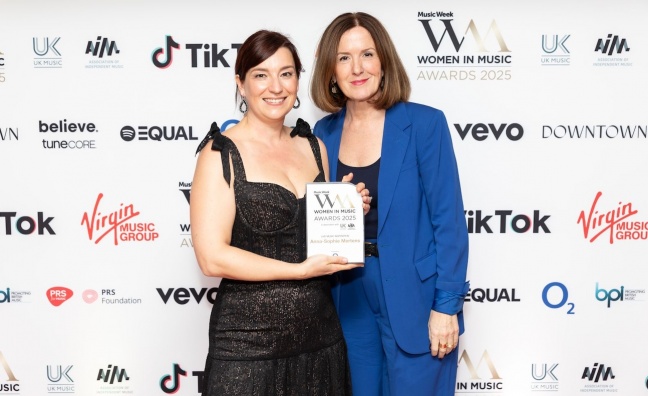
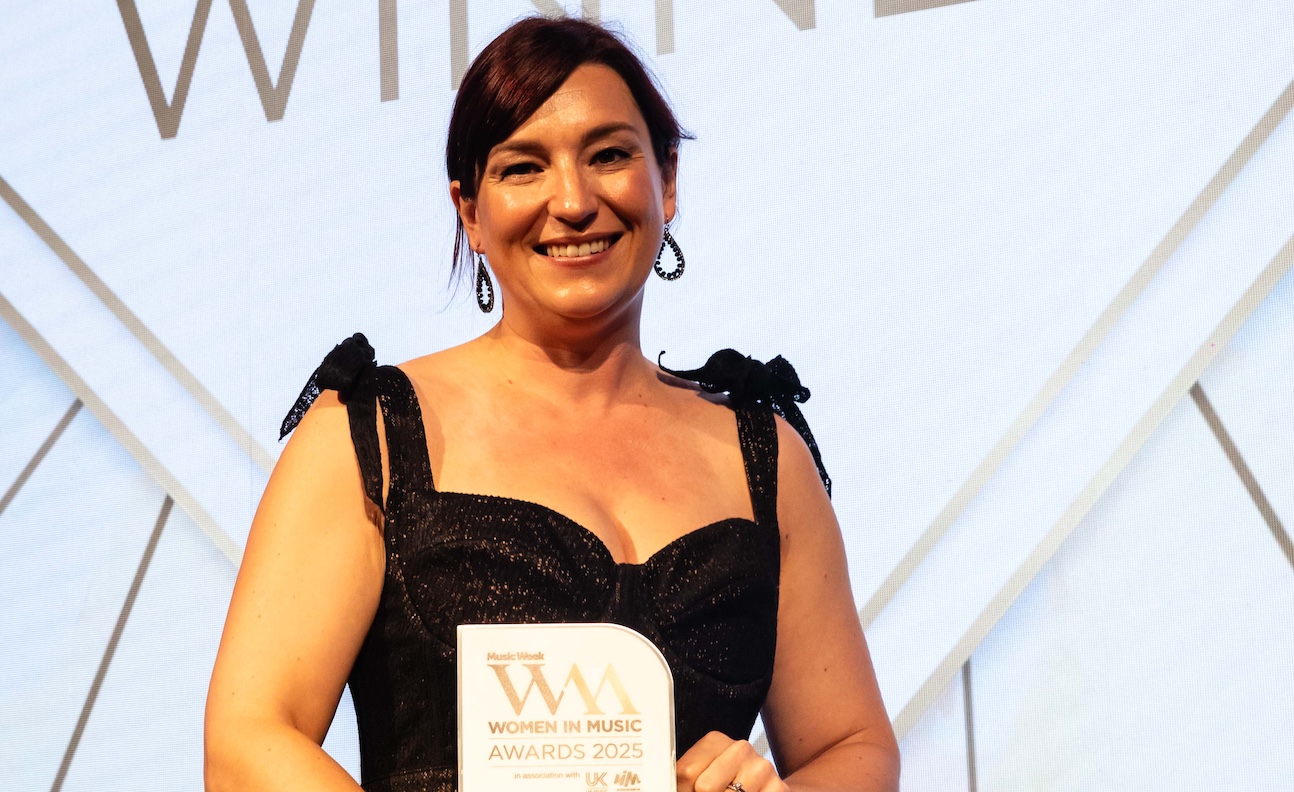
At this year's Women In Music Awards, we celebrated the achievements of 13 game-changing executives and artists as the industry came together to honour their work. Music Week has spoken to all 13 winners to tell their stories. Here, Live Music Inspiration winner Anna-Sophie Mertens takes us inside the life of a promoter...
WORDS: ADENIKE ADENITIRE
When it comes to shaping the live music landscape in the UK, Anna-Sophie Mertens has become one of the industry’s most influential figures. A senior promoter at Live Nation, she has spent more than 15 years championing new talent, breaking artists onto the biggest stages and redefining what it means to build a career in live music.
Her career highlights read like milestones of modern live music – she has worked with Lewis Capaldi since day one, taking him from unknown newcomer to O2 headliner; she spent years persuading Chris Stapleton to bring his first headline tour to the UK, a triumph that sold out in record time; she established Highways Festival at the Royal Albert Hall, a landmark moment for country and Americana music in the UK, and has sat on the CMA Board of Directors since 2020, underlining her global influence in the genre. And she continues to spot and develop future stars such as Myles Smith, Dylan Gossett and Tyler Childers, whom she has helped grow from playing 100-capacity clubs to sold-out O2 shows.
It’s a track record that makes her a fitting recipient of this year’s Live Music Inspiration Award, an accolade she is thrilled to receive.
“I’m really honoured,” she says. “I’ve attended the awards quite a few times, and they’re always inspiring. So, to now be recognised myself, especially having worked in live music at Live Nation for over 15 years, feels really special.”
Mertens’ journey began at Live Nation in 2008, where she cut her teeth working across festivals like Wireless and supporting tours for global stars including Beyoncé, Rihanna, Kings Of Leon and Katy Perry. By 2015, she was a promoter in her own right and quickly built a diverse roster spanning some of the world’s biggest artists, from Olivia Rodrigo and Ariana Grande to John Mayer, Chris Stapleton and Greta Van Fleet, as well as a host of rising stars she has nurtured from grassroots gigs to arena and stadium stages.
But beyond the career triumphs and awards, Mertens is reshaping the industry from the inside. She became the first female promoter at Live Nation to take maternity leave while maintaining her roster, proving that family life and senior leadership in live music can go hand in hand. She has been a vocal advocate for greener touring, most memorably helping Billie Eilish turn The O2 fully vegan during her shows, and has championed greater representation for women, mentoring the next generation of female promoters including Live Nation’s rising star Maddie Arnold.
As she reflects on her career so far, Mertens is clear about the values that have guided her journey: trust, hard work and the courage to ask questions. “You just have to be strong and believe in yourself,” she says. “Eventually, your dedication and hard work will pay off. And along the way, you’ll find people who lift you up, just as it’s important to lift up others, too.”
We sat down with Mertens to talk about her proudest achievements, the evolution of live music, her work championing country and emerging talent, and what it means to support other women in the industry.
First things first, how did it feel to win the Live Achievement Award at the Women In Music Awards?
“It's fantastic to see the amount of brilliant women in the room. So, to be honoured within the Live category is a big deal. It’s also just nice to receive that acknowledgement when you’ve worked really hard in the industry for so long. I’ve been in live music with Live Nation for over 15 years, and it’s lovely to see that being rewarded and recognised by my peers.”
You’ve achieved so much already. Do you have a proudest career moment so far?
“There are a few milestones, but one of the things I’m most proud of is balancing my career with being a parent. I have two kids under five, and being a working parent in this industry, especially in live, is still quite rare. There aren’t a lot of women in senior roles in live music, and even fewer who are working parents. Figuring that out and making it work for both my family and my career has been both exciting and challenging, but something I’m really proud of. Career-wise, one highlight is working with Lewis Capaldi. I’ve been with him from the very beginning, before he had music out, so to see him sell out the O2 and now return to live after everything he’s been through is incredibly special. We had three sold-out shows with him in September, and being part of that journey has been fantastic. Another big moment for me was bringing Chris Stapleton to the UK. I pitched for about six years to make it happen, and we finally had him come over in 2024. That was a personal favourite and big win for me. The ticket sales were through the roof; it was his first headline show in the UK. And he and his wife, Morgane, who was integral to the show, had a phenomenal time. And then, of course, there are the younger artists I’ve been developing. Myles Smith, for example. I started working with him just before I had my second daughter, and his rise has been amazing. Seeing him grow so quickly and make such an impact is really exciting.”
Music Week has often discussed barriers for women in live. What’s been your reality of the business since you started?
“Yes, it’s still a male-dominated space. There are definitely more men than women in the room. But Live Nation has always been a great source of opportunities for me, and one of the mantras I work by is: you have to deliver. If you work hard and stick to your word, people trust you. You’ll get rewarded with bigger projects and opportunities. So, I've never personally felt like there's been that much of a barrier for me. I’ve had great bosses who have acknowledged and rewarded my work. So, while the industry at large is still male-heavy, I’ve had a positive journey. And encouragingly, there are more women at senior levels in Live Nation now, especially in promoting, than I’ve seen elsewhere. It’s a nice peer group to be part of.”
You’ve also worked with some of the biggest female acts in the world, including Olivia Rodrigo. What’s it been like watching her growth, especially this summer with Glastonbury and BST?
“It’s been an absolute honour and pleasure. Olivia and her team are fantastic, and she’s such a genuinely amazing talent. Her rise has been stellar, and it’s been an absolute pleasure to be part of it. Looking at my roster, I’ve had the privilege of working with a lot of strong female artists, from Olivia to Joy Crookes, who I’ve known since day one, to legends like Shania Twain. Working on Shania’s shows was a career highlight for me personally; I grew up listening to her records when I was less than 10 years old. Thinking about what she went through in the ’90s as a solo woman in a male-dominated genre like country music… If you listen to her songs, she just owned it. So, we owe a lot to the women that have forged the path and made a statement unapologetically.”
There’s a wave of female acts dominating right now: Olivia, Charli XCX, Chappell Roan, Sabrina Carpenter, Olivia Dean. Why do you think they are doing so well?
“First and foremost, it always comes back to the music; these artists are putting out phenomenal bodies of work. But I also think there’s something about female audiences showing up in droves. Women want to see themselves represented on stage, and they’re supporting these artists in huge numbers. That energy is powerful, and it’s creating a movement that feels unstoppable.”
This summer we’ve seen new headliners step up. Has this been one of the strongest summers ever for live music?
“It’s been incredible. Streaming has given people access to such a wide range of artists; it’s not just about a handful of gatekeepers anymore. Fans are discovering music they love, and that’s creating opportunities where you can have multiple arenas sold out by artists that might not be commonly known to other fans.
“At the same time, you also get this huge amount of resurgence – I mean Oasis, what a massive story that is, right? Also, artists like Alanis Morissette, who I’ve worked with recently, are coming back and doing huge numbers. So, it’s both ends of the spectrum: brand-new headliners and iconic returns.
“And I think COVID showed everyone how important live music really is. Streaming couldn’t replicate the experience of being in a room full of people, singing the same words – that euphoria you can only experience live. Fans value it more now, and they’re willing to come out, spend money and really experience great live events.”
While the industry at large is still male-heavy, I’ve had a positive journey
Anna-Sophie Mertens
Speaking of COVID, how do you think live music has changed since then?
“For artists, live has become even more central. They’re seeing it as an opportunity to define their brand, from stage design to merchandise aligning with causes they care about. You know, we just had Billie Eilish come through, and obviously climate change is a huge topic for her, so she did a huge amount of work around engaging with local charities but also giving them a platform at the shows to engage with fans. So, you know, there are very bespoke items the artists are now working through. It's not just a show where people show up, but it's about everything that matters to an artist on many different levels.
“There’s also a shift in how artists tour. Maybe not as often, but with bigger, more considered productions. Shows are becoming brand-defining moments, not just gigs. For fans, the appreciation is deeper. They’re not just going to a concert, it’s a full night out, with fashion, community and living out that night all wrapped together.”
You’ve also worked with the world’s biggest superstars, such as Beyoncé, Drake and Rihanna. What’s the key to working at that level?
“Firstly, you have to deliver at the very top of your game. The expectations are incredibly high, and rightly so. You also have to be discreet, respectful and be the best partner you can for the artist and their team. That’s key, especially at that top level.”
And for those outside the industry, what does a promoter like you actually do?
“In simple terms, my role is to find talent early and be a great partner to them throughout their live journey. That means working with agents, managers and sometimes directly with the artist to build their live strategy. So, which venues do they play? Are they aesthetically the right venues for that artist? Do they have the right age restrictions to reach the right audience? How do we build a marketing campaign that is appropriate to their fans? Are we reaching the right fans? How can we reach more fans to come to the next show? What are the right ticket prices? Those are the sort of questions I deal with day-to-day.
“With new acts, you’re often in close contact, helping shape their journey. With established superstars, you might work more with their teams, but the principle is the same: building the right live plan for the artist.”
You’re also a champion of country music. How big is the genre in the UK now?
“It’s the fastest-growing genre in terms of gaining new fans. It’s outperforming every other genre, and overall streaming growth across the industry. That doesn’t surprise me because a lot of people don’t realise how much they enjoy country until they hear it. Sonically, it’s not far from folk or soft rock, so when people are exposed to it, they connect.
“The live side is booming – Morgan Wallen and Shania Twain both headlined Hyde Park – and we will see more of those artists appearing on top lines of festivals or in the top billing of mainstream festivals. More artists are coming over from the US, and some are doing as much business here as they do at home. That’s huge. We’re also seeing country artists appear on mainstream festival line-ups, which is a big step.”
You’ve been a mentor to young female execs. What advice do you give?
“My number one principle is: be trustworthy and deliver. If people know they can rely on you, they’ll give you more opportunities, and that’s how you grow. The other thing is to never be afraid to ask questions. Some people hold back because they don’t want to look inexperienced or feel embarrassed, but asking is how you learn. No matter what level you’re at, there’s always more to understand.”
And what’s next for you personally?
“More of what I’m doing now. Continuing to build live careers for artists, while also balancing that with family life. It’s a huge challenge, but there is a path, and I’m committed to making it work.”
PHOTOS: Louise Haywood-Schiefer / Panni Renner