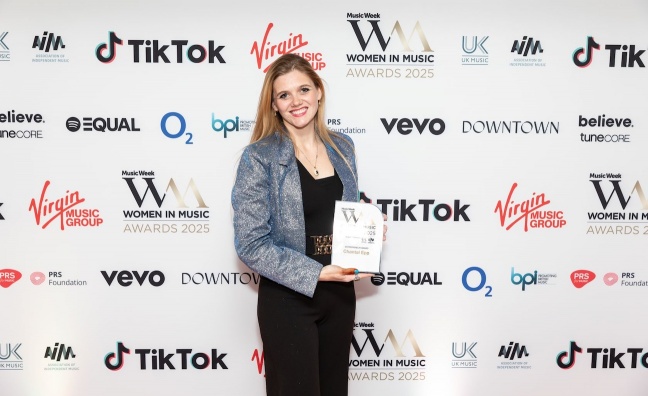
At this year's Women In Music Awards, we celebrated the achievements of 13 game-changing executives and artists as the industry came together to honour their work. Music Week has spoken to all 13 winners to tell their stories. Here, Chantal Epp, the winner of our Entrepreneur award, takes us inside her journey with music rights tech company, ClicknClear.
WORDS: ADENIKE ADENITIRE
August 2024 marked a game-changing moment for this year’s winner of the Women In Music’s Entrepreneur Award, Chantal Epp, and her music rights technology company, ClicknClear.
At the Paris Summer Olympics, the International Olympic Committee deployed ClicknClear’s License Verification System (LVS) to ensure that athletes in choreographed sports such as gymnastics, figure skating and artistic swimming were using properly licensed music in their routines. For the first time at this scale, unlicensed music was converted into licensed use at the point of performance, a breakthrough that instantly positioned ClicknClear as the global standard for music licensing in sport.
For an industry long plagued by copyright confusion, particularly in disciplines where music is integral to competition, it was a watershed moment. To put the challenge into perspective: every year, more than 150 million athletes in choreographed sports generate demand for over a billion licences. Historically, that demand went unmet, leaving athletes routinely exposed to copyright infringement risks. ClicknClear’s system not only resolved this but also unlocked a £2 billion annual vertical for the music industry, enabling federations to enforce compliance while opening new income streams for rights-holders.
Epp, a two-time world champion cheerleader, first recognised the issue in 2016, when Sony Music sued certain individuals within the cheerleading community for illegally editing commercial tracks. At the time, she was running a music production company that created mixes for cheer routines while also working for a licensing startup. In the very same week, the startup went into administration, leaving her without a job but sparking an idea that would reshape her future. Seeing that no one in sport knew how to properly license music, she decided to build the solution herself.
“I knew I could solve this problem, and I had the tools to do it,” she recalls, reflecting on her dual perspective as both an athlete and someone with licensing experience.
This led to her launching startup company ClicknClear in 2017, at the age of just 23, creating a technology-driven ecosystem that now includes: a global rights management database with direct feeds from labels and publishers covering more than 35 million copyrights; a licensing platform with over two million pre-cleared tracks; and LVS, which uses AI and audio recognition to verify licensing in real time.
Along the way, Epp has faced challenges familiar to many female and young entrepreneurs, such as limited access to funding, scepticism about her age and experience, and navigating a male-dominated industry. Yet she hasn’t let this deter her, which has clearly paid off.
“Back yourself,” she says. “If you know you can solve a problem, trust in that. Surround yourself with supportive people, stay focused on the mission, and don’t let anyone tell you that you don’t belong in the room.”
Music Week recently caught up with Epp to talk about winning the award and to hear more about the journey that brought her here.
Firstly, how does it feel to win this award?
“It's a real honour. I've been following these awards for quite some time, so it's amazing to get recognition from the industry.”
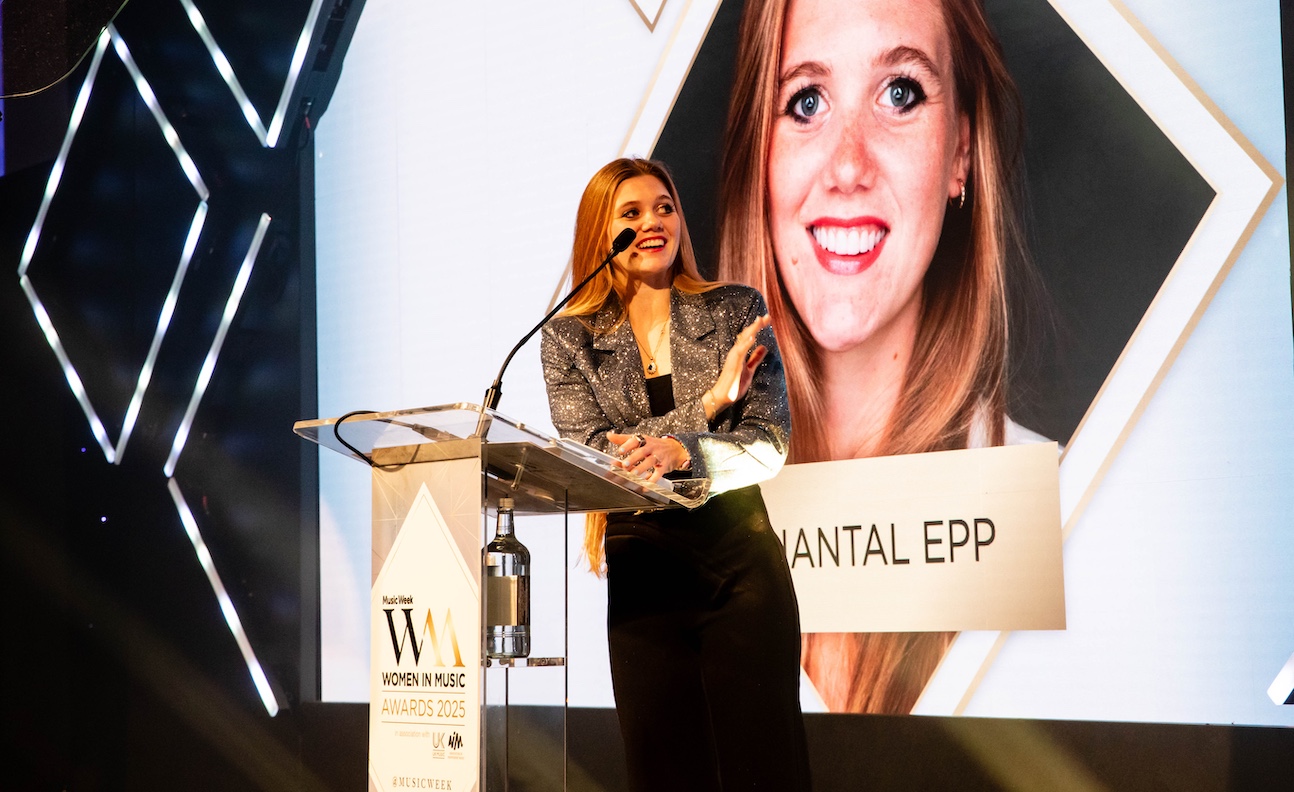
What does being an entrepreneur mean to you?
“It means solving problems and coming up with innovative solutions. And building long-lasting, sustainable solutions that help people.”
The Women In Music Awards celebrate women in the industry, but they also shine a light on barriers and inequality. What challenges have you faced, and how have you overcome them?
“Yes, I have faced lots of challenges. I’m a woman. I’m also quite young, especially when I started the company, I was in my early 20s, and people were often surprised that I was the founder. Being an entrepreneur in music tech, solving complex problems, has meant I’ve had to go and get investment. Especially being young, I didn’t have any money, so that has been a huge challenge. There’s very little funding that goes to women. There’s also not very much funding that goes to creative industries, and even within that, specifically the music industry. So, I’ve had multiple layers of challenges there.
“Funnily enough, the music industry has been a bit more accommodating in terms of women than the sports industry, which is the other sector we work in. But there are still a lot of problems, and I’ve certainly faced many myself. It hasn’t been easy.”
You had a unique way into founding ClicknClear, being a cheerleader as well as working in licensing and production. What do you remember about the “eureka moment” when you realised you had the solution?
“In May 2016, I walked into work one day and was told, ‘The company has gone into administration, you no longer have a job.’ I was devastated, because I really loved that company and the mission, streamlining licensing for digital media and YouTube creators. That same week, cheerleading announced that there had been a lawsuit from Sony Music, and we were no longer allowed to use commercial music unless it was licensed. And I thought, ‘No one knows how to do that.’ Even in my music production company, I couldn’t get a licence that covered the rights I needed. I realised: I don’t want to walk into work one day and be told I don’t have a job. I’ve always wanted to own my own company. I had the experience from licensing, the relationships with rights holders, and the perspective of being a two-time world champion cheerleader. I knew I could solve this. So, I spent a year writing a business plan, and in January 2017 I got a government-backed startup loan to get legal agreements drafted. That was the start of ClicknClear.”
What was the music industry’s reaction to what you built? Have you been welcomed with open arms?
“Yes, actually. I didn’t expect to be, but people generally have really loved the idea and our approach. We really care about music rights and about artists and writers getting paid. The first step is understanding who owns the music, so we built our own rights management database with direct feeds from rights holders. That powers everything, the licensing platform, the LVS. It means we can ensure athletes are actually licensing their music. So not only are we creating opportunities for rights holders, we’re also protecting them from infringement. It hasn’t been a walk in the park getting everyone on board, the bigger rights holders take time. But people have been really open to the idea. We now have almost 40 million copyrights in the database, and it’s still growing.”
Can you quantify the impact ClicknClear has had on the sports world?
“We’re helping Olympic athletes license their music. Our system was used for the Paris Olympics. We’re working with gymnastics, figure skating, dressage, jump rope, indoor skydiving, even sports people don’t realise exist. We’re also working with sports video-on-demand services, like FloSports, on the first-ever global blanket VOD licensing solution. Historically, these platforms either muted the music – people literally paid to watch silent marching bands – or they infringed. Neither was good for audiences or rights-holders. Now, we’re helping them secure licences, improve engagement and generate revenue. It’s been really exciting to see.”
When you started out, licensing must have felt like an unfamiliar and daunting space. What would you say to people who spot a problem but fear going into unknown territory?
“Copyright law exists worldwide, so for us it’s been about education first. Most people don’t want to do the wrong thing, they just don’t know. In the YouTube era, people think music is free. It’s not. We’ve focused on being friendly and supportive, while also providing a solution. It’s no good just pointing out a problem. You need to solve it. We worked with music lawyers to ensure everything was covered. I even met with the litigators who brought the Sony case against cheerleading, to confirm we were covering all the rights needed. And now we operate in more than 110 countries, with licences in 40 countries every month, including China. We also recently won the World Intellectual Property Organisation Global Award for our innovation and commercialisation of intellectual property, which was a proud moment.”
What has been the biggest challenge in your career so far?
“Honestly, getting investment. We haven’t secured nearly as much funding as my male counterparts. So, we’ve had to constantly balance building the team, growing, and being resource-limited. It’s been a challenge, but it’s also forced us to think differently and creatively.”
Do you think the music industry is well educated about licensing?
“It depends on who you talk to. Data is a massive problem when it comes to licensing. If you don’t know what you own, how can you make money from it? The industry is great at monetising streaming and performance rights, but less so at identifying untapped markets and monetising those. Too often licensing just means sync deals; film, TV, ads. But there are many high-volume uses, like what we’re doing, where billions of licences are needed. That can’t be handled case by case. There’s a $100 billion monetisation gap between music and other entertainment industries like film, TV, and gaming. Music is used in all those markets, so why the huge revenue gap? It’s fragmentation and lack of scalable licensing solutions. Managing those two things will grow the industry and increase the pie, rather than splitting the pie in different ways.”
We haven’t secured nearly as much funding as my male counterparts. So, we’ve had to constantly balance building the team, growing, and being resource-limited
Chantal Epp
How does it feel to have unlocked new income streams for the industry?
“It’s really exciting. Getting sports like indoor skydiving and colour guard on board, this is genuinely new revenue for the music industry. Working with VOD services that could never be licensed before has been amazing. It improves their user experience, drives engagement, and ensures rights-holders are paid. I’d say it’s one of the things I’m most proud of. And it’s just the beginning.”
Looking ahead, what’s the future for ClicknClear?
“We’re continuing to grow. More sports are coming on board, more federations are mandating licences, and our new blanket VOD licensing solution is really innovative and uses a lot of technology to streamline the process and unlock new revenue for the music industry. Beyond that, we want to keep identifying untapped markets and find new ways to grow industry revenue.”
Are there other entrepreneurs in music you’re excited about?
“Yes, lots. I’m involved in Music Tech UK, and there are many interesting solutions. I’m really interested in AI and how it will play out. I think when people talk about AI, it's sometimes seen as a very negative thing, but it really depends on the area in which you're talking about it. There are a lot of interesting tools that help artists make music. For example, Warner Music used it to recreate the voice of an artist who had a stroke [Randy Travis] and could no longer sing. That’s powerful. As for entrepreneurs: Jessica Powell at Audioshake is doing amazing things, and Pascal de Mul with SetMixer is enabling people to stream concerts they’ve attended afterwards, which is a really nice idea for fans and the industry.”
Finally, what advice would you give to young women looking to build businesses in music or tech?
“Back yourself. You’ll face challenges, whether it’s funding, perception, or access, but if you’ve identified a real problem and you know you can solve it, trust in that. Surround yourself with supportive people, stay focused on the mission, and don’t let anyone tell you that you don’t belong in the room.”
PHOTOS: Louise Haywood-Schiefer / Panni Renner