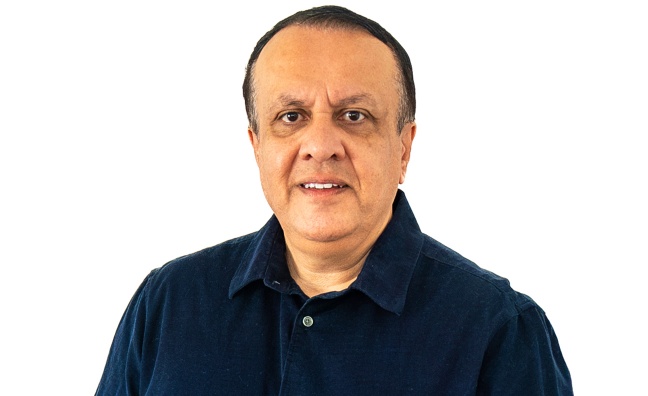
As the founder of A&R Worldwide and the man behind Musexpo (which runs this week until March 25), Sat Bisla’s been at the heart of the A&R world for decades. As this year’s edition of the Los Angeles conference kicks off, Music Week invites the seasoned expert to drill down into some of the topics he believes hold the key to successful A&R in 2026, including live performance, AI, sync, authenticity & more...
Is it time for A&Rs to ditch the data and get back into venues?
“How A&R works boils down to the individual A&R executive and their company philosophy. Each company operates differently. Some are more focused on data-driven A&R, others have a more human approach, and others are a hybrid.
“For me personally, I still feel that A&R is about true art. You need an artist who can deliver not only with the creative aspects of the work they do – whether through songwriting, performance, or engagement with their fans – but who can also connect across all the different touchpoints that make an artist an artiste in the true sense of the word. They need to not only connect with the world of streaming, social and digital, but also with radio, live, sync and brand integration. Then, they are ultimately connecting on a cultural level, not just in certain aspects. Because, again, when you look at the legacy artists, they have all built movements, as opposed to just focusing on moments.
“You have acts that have maybe hundreds of millions of streams that can’t even sell a hundred tickets. So, at the end of the day, it’s about who has the best fan engagement – not just on a digital level, but in a real-life sensibility as well. I look at those types of artists who can deliver in the most authentic way possible. Now, there’s still room for those who are going to be moment-driven, but I still feel that if you want to build a legacy and have your music stand the test of time, you really have to be able to connect on a cultural level in the most authentic and impactful way possible.
“Over the years at Musexpo, I’ve seen situations where A&R people in the room watching the artists play [come across] an act with very little data or streaming information, and yet the pure impact the artist makes in that room is what moves them.
“They then elevate conversations to [the point] where they want to work with the artist – whether it’s a label A&R, a publishing A&R, or a booking agent. I’ve seen that happen time and time again.
For me personally, I still feel that A&R is about true art
Sat Bisla
“Last year, we had an artist called Shobsy, from Ireland, who delivered an incredible showcase performance and got signed to an independent deal with an administration deal through Sony Music Publishing, based on a two-song performance. There’s also an artist called Dave Lofts, from Ireland, who had the same thing. He literally had multiple offers and signed a global deal a few months ago.
“And so, there’s always a situation where an artist who is not that well known puts on the most amazing performance, lifts the roof off the room, and people are just like, ‘We need to work with this person.’
“Also, when you see the artists perform live, you get to see how they connect with the audience, which you can’t really do in an authentic way through socials or just watching a video.
“When you’re a label or an A&R person, you’re also looking at not just the artists, but the team. Time is becoming a very precious commodity, and people don’t want their time or resources wasted. So when you see an artist who can perform, and you meet their team, and you feel like they’ve got that je ne sais quoi factor – they’re likeable, they’ve got the work ethic, they’re authentic, they connect with the audience – that all helps mitigate risk. Whereas sometimes you see labels or A&R signing artists purely off a social or viral moment, and it doesn’t translate.
“I’ve had many conversations with various label heads over the past 12 months, and they generally agree with the idea that it’s easy to mitigate risk by just looking at the data and going, ‘Okay, the artists are already generating this level of traction and revenue, so we know we’re probably going to get our investment back. But they also admit that this is a short-term approach.”
Artificial intelligence is here to stay. And so are we…
“I look at AI – and I say this in a metaphorical way – it’s like having ketchup on your French fries: you never want more ketchup than French fries. It is an additional technological tool where it’s helping save time; it’s helping with the creative process.
“While some people may use AI as a lead indicator, I think it should be used more as a tool, as other technological advancements have been used in the past. And so a bit of artificial intelligence melded with more actual intelligence, for me, is a good balance. Certainly, for artists that don’t have the budgets to create really good demos, it’s a great way to create a demo. Then you can go to the studio and add the additional human touch to make it sound amazing. But, look, AI is here to stay. And again, I remind creators that it should not be the main driver. Your real talent should be the main driver, with AI used as a supplement to help enhance the process and make it easier.
“Now, obviously, there is AI-generated content already out there that sounds pretty authentic, but for a trained ear, you can still tell. At least, I feel like I’ve been able to tell what’s real and what’s created by artificial intelligence. And again, AI cannot replicate what real artists can do. They cannot go on stage and create that human impact for thousands of fans. It can do certain things, but there’s still a lot it cannot do – and it will never ever be able to do what human creators can.”
Why artists and execs need to get into music supervisors’ heads...
“Sync is such a big part of breaking an artist or a song – not just on a local or national level, but globally. When you look at shows like Stranger Things or Euphoria, or a video game like FC, they’re consumed all over the world. One placement can generate millions of new fans.
“Sync has always been a big part of Musexpo. This year, for example, we have the world’s first Netflix creative music team panel, which Amy Dunning, VP of music, and Alexandra Patsavas – who has had an original series in North America – helped us put together. Obviously, Netflix is an incredible platform that breaks songs and artists on a daily basis around the world. We’ve also got the Format [Entertainment] team, led by Dave Jordan, who is doing his first-ever team panel. Dave and his team are, music-wise, behind a lot of the Marvel TV shows, films and soundtracks, as well as other projects outside of the Marvel universe. Fox Sports’ music team are also doing a panel, and Bob Bowen, the global head of music for Amazon MGM Studios, is speaking at this year’s event as well. We’re offering an opportunity for not only the creators to meet, but also to learn how their different ecosystems operate, both creatively and commercially. At the same time, over the years, many music supervisors have discovered young, aspiring songwriters and artists in the room where they’ve ended up imbibing their music.
“One of our biggest successes was a composer called Neil Davidge, who had worked with Massive Attack and came out to one of our global sync events in 2010. And at Musexpo, he literally walked away with a deal with Microsoft Xbox, serving as the composer for Halo 4 and doing the entire soundtrack.
“The days of tastemakers or gatekeepers are gone, but tastekeepers – people whose taste you trust – are still really important. I think a lot of music supervisors are tastekeepers. Not only do the studios and producers trust them, but so does the audience. They’re in a very unique position to elevate a song or an artist into the stratosphere overnight. You can see a song explode on streaming, then also on social media, get on radio, and become a media story – literally overnight. We saw that happen with Nora Felder when she licensed Kate Bush’s Running Up That Hill [A Deal With God] for Stranger Things.
“I also remind artists to understand the music supervisor. Don’t just pitch them music they won’t understand – understand the narrative, the kind of shows they work on, and the types of music they license. That way, you walk in well-prepared, and the music supervisor will appreciate the fact that you’ve done your homework and aren’t just wasting their time.”
The real way to keep it real...
It’s so important to be authentic and original. Hanumankind, the hip-hop artist from India who grew up in Houston, has now had global success in the last 12 or so months with the song Big Dawgs. The video went viral on YouTube in India, then spread globally. What he did with the video was to create something that was a must-watch moment. So, whether it’s your music, whether it’s your fashion, whether it’s your visual aspects, your branding, that conversation hasn’t changed. Authenticity always wins.
“Do you want to be McDonald’s, or do you want to be that Michelin-starred restaurant that everyone’s talking about, with a line out the door? Create something that people are talking about, sharing, and are genuinely passionate about. Everyone in the business – artists and even some executives – are trying to sell something, right? Everyone’s a salesperson. But I remind them: stop being a salesperson. When people start buying into you, that’s when the magic happens.
A lot of people feel like they have to put out music every month just to keep the algorithm going and keep people’s attention – but less is more
Sat Bisla
“I tell a lot of creators, ‘Don’t just put stuff out there because you feel you have to; put your music out there when you want to.’ A lot of people feel like they have to put out music every month just to keep the algorithm going and keep people’s attention – but less is more. I mean, that phrase has been used for decades, right? And there’s a reason people say that, because you have a bigger impact when you create something that’s meaningful, that’s unique, that people are talking about, as opposed to being disposable. I remind artists: don’t create what’s disposable; create something that will be a keepsake – something that will make your fans, and those that discover you, say, ‘Wow, this is so powerful. This is so unique. This is speaking a narrative that I’ve not heard before.’
“Beyond the music, likeability is just as important, because no one wants to work with somebody who is a horrible human being or just not a nice person. I also tell artists that it takes a team; it takes a village to create success. Ensuring that your team really understands you, that you understand them, and that you both collectively understand your audience and what you’re trying to accomplish is key.
“Those factors are very important because no label is just going to sign an artist without a strong team around them – they want to ensure that their efforts in working together aren’t going to be for nothing. Investing in an artist these days is not just very time-consuming but also very expensive, so having the right team, the right mentality, likeability, and exceptional talent is essential.
“I break it down into three tiers for artists: there’s a lot of good out there; there’s a certain amount of great; but you need to be exceptional. And exceptionality takes at least eight to 10 years. When you look at Olympic gold medal-winning athletes, they didn’t just get a gold medal overnight. It took them a minimum of five to six-plus years to get to that point. It’s the same thing with being an incredible artist. There are always the exceptions and those that are born with a gift, as opposed to learning a talent, that come through once in a great while.
“I always tell artists to be true to themselves. So, pick the platforms that you feel most aligned with, that speak to you and connect with your audience. And as you grow your base and you want to expand into new audiences, then look at other platforms. You’ve got to crawl before you walk before you run.
“I also think a lot of artists feel like they’ve got to build from the top down, whereas I remind them you’ve got to build from the bottom up. You plant the seed and the tree will grow and it will bear fruit. You don’t stick a tree upside down and hope it will bear more trees. Sometimes people come in with the upside-down mentality, whereas it should be a bottom-up, not a top-down approach. Artists should be patient, take their time, and do it right because you only have one chance to make a first impression.”
Why radio still matters to A&Rs...
“Having worked in radio for so many years, I know you’re always super-serving the listeners, the fans, the consumers. You build not only an understanding of how to present authentic artists, but also a trust with the audience. The audience not only consumes the music, but also helps elevate the artist and songwriter, because the fans ultimately are the judge and jury.
“If you look at Republic Records, [founders] Monte and Avery Lipman both come from the world of radio. I’ve heard them speak many times at Musexpo, and from conversations I’ve had with them, they still see radio as a very important part of the equation. And there’s a reason why they’ve been the No.1 label on the charts for the past 11 years: they understand culture, they understand the fan, they understand the audience, they understand the artist, and they know how to build movements – not just moments. They came from a world where they interacted very closely with radio, and they still do today.
“There are still independent radio stations that know their local markets better than the streaming platforms. For example, when you look at stations like FluxFM in Berlin, they championed artists before they were on Spotify. They’ve created this niche culture where they are there first. They understand every aspect of the artist before they even hit the algorithm. There are a number of stations around the world like this, such as Triple J in Australia, or KCRW in Los Angeles and KEXP in Seattle. They understand how to act local, but then build global. I think most streaming platforms have a more ‘act global, think local’ approach.”
New territories are opening up, and A&Rs need to be involved…
“India has been the dominant force [in the music industry] in the last few years, and it hasn’t even reached its pinnacle yet. I’ve spent the last 20 years going to India, and the market was still pretty much 98% Bollywood-centric. It wasn’t until Covid that it shifted toward a more non-Bollywood focus, mainly because film production stopped and many consumers – especially younger ones – started pivoting towards different platforms and discovering non-Bollywood-centric music. This inspired a whole generation, with lots of free time, to understand what was happening around the globe and to open their eyes, ears, hearts and souls to a whole new world.
“The biggest challenge – and the biggest opportunity – in India over the last five or six years has been the lack of A&R, because there have not been many A&R people who know how to develop artists from the ground up. That’s changing, which is a good thing.
“And it’s not just the artists; it’s the hitmakers, too. Hybe have just launched an office in Mumbai, and you have companies like THG, who are very strong and run by Taylor Jones. I took him to India for the first time two years ago and he was so impressed that he actually moved his LA headquarters to be between Mumbai and Dubai. You’ve got people like Savan Kotecha [who won the Global Songwriter honour at Musexpo 2025], a renowned hitmaker, setting up an operation there with a JV through Universal Music India. So you’re seeing a lot more A&R skill sets coming into India from the West, which is going to definitely help elevate these artists into the global stratosphere. We’re just literally moments away from that I-pop moment.
“I also think Indonesia’s one of the last major untapped markets. It has a very young population of nearly 300 million. The Indonesian government is also looking to support the creative industries, similar to how the South Korean government helped elevate theirs. But, at the same time, you’re seeing more and more people coming into Jakarta or Bali doing songwriting camps. It’s a combination of pop, EDM, alternative rock and some hip-hop, so it’s multi-genre. So, when you can start doing that – just like the first-generation Indians did, where they had Indian melodies, rhythms, lyrics, and sometimes it was bilingual but with Western A&R production – the two work pretty well together.”