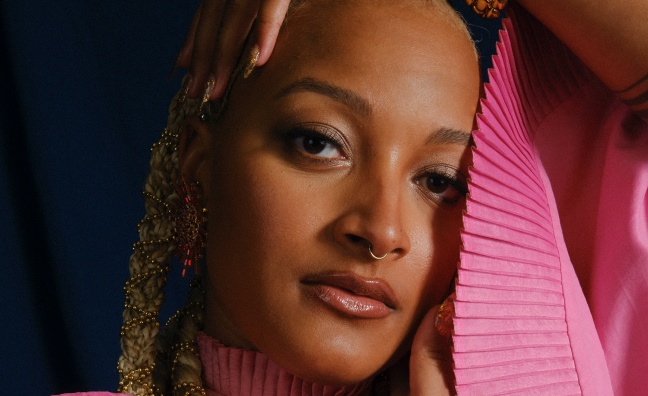
This month, Nubya Garcia shares her brilliant second album, Odyssey, with the world. Here, the London-based jazz star opens up about exploring her musical voice, the importance of representation and owning her work...
INTERVIEW: Miranda Bardsley PHOTO: Danika Lawrence
How did the creative process of making your new album, Odyssey, differ from your debut record, Source?
“I pushed myself in a different way with this work, writing and composing-wise. It really sees me progress and grow in terms of trying to expand my own musical voice and my way of writing and composing. Even the involvement of strings was a huge challenge; I’d never done anything like that before. It’s a beautiful reminder that we all have the capacity to do hard things, even if you may doubt yourself along the way – just do it, just keep going. If I had stopped because it was hard I wouldn’t have this album. So it’s really a deeper realisation of my vision and my wildest dreams. I’m very proud of it.”
You have carved out your own space in a male-dominated sphere of the music industry. Have you navigated any challenges on the way?
“It has been a full spectrum; I’ve had wonderful people championing me from day one but I’ve also had huge challenges. As a woman, it takes longer to garner respect, to be seen as ‘investment worthy’ – people have to see it to believe it. But the older I get, the more I realise that no one is really ready to talk about those kinds of things. If you do, you’re often written off as a complainer, so I’m still figuring out how to journey along that realm. But I know I have people I trust around me so I don’t find myself at huge risk, which is a huge privilege because we live in a very misogynistic world. Jazz is a male-dominated genre; it has been throughout its history, when women weren’t even given opportunities. But I wouldn’t be here without the amazing pushing forward and excellence of the Black women, especially Black instrumentalists, who came before me. I always ask myself what the industry can be doing to support Black women more. You have to go right back to the beginning, with young women learning instruments, having access to education and representation. I didn’t have a Black woman who was a saxophone player to see on stage when I was growing up, which is deep – most people have that. Mentoring programmes and access to industry advice are also so necessary, because the world has a habit of exploiting Black women. It’s a never-ending list, but the basic thing is creating more opportunities and more intentional, continuous action.”
As a genre, does jazz have enough large-scale support from the business?
“Jazz has garnered so much more support and people are more aware of it now. There’s not this diminishing view cast on it, which has taken years and many people – musicians, creatives, journalists, tastemakers and broadcasters – changing the narrative around it. What do I see for the future? I see it continuing to grow. With Ezra Collective winning the Mercury Prize, and with the nominations every year, that’s huge. I’m so glad that people recognise its multifaceted nature and that musicians across the UK are being recognised for having their own sound in the genre. I also want to see the younger generation continue to break the glass ceiling that has been placed over us by people who aren’t us, and for the music to reach people who want to hear it. That’s what it’s really about at the end of the day.”
You’re signed to Concord Jazz. How are you finding life on the label and why is being independent important to you?
“I believe in owning my shit! It’s as simple as that. When I’m 80, I want a legacy of music that’s mine. I wouldn’t say ‘never’ to a major, but I have a great working relationship with my label and, right now, I don’t see that I need to go in another direction. But I don’t know everything there is to know about the industry yet. Major labels are so important in getting people to where they want to go, and that’s dependent on your own vision and what you want to achieve in whatever timeline.”