Sabrina Carpenter shook the entire music industry when she shared her smash hit Espresso with the world in April this year. The track spent seven weeks at No.1 in the UK and has racked up over 1.5 billion streams on Spotify to date.
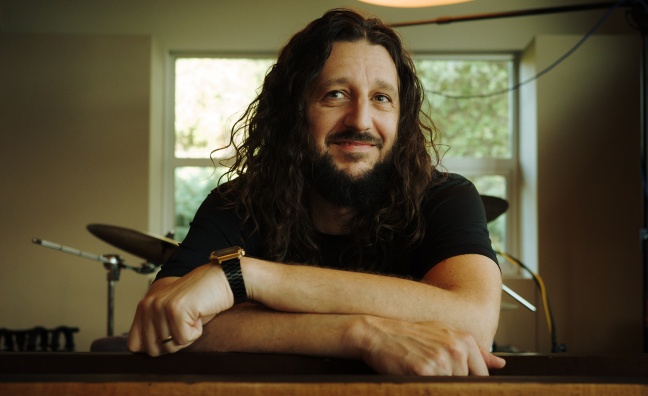
Here, hitmaker Julian Bunetta takes us into the French countryside where the track came to life, tracing its journey from a 20-minute jam session to becoming a global sensation...
I think I’ve listened to Espresso more than anyone else in the world; I was on a billion streams before it even came out!
It’s not often that you get a song which is so magical and happens so fast. With so many, you have to put on your work boots and go to work, it’s a job – you sit down, you write, rewrite, chisel it, mull it over… But now and then you get those ones that just fall from the sky. And that is what Espresso was.
It started in the summer [2023], four or five weeks after I’d just had my second baby, and Sabrina was in Europe. She’d always talked about wanting to get a studio somewhere in the countryside in England or France, so myself and her team, we scoured the internet for the perfect setting with the right criteria and we found this wonderful place called Flow Studios outside of Paris.
We’d been working together since 2021 for her track Nonsense [2022], and since then it had just been a roller-coaster where we could see her career reaching this big tipping point. From Nonsense’s release, the outros, the Taylor Swift tour to her track Feather going to No.1 [on Billboard’s Pop Airplay Chart] and getting all the press for its video, there was this energy everyone could feel and we all went in feeling excited to make new stuff.
The song came about when Sabrina, [co-writers] Amy Allen, Steph Jones and I were just having coffee, thinking, ‘What should we do?’ Sabrina always seems like she has a Rolodex of song ideas or titles in her head, then it’s like she hears some chords or a musical idea and she goes through them to see what fits.
For this, she knew she wanted something fun. We started with the tempo, then I pulled up some chords and found a guitar loop, which felt cool. I changed the chords and made this bassline, then it was like, ‘OK, this feels good, this is a nice little bed of music…’
From there, the melodies flew out fast; we were all bouncing off each other. Sabrina would be singing, Amy would pick something up, Steph would sing, I’d be adding a kick or snare drum then turning back to them to sing. We had this synergy and momentum and we weren’t really thinking, the words were just coming out and suddenly we had ‘Espresso’. That initial explosion of inspiration all happened in about 20 minutes. It was like the songwriting process handbook was thrown out the window, everyone was jamming and having fun, and then we were just like, ‘Fuck it, let’s record it’!
After that, we went back and refined for another three or four hours. I dialled the drums in, changed some words. Then after France, right until the moment the song was coming out, Sabrina and I just chipped away at it. That’s when we really got into the weeds of it – her voice, the sections, the effects.
Sabrina listens to everything – she’d be able to hear if I took out a freaking bit of percussion for a few bars, so we were doing lots of micro-tweaks! The bass part kept changing – what’s in the second verse was happening more in the song, but we took a lot of it out so it changes that up – then there were things like how much reverb we’d put on a cowbell or a woodblock. Sabrina and I knew what we wanted the song to sound like so we just kept chasing that.
My engineer, Jeff Gunnell, and I would also be producing and mixing at the same time. We’d be doing vocal rides and Sabrina would say, ‘The vocals are getting lost,’ so we’d go back to old mixes and I’d bring new things I’d learnt into them. It was like you’d go back to a fork in a road and keep taking different paths.
There were also ad libs that Sabrina had remembered recording in the first session which we pieced together. She’d sung them from random inspiration, but by adding them in the way we did, they became intentional melodies along with the BVs and the leads.
I love working like that, turning over stones and making magic discoveries. Sabrina does too; she likes to hear the song over and over so that everything is crystallised and it all has purpose.
Because of that, Espresso is a beautifully crafted song – the four of us have chemistry and we pushed each other to make it perfect. Every syllable and sound is intentional to make you feel a certain way. It’s not a cheap toy which is fun to play with but breaks straight away – the more you listen, the more you hear its nuances.
I don’t think you can find anyone who makes music who doesn’t daydream about their song being the biggest song in the world. You want it to be, you think it should be, but you can never predict it. Even with Espresso, I thought it would be big, I just never thought it would get big in the way it did, but you still have to work on a song like it’s going to be heard by everyone in the world.
I learn so much from Sabrina, especially as most of my success has been with bands or male artists. And as far as Espresso goes, I don’t know if it’s telling me that I should work away at songs right until the day they’re finished [laughs], but it has taught me to just follow my instinct, my gut, because if you don’t absolutely love your song and would die for it, how do you expect anyone else to? I would listen to Espresso every single day, I love it so much.
PUBLISHERS:
UMPG, Sony
Music Publishing, Warner Chappell, Reservoir Media
WRITERS:
Sabrina Carpenter, Julian Bunetta, Amy Allen, Steph Jones
PRODUCER:
Julian Bunetta
RELEASE DATE: 11.04.24
LABEL: Island Records
TOTAL SALES (OCC): 1,544,563
Publisher’s Corner
Katie Welle, SVP, creative A&R, Sony Music Publishing: “Julian is a standout songwriter for many reasons, but I am constantly amazed by his ability to inspire creativity in others. He has high standards for quality and brings that to everything he does.”