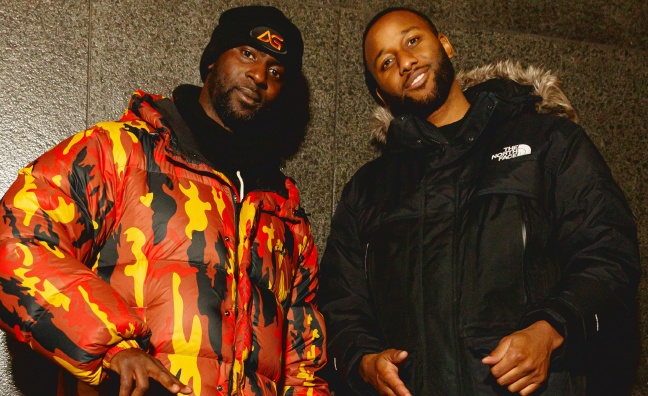
DJ AG doesn’t mince his words when it comes to artist development in 2025. “A lot of artists don’t know what to do,” he tells Music Week, as we meet, together with his manager Zeon Richards, to discuss the growth of his platform. Streaming live on TikTok from the streets of London, AG has hosted an array of emerging artists, plus stars like Central Cee, Craig David, Skepta, JME, Krept & Konan and Jorja Smith. As for what’s next, the possibilities seem endless for the pair, whose views on A&R, virality and content creation make for essential reading…
WORDS: YEMI ABIADE
PHOTOS: CALVIN CEILE
The cold of a wintry January evening in central London doesn’t stop the masses from turning up to DJ AG’s latest TikTok livestream. With a set of speakers, a pair of CDJs and a microphone in tow, AG – real name Ashley Gordon – has his growing audience (more than 533,000 followers and 3.8 million likes on TikTok) hanging on every upload. As well as would-be rappers, singers and instrumentalists, AG hosts established musical talent: Central Cee, Skepta, JME, Jorja Smith, Lady Leshurr and Krept & Konan are just a handful of past guests.
A former wannabe MC who began livestreaming DJ sets from his Tottenham bedroom, AG’s everyman approach anchors his work. He asks a question of everyone who steps up and performs, whether it’s a spelling bee, or a challenge to jump as high as he does. It is this down-to-earth demeanour that makes everyone feel special. The general theme of his streams, akin to street parties, is to expect the unexpected.
So far, he has mostly set up shop in Brixton or King’s Cross, which is where Music Week is summoned for our encounter with AG and his manager Zeon Richards. This evening, commuters are treated to an accordionist playing over a rampant drum & bass instrumental, blends of grime, drill and R&B, and Craig David turning up to send the crowd into a frenzy, running through classics like Fill Me In and Re-Rewind (The Crowd Say Bo Selecta).
“I’ve been streaming since 2022 and making good progress, but I’ve always been open to bringing people in,” AG beams. “I just loved Zeon’s energy and enthusiasm. It wasn’t about numbers or finances, more about joining forces to see what we can do to help communities. It’s about amplifying my idea, making it bigger and better, and just getting in the right spaces around the right people.”
When a September 2024 stream featuring Daddy Freddy (who was once the holder of the Guinness Book Of World Records title of world’s fastest rapper) went viral, it sparked the belief that what AG was doing could impact the music industry.
“I realised that people really want to see artists on my platform,” he says. “So I thought, ‘How am I going to be able to serve that but also get that infrastructure in place, to try and be creative and then build a million other connections?’ That’s when I realised I needed help.”
Enter Richards, who also manages Wretch 32 and heads up Renowned Group. Having also held A&R roles at Polydor and Ministry Of Sound, Richards has been a key player in the UK industry for decades now.
“AG came to my house and we had a discussion about the power of his idea to bring the community in,” Richards explains. “I watched one of his streams with a woman named Sandra and it really hit me that you don’t know what a person’s going through, but they can still possess so much talent. Anyone you bump into on the street can be that talented. It’s something I wanted to be a part of.”
His live sets have captured the imagination of the UK scene, reinventing the DIY culture of pirate radio. Except, rather than scaling a high-rise estate for a radio signal, he utilises TikTok to broadcast new artists at will. It’s a new twist on an old formula, offering an alternative to the traditional curve of artist development and breakthroughs. As well as empowering emerging artists and invigorating more established acts to go back to basics, AG has partnered with labels including Defected and Ministry Of Sound.
Beyond the livestreams, he has visited schools and care homes, altruistic acts that show his intent to channel music into building community.
How, then, do the pair plan to grow AG’s business? And what impact do they intend to make on the wider industry? Music Week sits down with DJ AG and Zeon Richards to answer those questions and many more…
When it came to the prospect of starting to work with each other, what was the initial appeal for you both?
DJ AG: “It’s Zeon’s knowledge about how things work and how to get things done, because I’m still learning. He has great connections, but it’s more how knowledgeable he is and his vision, how he wants to execute things.”
Zeon Richards: “It’s been amazing, because I get so much out of going to a place like Brixton and seeing what AG does for the people and how they react to him. It’s really fulfilling; one day he was in Brixton and Ragga G gave him a ‘Brixton Loves AG’ T-shirt. Or when he streamed from Birmingham, I got calls saying everyone was so excited he was coming. It goes back to the idea of people wanting to be heard and AG serving and connecting with people.”
How is your relationship evolving so far? Do you ever disagree, for example?
ZR: “We’re fully aligned with the purpose and we’re both quite ambitious. Where we disagree sometimes is me telling him that what he wants can be a lot to put on himself, like travelling around and maybe overworking. But he’ll do it anyway!”
AG: “I’m just hungry to succeed, man. I think I failed in so many things in my life, so to finally be able to get some traction means I can’t stop, I have to go in.”
You’ve both been in and around UK rap for a long time – how do you view the current state of the genre?
AG: “We’re in interesting times. I found last year quite boring; if you asked me to name you 10 breaking acts, I’d struggle. Maybe three or four. The hype of grime coming back has been great. This could be a big year, but it depends on a few things. There’s been a lot of talk about whether the scene needs gatekeepers, but the only gatekeeper for artists these days is the algorithm. If you can bust that, then that will give you all the opportunities you need. Ragga Ruggie is a perfect example, I didn’t know who he was, but the guy goes viral every single week. He comes on the stream and he hits 100,000 views and now everyone knows who he is. I can ring off so many of his lines now! I think by the end of this year I’ll be able to name 10 breaking acts minimum, if not 20.”
ZR: “I think we’ve got to the stage where so many artists have had success and the game is a little too glossy. It’s amazing that anyone could hop on a beat, say whatever they want, and it can fly up the charts. But with that, and because the level of entry for artists is so low, you see a dip in quality. We have artists like Dave, but then there are others we probably don’t speak about enough because maybe the quality of their music isn’t strong enough. But I’m looking forward to seeing the next generation of artists coming through that everyone will scream about and maybe that will mark a shift in quality.”
Will you unearth new mainstream talent via what you’re doing?
AG: “It’s inevitable. We see about 20 artists a day and we’re out four to five times a week. Everything is timing. It could be anywhere around the world or the country, but it’s bound to happen.”
How is the platform lowering barriers to entry and creating sustainability for artists?
ZR: “AG’s platform is a very good developmental stage. It brings you back to [the days of] pirate radio where you had to turn up every week and maybe got lucky to hop on a set before you got your own and show that you were good enough to be there. Then, in time, there might be a bit of demand for you to get your own set. Then you might get a booking to do more sets or maybe a live show. The better someone gets, the more time they get. So you keep coming, get better, develop your audience on TikTok and viewers start to know who you are. Hard work pays off, so you should want to work hard. It’s important to not take any stage of your development for granted.”
There’s been a notable lack of mainstream UK breakthroughs in recent years. Do you think that the system is broken?
AG: “Absolutely. People don’t work as hard. It’s not because they don’t want to; people just don’t know how to do things. That’s the one thing that I’m learning throughout the journey of working with artists. A lot of them don’t know what to do. What people want to watch right now online is the weird and the wonderful, because that’s what’s basically going viral. Your production value has to be on point: if you’re an MC spitting about beans on toast, maybe you need to dress up as toast, get someone to dress up as beans and that might convince people to pause and watch it back. Or, maybe you bring your whole team to stand behind you, hyping you up, egging you on. You’re making the audience ask themselves questions, ‘Who’s that person? That person’s going nuts.’ When artists come on my streams, they should think, ‘If I was doing a music video, what would that look like?’ That will make what you offer more exciting and entertaining.”
ZR: “It’s just a cheaper version of a music video that can potentially reach a lot more people across different platforms. It reflects the changes of the world.”
You’ve hosted some big names – which performances stand out the most?
AG: “If you had told me 12 months ago that Krept & Konan were going to come through, I would’ve laughed. They’re two amazing individuals who’ve done great things for their community. Jorja Smith was so humble to come to Birmingham, it’s a priceless memory. We need to run that back, I’ll come to Walsall if I have to! Having Chip on was a full-circle moment because we’re from the same area, so to be able to reconnect with him has been amazing. Ray BLK came to Brixton and let us know how many bangers she has! I hope she gets the support she needs from the industry this year. I went to school with JME and Skepta, so that was full circle, too. Being a failed MC, I can’t get into those rooms but to get that co-sign was a great way to start this wave of people wanting to come on. People like Lethal Bizzle, Frisco, ArrDee… I’m very grateful for them.”
How has the industry reacted to what you’re doing?
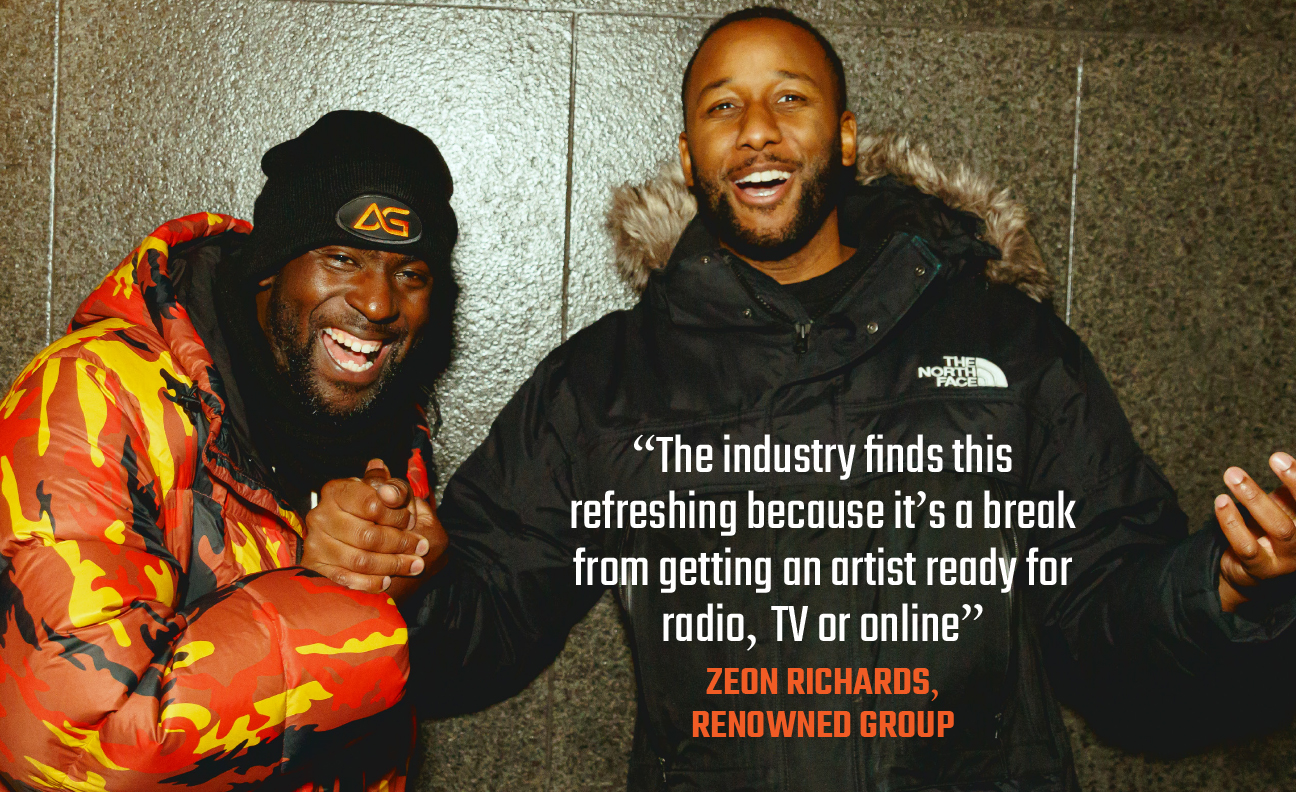
ZR: “People find it refreshing because it’s a break from getting an artist ready for radio, TV or online. The fact that so many big artists are engaging with community and culture, it’s a break from what we’ve seen in recent years. Someone can prepare their set, spray and then be able to say they’ve been on the same billing as Skepta and JME, or Chip or Krept & Konan. It’s just about giving opportunities and moments to savour.”
AG: “I get a lot of praise but I always take it with a pinch of salt. I’m not focused on what happened yesterday. If something goes viral, great, but what’s happening today? What’s happening tomorrow? Let’s keep going. I’m obviously grateful for the well-wishing, I’ll take it where I can get it, but we just keep moving. I don’t see anything I do as winning until we get to the final destination. Maybe I’ll have a drink of something then, but for now, it’s bread and water!”
On a practical level, how does your set-up work? Have you run into any issues yet?
AG: “We stream on TikTok and artists want their music played and they want to trend, so they get with the programme. Across the UK, you need permits to go to certain places. But why am I, as a streamer who’s bringing joy to people, paying for a permit? I don’t care how much it is, but that can obviously limit where you can go. But hopefully common sense will prevail, and they’ll give us the keys to London.”
In your opinion, how important is TikTok to the music business at the moment?
AG: “It’s fundamental. If you can consistently defeat the TikTok algorithm, that puts you in a very prominent position. It gives you visibility that other platforms don’t and your growth can be instant. I’m definitely grateful for TikTok and being able to use it to platform artists and change lives.”
AG, you’ve talked about taking your operation abroad. What can you share about plans for 2025 and beyond?
AG: “We want to cater to as many genres as possible. We play a lot of dancehall in Brixton, so we know we need to see the Caribbean, or when Tiwa Savage or NSG came down, that tells us we need to see Africa. We have a reggaeton presence. There’s certainly an appetite to go and explore.”
ZR: “If you’re able to build an audience internationally, that can only help UK artists, because then you’ve got an even bigger platform. In terms of confirmed plans, we’re doing Red Bull Culture Clash this year, a few UK festivals and a lot of live events, including one this quarter. We collaborated with Idris Elba, which shows the desire of people outside of music to work with us, so hopefully we can continue that.”
You also teamed up with Defected on a livestream in 2024. Presumably labels have been in touch – are there any deals in the works?
ZR: “There have been initial conversations, but it’s just about trying to work out what something like that might look like. Working with Defected was great and they were amazing partners.”
AG, are you interested in starting your own label?
AG: “My thing is if I’m going to have one, can we service it in the right way? Are artists going to get the right development? There is appetite from my side, but it’s just about making sure that artists are really catered for. I just don’t really know what that looks like right now.”
Do you have any advice for label executives?
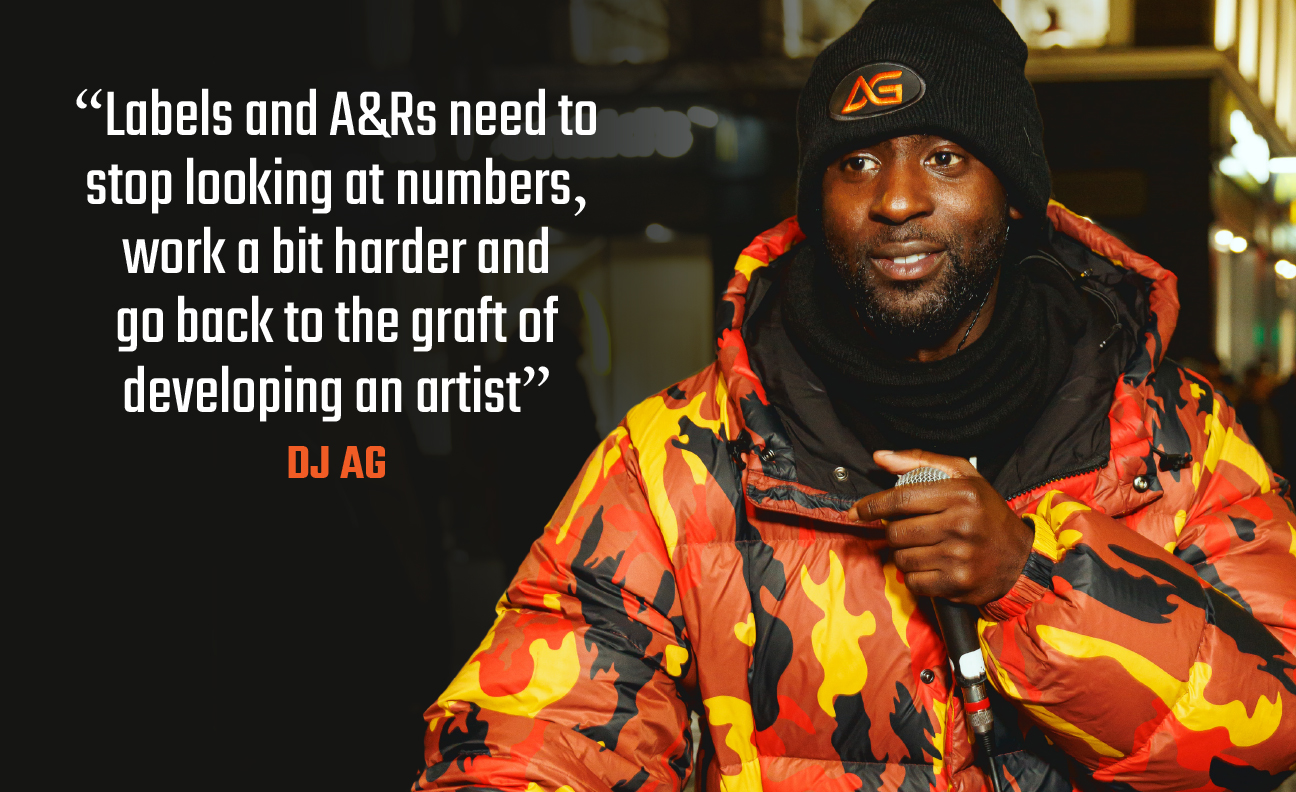
AG: “We pump out eight to 10 videos a day, so A&Rs have quite an easy job. All you need to do is scroll and keep scrolling to find artists with talent but who need a bit of help to position themselves and how to be a bit more creative. But generally, labels and A&Rs need to stop looking at numbers. We’re not posting just looking for every single viral moment, we’re posting to showcase talent, people who need feedback, whether it be good or bad. So just work a bit harder and go back to the graft of developing an artist.”
Finally, AG, how would you sum up your ultimate mission?
AG: “The key thing is giving people hope. Whether that is on the street with artists, going to a care home, or going to a school. We need more influencers giving hope and showcasing positivity. The more hope you give to people, the greater we can be as a people.”
 FOLLOW