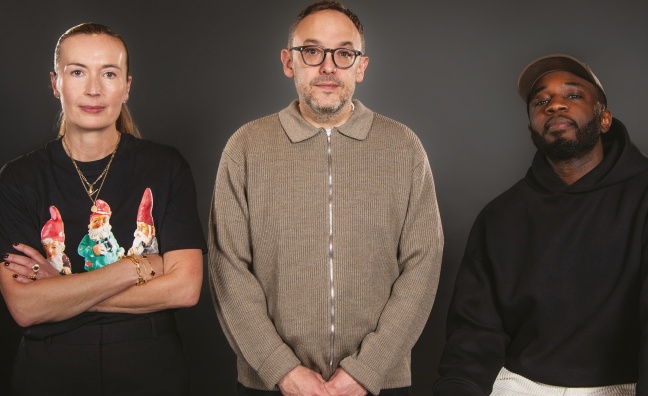
Polydor Label Group (PLG) has been responsible for some of the biggest success stories in British music this year, from the global breakthrough of Olivia Dean to the huge sales of Sam Fender, the return of Lewis Capaldi and dance hits for Jazzy & Kilimanjaro, Chrystal and more. Helming it are PLG and Polydor president Ben Mortimer, Capitol UK president Jo Charrington and 0207 Def Jam president Alec Boateng. Here, Music Week is granted an exclusive first audience with the recently united trio to discuss the secrets to their success at Universal Music Group UK…
WORDS: Ben Homewood
PHOTOS: Carsten Windhorst & Gerard Hynes
"I think,” begins Ben Mortimer, with a glint in his eye, “that if you just look at the charts, then you could say that it’s working…”
We begin our meeting with the three labels that form Polydor Label Group, by asking Mortimer – who also serves as president of the group itself – to sum up how life at the restructured Universal Music Group UK is going so far.
“We’ve got a phenomenal amount of Universal records in the charts, and a phenomenal amount from PLG,” says Mortimer. “If you look at the singles Top 20, Olivia Dean’s got four songs, Sam Fender has two, so does Sabrina Carpenter, Lewis Capaldi has one… If you take it from a results perspective, it’s fantastic.”
No wonder Mortimer is smiling: the week before we meet, Sam Fender won the Mercury Prize for People Watching, which set the record for the fastest-selling album by a UK act in 2025 back in February, and the biggest by a UK solo act in three years. In week one alone, it shifted 107,124 copies and outsold the rest of the Top 10 combined. On top of a host of five-star reviews, it has supported 500,000+ ticket sales.
Meanwhile, led by president Jo Charrington, Capitol UK’s Olivia Dean campaign saw the singer become the first British female solo artist ever to have four songs in the Top 10. Her second album, The Art Of Loving, debuted at the top spot, while Man I Need climbed to No.1 to give Dean her first chart double. With 662,632 sales, it is the biggest-selling single released by a British artist this year. All 12 album tracks featured in Spotify’s UK Top 40, while daily streams overall surged to 20 million. The day of the record’s release also saw Dean achieve the most Spotify streams of any British artist in the world.
A sprinkling of further stats underlines the impact made by domestic talent under PLG in 2025. Dean and Fender, who toured together this year, collaborated on Rein Me In, which reached No.6 and has 492,726 sales to date. Mortimer and Charrington also point enthusiastically to No Bad Vibes by Jazzy (Polydor) featuring Kilimanjaro (Capitol). Released by Polydor’s dance imprint Chaos, it has 320,214 UK sales, not to mention in excess of 120 million Spotify streams. Mortimer also tips his hat to The Days by Chrystal, another Chaos-released single that has 1,081,329 sales.
“We are the sole UK company that has exported music this year,” Mortimer states. “Look at Sam, Olivia, Chrystal, Lola Young… There are really concrete examples of [our global success], that’s the best thing, and I think we should feel really, really proud of that.”
“In my opinion, Universal is the best, and the best way to show artists we’re the right place to sign is really just proof of concept,” Charrington says. “It’s about being really good at our jobs and showing that, while we might be based in the UK, we’re the best in the world.”
“There’s so much conversation about technology, AI, the business of music…,” says 0207 Def Jam president Alec Boateng. “But it’s just like, having a front seat to Olivia Dean, you’re thinking, ‘Oh, okay, I know when I come across the next Stormzy or Olivia I’m in a system that can deliver them into people’s lives. That’s our job, do you know what I mean?”
Boateng arrived at Universal from Atlantic five years ago, running the newly launched 0207 Def Jam. He was working on what would become a historic No.1 for Stormzy and Chase & Status at the time of the big changes at Universal Music Group UK. Together with Charrington – who was then co-president of EMI, home to Chase & Status – they worked on the epic campaign for Backbone.
“It became No.1 in the mix of everything and it was good to be energised by the ability to deliver what was that year’s only [all] British No.1 record,” Boateng tells Music Week. “That was energising and encouraging.”
Mortimer, Charrington and Boateng are a trio of A&R specialists and, as we hear in a lengthy discussion of their plans for PLG, they intend to be at the centre of Universal’s push to break UK talent on the world stage.
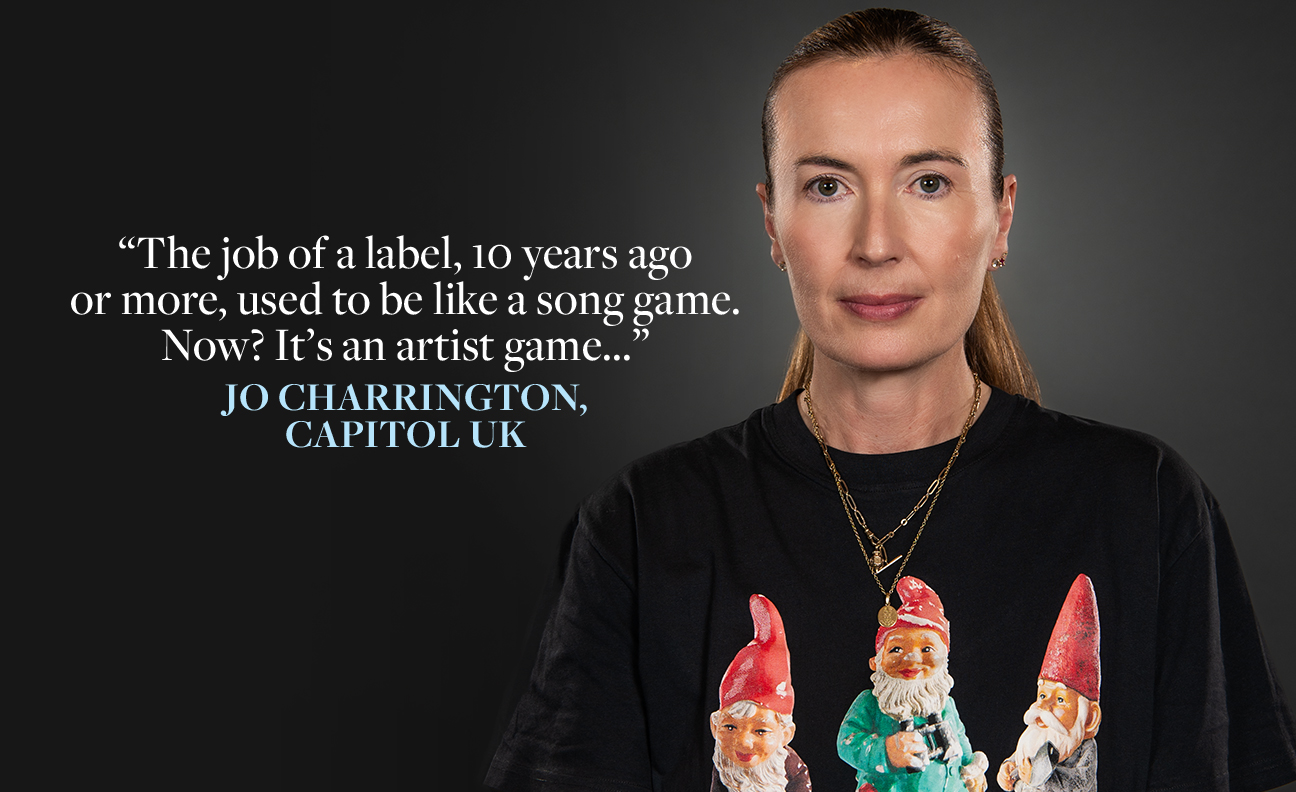
“The artists that are really connecting now, let’s say from the UK and signed to Universal, such as Lola Young and Olivia Dean, the reason they have connected and they’re working everywhere is because they’re authentic,” insists Charrington. “The job of a label now is to let your artist be who they are and give them the confidence to do that.”
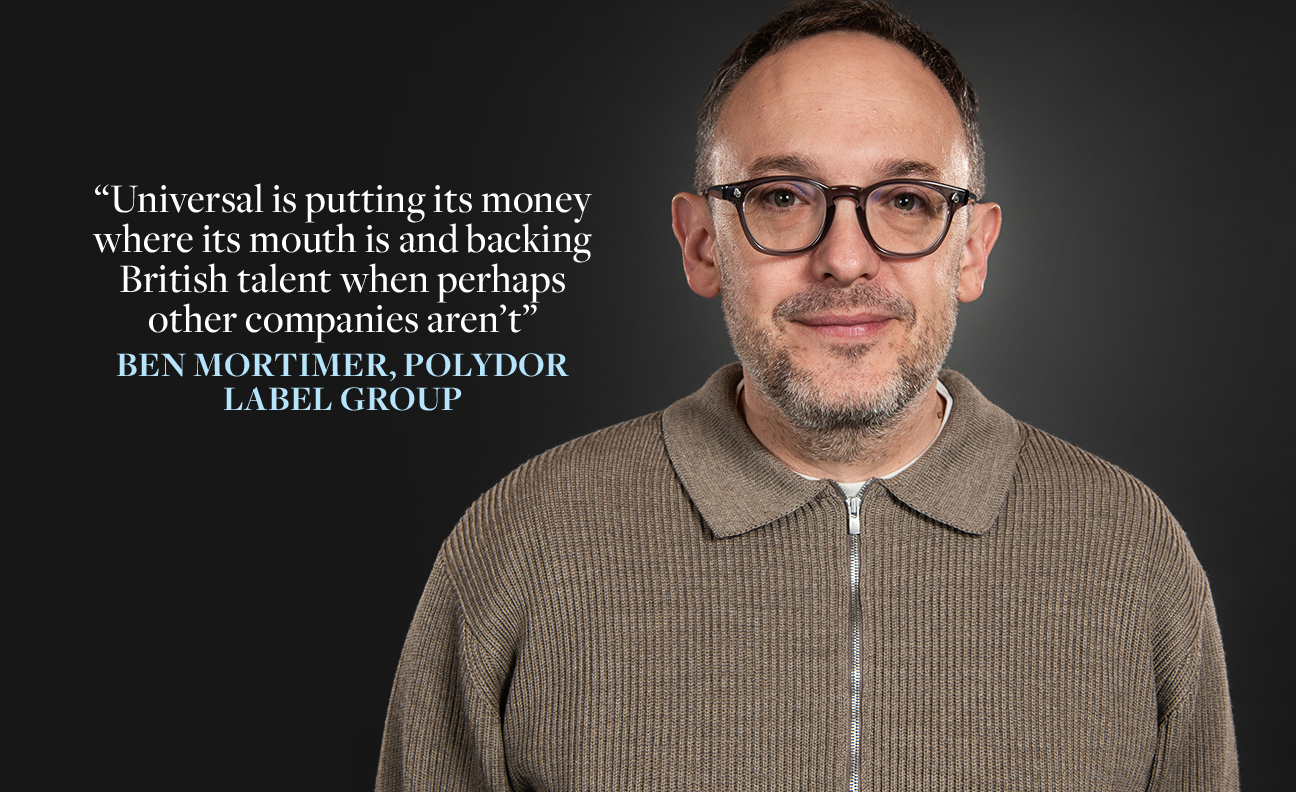
“Hand on heart, I genuinely feel really lucky to be here,” says Mortimer. “It’s a company that supports entrepreneurs and I think it’s putting its money where its mouth is and backing British talent when perhaps other companies aren’t.”
Our time at Universal Music Group UK HQ for the interview and cover shoot (for which Boateng arrives with a mini packet of Haribo) allows for an illustration of the dynamic at the top of PLG, and what it will bring to the table in the major’s new era. Here, we launch into a discussion of exactly what that will entail…
Let’s rewind to last summer – Ben, how did you feel when you found out you’d be running PLG?
Ben Mortimer: “It’s all a bit of a haze. I had a very young daughter, so it was actually the maddest time of my life in general. Like with any restructure, there’s an element of sadness and you’re losing some stuff, but I was also incredibly excited about getting to work with Alec and Jo and the artists that they were bringing in. Very quickly, I could see the opportunity. [Being PLG president] is an honour – it’s that simple, really. I don’t want to sound arrogant, but I don’t think I felt particularly daunted by it because I knew Jo and Alec really well. I have got so much respect for what they’ve done, it just felt like a really amazing opportunity.”
Now your roster has expanded, have you got to know all the artists?
BM: “Yeah, absolutely, while also being incredibly respectful of the existing relationships. Alec was very generous in setting me up with Stormzy, and it was the same with Jo and Sam Smith. I actually knew Sam because I tried to sign them back in the day and they remembered. [Laughs] And obviously I didn’t sign them, so that was funny. They were like, ‘Well, we’re here now!’ Jo and Alec draw on me if they need me and it’s not that often. There’s some stuff that I have oversight on, but I have such faith in Jo and Alec to get it done; they’re such brilliant executives.”
Jo and Alec, how are you adjusting to the PLG set-up?
Jo Charrington: “It’s like a nice little Christmas tree! If we’ve got a question, we bounce ideas off each other. It’s good to have people around, I like it. Ben’s really supportive, I’m allowed to get on with it when I want to get on with it. And Alec’s just down the corridor – he’s one of the most incredible, creative executives, just being near that energy is positive, and our A&R teams chat and swap ideas.”
Alec Boateng: “At heart, Jo, Ben and I, we’re all A&Rs, we all think from an artist’s perspective. There are different paths to a leadership space. Sometimes I wake up and I think, ‘How did I get here?’ And a lot of it is because I really love music; I do genuinely feel like Jo and Ben are the same in that sense. I’m the newest in the Universal system. It’s such a beast when it works that it’s really good to understand it from the inside out and to have people who’ve managed to manoeuvre and make it work for artists and teams. Jo and Ben have been involved in breaking acts internationally and that’s something we’ve got a huge ambition to do at 0207.”
And how are the three of you all finding life under Dickon’s leadership so far?
BM: “It’s great, he’s very straightforward. That makes it sound simplistic, but it’s not. The messaging is always really clear, he’s super supportive and I don’t know if he’ll like me for saying this, but he’s a really nice person.”
AB: “What I really like is that he believes in A&R. I think that’s so valuable because that’s what we are – 0207 is a very culture- and genre-based label in a lot of ways and I’ve always said that the industry can have a bit of conditional love for Black music, if I’m honest. It’s really good that the conversation can just be, ‘Make great music, sign great artists.’ When you’re in an environment in which that’s the petrol to the car, you feel quite safe.”
JC: “Dickon is about artists and his executives. I haven’t felt as supported, well, since I worked with Nick [Raphael, former Capitol co-president]. Dickon is just a really good leader, he doesn’t get involved for the sake of it, but he’s very supportive. He just loves it and he loves the artists, he’s excited to meet them and they feel that, so they can go out and do what they do knowing that they’ve got someone who’s out there properly cheerleading and standing up for them. I think he really understands creative executives. He doesn’t shy away from people. I can be pretty forthright and that doesn’t bother him. We can have really honest conversations and our visions match up. Also, having Dickon’s energy has been a multiplier in what’s happened with Olivia, because he came in and gave us a massive boost. He believed in her, he believed in us, and that support and that energy, it really means something. Our ideologies align. We’re not looking inwards at the UK, we’re not chasing the UK hit. We’re chasing building the business, building the artist and then hopefully it’ll connect and we’ll get the big hit, and that’s what’s happened with her. It’s super special.”
How are the identities of the three labels taking shape now you’re part of the same group?
BM: “There was always this reputation of Polydor, pre-PLG, as being this well-oiled machine. Sometimes when we were talking to artists, I’d pitch it as, ‘You’d probably have more fun with other people, but if you want a good job done, come with us.’ It’s not the most exciting pitch, but I think it was just true. And Polydor at that particular moment [when the restructure happened], I don’t think its cycle of artists was as good as it has been recently. Polydor itself was coming out of a cycle, but we knew we had a good machine, and knowing that there was this fresh influx of artists coming from Alec and Jo, it just really felt like everybody plugging into that machine could benefit.”
JC: “I’d love to bring through some executive talent, that’s really, really important to me. I want to keep doing what we’re doing, keep showing that it can be done, which is what we’re doing with Olivia. Capitol is an amazing brand and I’m so proud to be part of the story.”
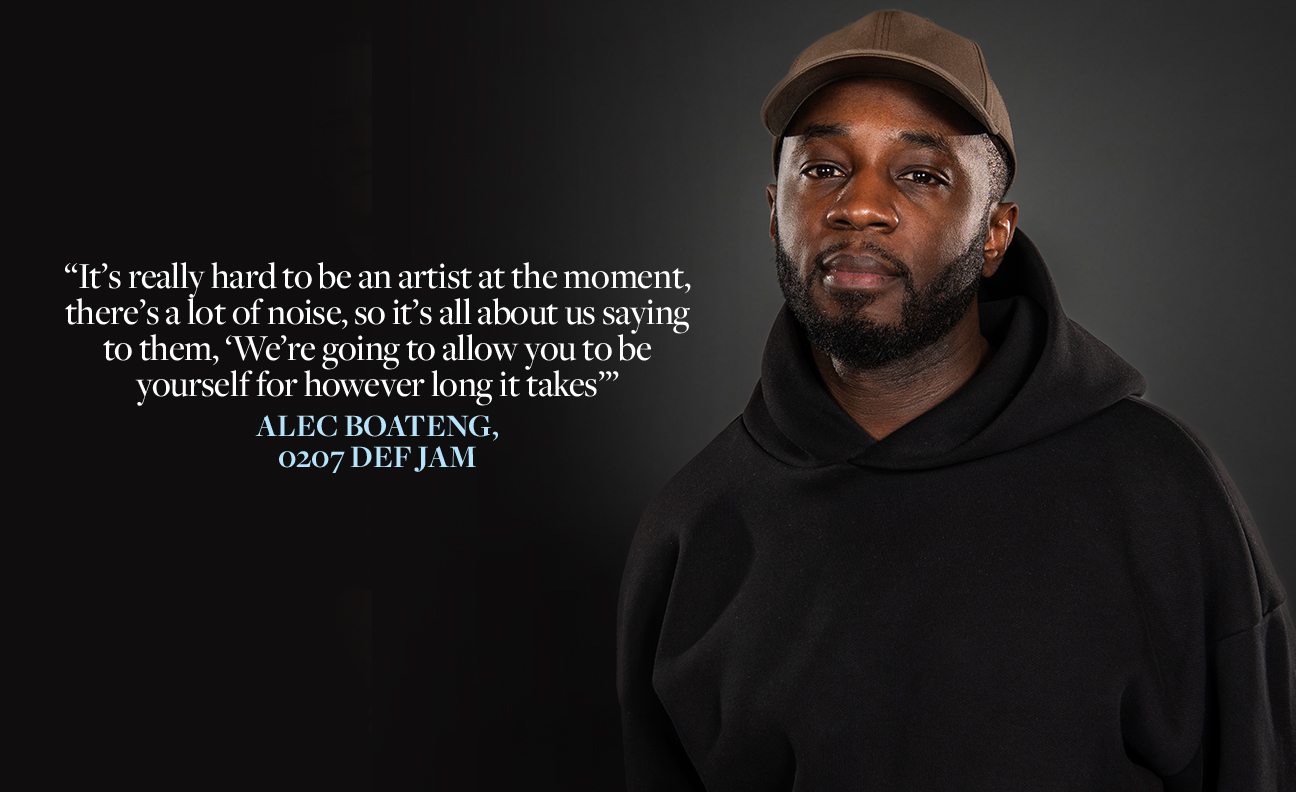
AB: “It’s evolution. I’ve always had a focus on serving artists, that’s what’s been my thing. So it’s just about adapting to the newness. What I will say is that there’s a simplicity in the shape of Universal now that really helps. I’m super excited about Amie Blu, Nia Smith and LeoStayTrill. You sign someone and you think, ‘You are going to be something.’ In our jobs we’ve got to have a lot of faith and hope. It’s really hard to be an artist at the moment, there’s a lot of noise. It’s about picking an artist and saying, ‘We’re going to allow you to be yourself for however long it takes.’”
Are collaborations between Universal artists such as Sam Fender and Olivia Dean, Sam and Elton John, plus Jazzy and Kilimanjaro the best illustration of what’s now possible?
JC: “Sam is obviously huge here, and Olivia was growing, and Rein Me In opened them both up to new audiences, so I would say that is the best example. And from my personal point of view, it’s about being able to use some of the great resources that Polydor have, with Semera [Khan, creative director and recent winner of the Special Recognition honour at the Music Week Women In Music Awards 2025] and Paddy [McLean, general manager] and the value that adds to our campaigns. Just having access to that talent is one of the best upsides for me and our artists.”
BM: “These are things that were cooked up on our floor here and are examples of very good creative collaboration that I’m not sure would have happened without this set-up. When it feels right, yeah, we’ll look to do it more, but you can’t do it on everything. The Sam and Olivia one, it was actually my idea. I have one good one a year and that was it! I came in and spoke to Richard [O’Donovan], who’s Sam’s A&R, and I spoke to Jo and they were both like, ‘Mmm…’ and then they went off and made it happen. But the artists executed it at the end of the day, they created the magic. We just led them there. That’s the best way when it’s like that.”
Alec, could we see Stormzy involved in anything like that one day?
AB: “Yeah, it’s all down to timing and the music the artists are creating. He’s probably one of the most unique modern artist propositions. I trust him, alongside all of us, all the newness, to figure out what the best version of himself as an artist is. It’s a really exciting challenge, because to me, he’s still one of the best performers in the world. He doesn’t make that much music, he’s probably made about 70 songs in his career, and a third of them are certified records, silver, gold or platinum. He’s so clinical musically that you almost have to wait until he’s got clarity and you know something brilliant’s going to happen. It’s exciting, it’s like, ‘What do you do? What does he do musically?’ He’s had hits across gospel, grime, pop, R&B… he’s had platinum hits in basically every genre, even drum & bass now, so it’s like… flip. He causes so much noise and such a stir with his presence, I think people, whether they like it or not, care what he’s going to say or do.”
Jo, when we spoke earlier this year for Music Week’s Olivia Dean cover story, you said that the team working the campaign is “one of the best in the world”. Is that the reason she’s been able to break in America?
JC: “First and foremost, it’s about a brilliant relationship with Island US and the team there. Tom Paul, the MD of Capitol, was part of the Sam Smith campaigns so he already had a lot of experience in terms of breaking acts from the UK in the huge market that is America. That was all alongside Nickie Owen in International here. One of the key things is that their muscle memory was really good in terms of how to navigate the networks we have here. It was just good old-fashioned stuff, like being in the market at the right time, starting to set up live shows a year ago, working closely with our American partners. The multipliers were from the UK and they translated over to the US. There were many, many things, but I think the two that really helped tip us over the edge were the Bridget Jones [movie] end credit song, It Isn’t Perfect But It Might Be, and the Sam Fender duet. Doing the Sabrina Carpenter BST show and that connection was massive, too.”
All the cards have fallen in such a way that the campaign looks close to perfect from the outside – what’s it been like on the inside?
JC: “I don’t think any of us quite realised how big this would go and how quickly. All I can say is it feels the closest to Sam Smith that I’ve ever felt about an artist and a campaign in terms of everything connecting all at once. It’s almost like every song on the album could have been a single in terms of how they’re reacting. She’s connecting on a level that I haven’t seen from a UK artist for at least 10 years. It feels like an American artist, like what happens with a Sabrina, it feels like that, or a Chappell Roan, to me. But we’re doing it from the UK, which we’re just so proud of. I went to LA in February 2024 and was doing meetings with publishers and songwriters, I could feel the interest and the appetite, everybody sensed how big she could be. Now it’s just being ratified. Her album is now Top 10 in America for the fourth week in a row and it’s growing every week and the next single, So Easy (To Fall In Love), is climbing the charts. It’s starting to feel like Sabrina when she had Espresso. She had two songs competing with each other and we feel like we might be about to be in a similar situation.”
Speaking of Sabrina Carpenter, she’s just one of a number of US stars that PLG works with. What can your UK set-up do for those acts?
BM: “The history of Polydor and Interscope goes back to Sir Lucian Grainge and Jimmy Iovine. It’s a really longstanding relationship, and there’s been so much incredible stuff that’s come through it, artists that feel really well connected to the UK. We just kept that blueprint going. Billie Eilish did her first ever show here. Olivia Rodrigo did her first ever live performance here. Sabrina put in a huge amount of time here. It’s well documented that she broke on her sixth album, but she’d been here four or five times. She’d be sitting in this office going, ‘Why is this not happening yet?’ We just kept going and kept going, so by the time it exploded, the groundwork was there. I’m really proud of what we’ve done, and I don’t want to sound arrogant, but sometimes I think US acts see being on Polydor as a bit of a badge of honour. I can’t base that on my work, it goes back historically from Lucian onwards.”
Closer to home, why do you think Universal has been the label responsible for the likes of Olivia Dean, Sam Fender and a lot of the other artists that have had a big 2025 at home and abroad?
BM: “It’s backing artists that are really talented. It’s an obvious thing to say, but they’re huge talents. Sam had a tough time making this record. He speaks very openly about it, and we gave him the time and said, ‘Everybody stop, leave him alone.’ We just let him heal, and you felt the benefit on the record. So hopefully that’s a good message for people out there.”
JC: “The job of a label 10 years ago or more, was more about having a hit, pushing it, getting it on this, getting it on that. It used to be more like a song game and a music game, and now it’s an artist game. Experience is important. Smart artists want some experience around them as much as the youth. It’s our job to help them be who they are, not to dictate what they’re doing or fight on everything. It’s our job to pick, ‘What is the one thing that could make a difference?’ and to then be really intentional about what that is and go with a really logical argument. We try and get it across the line and show them what a difference that makes. It’s about being considered and thoughtful on their behalf, basically.”
How much has the landscape in artist development changed since the Universal restructure?
BM: “There’s artist development happening again. I see it across our whole floor. I think the whole industry was guilty of chasing a bit of a quick fix after Covid, and it was great and fun and you get a rush, but you’re not building catalogue, you’re not building artistry. The conversation is different now. There’s a real long-term attitude, certainly at PLG, but I’m feeling it across the whole business and it needed to happen. You’re seeing it with Amie Blu, Olivia Dean and Sammy Virji at Capitol, the approach we’re taking with Holly Humberstone or Elmiene at Polydor. There’s real development going on again, it’s an exciting moment.”
With all the options available to artists and their teams, why should they come to you?
AB: “There’s so much proof of concept of going from zero to the world. Hopefully there’s evidence in terms of the wrestles I have on behalf of artists. From an 0207 Def Jam perspective, the characters and cast list have a history within culture that matters and a lot of the relationships are long term. We will care and do things with cultural sensitivity and confidence, because we’ve done it for one of the most important Black icons of modern culture in Stormzy. And it’s about resources. I think people underestimate, especially in Black music, the resources needed for a really long career journey. I always say trying to be successful is really expensive sometimes!”
JC: “If you live here and you want to retain what’s special about you but have a global outlook, then we can do it. We’ve got the muscle, but we’ve also got the small teams to put around you so that you don’t feel overwhelmed. Also, we’ve all realised we have to be a lot more flexible. Artists, deals, campaigns… no one of those is the same. I think to really succeed in this system, you’ve got to be quite entrepreneurial and that’s what’s quite fun. Being able to be entrepreneurial, which is what Dickon allows, is like a superpower. So artists can have that, but with all the might and the money.”
BM: “Look, I would never tell an artist not to do an artist services deal if it feels like that’s the right thing for them. One of the joys of the business at the moment is that there is choice. But for a certain type of act who wants a certain type of thing, it’s not just gas for me to say we can do it.”
How hard is it to know if a deal with a PLG label will be right for all parties concerned?
AB: “It’s so loud now. How an artist gets out there has become, in my humble opinion, sometimes a bit more important than the music. I do think that the ability to choose is a good thing. There are artists like Potter Payper, we did a two-album deal and had a super successful period of time for him. Then, he wanted to be an entrepreneur and the set-up we had at the time didn’t allow that. I’m going to his wedding soon – it’s fine! The evolution of choice, and of a journey is not a bad thing. We’ll be right for some things at one period of time and then we won’t be right at another. I think that’s fine, too; I don’t think there should be a major label identity crisis because of that. It’s not about criticising the options, it’s more that when we feel that this is the right option, I’m quite confident about the conversation.”
BM: “One thing I would like to push back against is that there’s this narrative that majors are right once you’re at a certain level. We can develop acts as well. We can sign them at an early stage – and we keep talking about our successful examples here, but both Sam and Olivia were signed incredibly early. I don’t necessarily buy that narrative. I know we can develop. I feel very confident in the next tier of artists that are coming across PLG. There are some really, really, really good artists there.”
Finally, what is it that makes the UK music industry so special to you?
JC: “Probably the weather?! [Laughs] How can you get that deep in LA when it’s sunny all the time? I don’t know, it’s something in our algorithm. We’ve always punched above our weight culturally, haven’t we? And we’re really ambitious. And we’re an island, so we’ve always had to look out and go, ‘Right, where are we going next?’”
AB: “Culture. As much as there’s so much conversation about multiculturalism, there are 10 albums in the last year that prove why multiculturalism’s flipping amazing. We borrow from so many places to create sound, style and genres.”
BM: “I had a meeting with a British exec who is now based in the US and they were like, ‘You don’t understand, in America, Taylor’s big, Sabrina’s big, but it’s nothing compared to what it means to be big in the UK.’ I never really thought about it like that. Within two albums, you’re a national hero. Music is so important to the culture here. It would be really shortsighted as an industry for people to stop backing the UK, and unfortunately, I’m seeing it in other parts of the business. But I’m not seeing it at Universal, and I’m proud of that.”
 FOLLOW