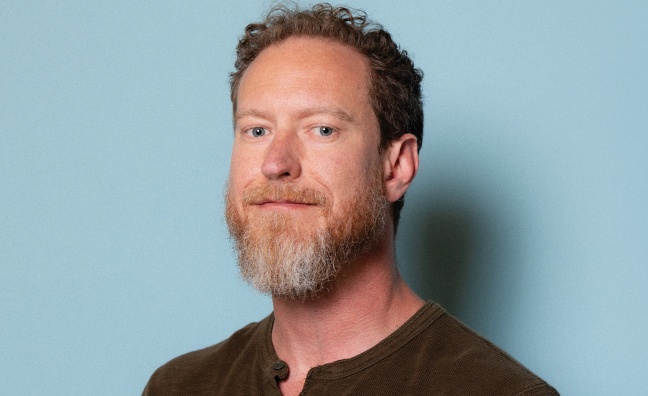
Following more than two decades at Hopeless Records, the company’s executive vice president Ian Harrison recently succeeded Dr Richard James Burgess as CEO of A2IM, the US independent music coalition of more than 700 labels.
As part of Grammy Week, A2IM hosted its first A2IM Independent Breakfast at the Grammy House.
A2IM member labels among the winners at the Grammys include American Dogwood, Anti-, Candid Records, Concord, Craft Recordings, Empire, Leo33, Mack Avenue Records, Partisan Records, Pentatone, Rounder Records and Young.
“The continued success of independent labels at the GRAMMY Awards is not a trend, it’s a reflection of how today’s music ecosystem truly works,” said Harrison. “Independent companies are building successful careers globally while preserving creative freedom and long-term artist development. We are proud to celebrate the independent community whose work is shaping the future of recorded music.”
Here, the indie community leader talks artist development, AI opportunities and rock’s resilience...
Congratulations on the new role, how does it feel to move from a label to heading up A2IM?
“I feel very fortunate to join this organisation, which is in this amazing position – our events are making a big impact, the membership’s strong, we have a lot of juicy advocacy issues to dive into. So while there’s a lot to do, I’m really fortunate to be in this place where Richard [James Burgess, former CEO & president] has taken care of this organisation in an incredible way. He’s had tons of advice for me. He’s always preaching to help keep the independent community independent, and that’s what I’m here to do.”
You’ve been a key player in the independent sector at Hopeless, why switch to a trade body?
“I’d been at Hopeless for about 21 years. I got a chance to grow that label into something that is pretty meaningful worldwide in certain genres. That was an amazing experience; I thought I’d stay there forever. For indies, the community aspect is really important. It was a big deal for me to leave Hopeless – that’s sort of my family. In some ways, A2IM feels like an extension of what I was doing at Hopeless. Louis [Posen, label founder] is one of my board members, so I’m still quite connected to the company. But I also get to contribute in a way that wasn’t really possible at just one single label.”
What are the key priorities right now for A2IM?
“It’s our job to protect the independent community and make sure that labels and artists can be as independent as they want to be. There are lots of different ways to approach this business at this point, and our mission is to make sure that there’s a lot of choice and opportunity for people to be independent and run their businesses the way they want to run them. So that’s the overarching priority that I think will always be a part of what we do.”
How about the indie sector’s approach to AI?
“It’s our job to lead the way on that and make sure that artists and labels are not left on the sidelines. You’re seeing all these new deals coming to fruition, and over the next few months there will be lots more, I’m sure. It’s our job to stick up for our community, whether that’s actual policy with the government or relationships with all of these companies. It’s up to me to make sure that we know the people at Suno and Udio, and that we’re talking to Spotify and YouTube about how they’re incorporating AI. That’s really job number one this year in terms of policy.”
Can independents take credit for vinyl’s revival?
“The vinyl resurgence was largely led by the indies. We had major labels that were basically giving away vinyl rights for a long time. The indies made a business around that; we never stopped making vinyl at Hopeless. Then all of a sudden, we were making 10 times as much vinyl as we were years before. We were well positioned to do that, because we kept making it and had relationships with the plants.”
Think tank ORCA found that nine labels, including Hopeless, invested $134m in artists in 2023. What does that say about indies’ support for talent?
“I think it drives home the fact that these labels are really investing in artists. I was in that group when I was at Hopeless. These are labels that really take artist development seriously. These labels are investing in artists, and they’re in it for the long term. The current business model really challenges that kind of long-term investment. But the ORCA group is standing up for that idea [of investment], which is really at the roots of our community.”
In what way is the model challenged?
“In general, we’re seeing that the idea of investing in artist development long term is becoming harder for partners, especially newer ones. For a label that has a pretty good catalogue and history, while it’s not easy, it is possible to invest in a new artist while you’re waiting to earn that income. There are some labels making a better return on recordings from [streaming], but it does stretch the time horizon.”
It takes a lot of time to develop an artist. So that’s an issue we’re dealing with as a community
Ian Harrison
Is it about balancing catalogue with artist development in the streaming era?
“For newer partners who want to start a label, it’s a much more different proposition than when Hopeless, Sub Pop or Beggars started. They have been relatively well positioned to handle the shift because there’s a little bit of a padding from that catalogue. But even those labels are starting to ask how they can keep investing in artists when it’s harder to see a return – not even to make a lot of money, just to justify the project. It takes a lot of time to develop an artist. So that’s an issue we’re dealing with as a community.”
Some labels have been vocal on independent routes to market, how important is it for A2IM?
“It’s crucial. What does it really mean to be independent if you don’t have a pathway to market? One of our jobs is to uphold that variety. So if a label feels that being in a major label distro system is the right move for them, that’s perfectly fine – but not if that’s really the only choice for them. So as long as we have multiple routes to market and plenty of free choice, I think there are lots of different ways to be independent and feel great about that.”
What are you most proud of at Hopeless?
“I’m really proud of the fact that we were able to help a lot of artists build a real career. We were fortunate to have some quite big successes with All Time Low, Avenged Sevenfold and Neck Deep. But we also had 40 to 50 records that sold over 100,000 copies. We looked at that 100,000 figure because we felt that was a good marker of whether a band could have a career. That’s where the independent community shines in giving artists like that a real boost and a real career that wouldn’t have probably happened otherwise.”
Finally, how do you think rock is doing right now?
“I think it’s in a pretty good place. We have some really great new stories, like Sleep Token coming out of the UK. That’s the cool thing about rock: its staying power and community. The Turnstile story in America was pretty great last year in terms of breaking through and creating some new fans for the genre. There’s the emo revival; those bands are bigger than ever. But we’re also seeing lots of new young artists that are blending genres, which I think is very interesting. So it seems alive and well to me.”
PHOTO: Jordan Kelsey Knight
 FOLLOW