
interviews

Special Report: Independent Publishing 2026

Gathered for our latest special report, a selection of key names from the independent publishing world salute the “cultural champions of songs and songwriters” who inhabit this thriving sector. Also on the table as Music Week meets them is AI, ...
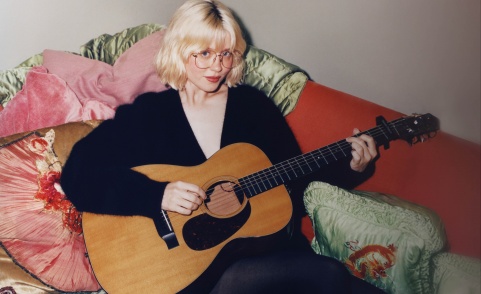
Go With The Flo: Maisie Peters and her team talk Florescence and the art of pop stardom

Since she burst onto the scene in 2019, Maisie Peters has ticked off milestone after milestone, including a No.1 album, opening for Taylor Swift, Ed Sheeran and Coldplay, and lighting up Glastonbury’s Pyramid Stage. But, as she releases her incredible third record Florescence, she wants more… of everything. To find out exactly what that entails and how she plans to get it, Music Week meets the fiercely ambitious singer-songwriter, alongside Atlantic co-presidents Briony Turner and Ed Howard, manager Bobby Havens and agent Summer Marshall of CAA, to talk breaking big, dealing with the critics and mastering the art of being a pop star… WORDS: ANNA FIELDINGPHOTOS: ELLA PAVLIDES        There’s a touch of the romcom heroine to Maisie Peters. You can easily picture her last few years as a montage. First of all, here’s our main character meeting Taylor Swift. Next, cut to a sunny morning in Nashville, as she walks down the street, musicians and musical history everywhere. Then, switch to New York, where she’s laughing over coffee with Ed Sheeran. At another point, fans around the world are handing her bunches of daisies. In the next scene, she’s in the back of a tourbus, working her way through the titles of the Booker Prize longlist. After this, she’s glimpsed playing her guitar in a florist, then a bookshop, as intimate crowds hang onto her every note.  Today, as Music Week finds Peters on tour in Cologne – as she prepares to release her third album Florescence on May 15 via Gingerbread Man/Atlantic – she looks ready to stride across the opening credits, with the blondest of bobs tucked behind her ears. She has glasses with gold wire frames and a fluffy angora jumper in a perfect shade of baby blue. Oh, and she’s fallen in love.  “In a broad sense, the album is a journey into love,” she begins, speaking from an unadorned backstage room. “Love is a big word, but it includes love for others and love for yourself. It’s an album about the last few years of my life, really. It’s been a period of feeling much more grounded [in life] and that’s what the album is about: knowing yourself as well as you can.” She pauses and smiles. “Although I’m only 25, so I haven’t got that much to go on!”  This is a different Maisie Peters to the singer of 2021’s Psycho (her biggest-selling hit, with 231,942 sales to date according to the Official Charts Company) or 2023’s Lost The Breakup (168,838), singles that established her as a creator of catchy heartbreak narratives. Her No.2 debut album, You Signed Up For This, showcased a teenager writing about teenage things. Just two years later, The Good Witch – her first chart-topper, which came out on the day she played Glastonbury’s Pyramid Stage for the first time – showed that Peters had been through enough romantic trouble to confidently label herself – in the lyrics to BSC – ‘bloody motherfucking batshit crazy’.  “Both of those albums were very representative of the years of my life that preceded them,” she says now. “The Good Witch was made in a period of chaos. I was on my first stadium tour, with Ed Sheeran. My first album had just come out; I was doing the second one straight off the back of it and I’d gone through a really difficult heartbreak. So that period was chaotic, dramatic and larger-than-life, and all that became ‘the good witch’, a kind of character.”  Florescence, by contrast, is an album about growing and blooming and there’s a country sheen to many of the tracks, which were mostly written and recorded in Nashville with Ian Fitchuk (Kacey Musgraves, Harry Styles, Beyoncé). Peters is credited – for the first time – as co-producer, while the record has duets with Julia Michaels and Marcus Mumford. “My life changed again,” she says, setting the scene. “I fell in love and…” she stops, but only because she’s searching for the right word, “I joined a relationship..? No, you don’t join a relationship…” She grins with mischief, a flash of the spice that lies under her ‘all things nice’ surface.  “That would not be a story for Music Week!” she continues. “No, I entered into a relationship: a healthy, normal, adult relationship. And so this album is much more real, rather than surreal. There are a lot of threads that connect to my previous work, but in a really nice way. I feel like it is the next book in a series and there’s been some real character growth.”  Throughout this journey, Peters has been with Atlantic, where she signed in 2018. In 2021, Ed Sheeran signed her to his Gingerbread Man label, which is overseen by his Grumpy Old Management team in partnership with Atlantic.  “We’ve always had massive amounts of belief in her,” says co-president Ed Howard. “Maisie has always repaid that in terms of how hard she’s worked and leant into the label. Our sights are set extremely high, so we know we’re not where we want to be yet. That’s because we’re taking the long view and see her talent as generational – so the sky is the limit.” His point is borne out by Atlantic’s very own Charli XCX.  “I often think of Charli in the context of Maisie, insofar as she has grown so much over time into the person she is now – and that is the same journey Maisie is on,” he says. “And the more she learns as she goes through her career, the more control and agency she has, the more people will see [who she is]. The new record is about growth and I think you’re seeing an artist coming into her own.” “We first met her when she was just 17 and deep in her A-Levels,” chimes in fellow co-president Briony Turner. “She was highly intelligent with a very clear observational wit prevalent in her songwriting. Back then, she was very much in the mould of the storytelling singer-songwriter. By The Good Witch, she was scratching a pop itch – and doing it brilliantly. Her evolution has brought her back to her roots in many ways and Florescence fuses both sides of her creativity.” In September last year, Warner Music Group announced that Atlantic and Warner in the UK and US would work more closely across A&R, with Howard and Turner joining the global leadership team of Atlantic Music Group, reporting to CEO Elliot Grainge. “It’s been amazingly positive to have a refreshed energy around Maisie,” says Howard. “We were already really well embedded with Elliot and his team in the US and were deep in some very successful campaigns, so Maisie has really benefited from that. She’s getting all this extra wonderful energy from new people who’ve fallen in love with her. It feels really positive in the States.” “I’ve known Ed and Briony since I was a teenager,” offers Peters. “Briony was there when I went with my mum to be signed. She and my mum are Instagram friends, and I’ll go to Ed’s house to hang out with him and his wife and their massive cats…”  Peters feels a “sense of family” with Atlantic.  “They’ve watched me grow up to the point where I’m making the music I am nowadays, and they have helped me and facilitated all the things I needed to do to get to where I am now,” she explains happily. Bobby Havens, of Grumpy Old Management, discovered Peters on YouTube and has been with her from the beginning. He also uses the F-word to describe their bond.  “It’s been so long now that, as cheesy as this sounds, she truly is a part of our family,” says Havens. “As much as she would gleefully tell you that I’m much, much older than her, we have grown up together in the industry. And with Atlantic, the relationship is better than ever. Briony, Ed and the team have never wavered in their belief in Maisie or support for me.” “He’s the longest-standing team member,” smiles Peters of her manager. “And we do have a very sarcastic relationship, so now I have to refrain from telling all of the jokes where I’m mean about him. I’m obviously not being mean to him! It’s just so innate to my sense of humour… But he is my number one fan, and I feel really lucky to have that in a manager. I know that Bobby thinks I could and should be the biggest artist in the world. That sort of faith is really the motor behind a lot of what we do.” Atlantic, says Howard, sees the Florescence campaign in three distinct stages. The first, which took place prior to Christmas, was the “introverted” phase.  “We led with the music that was a little more challenging, but that we felt would bring a little more credibility to what she’s been doing,” he says.  These were the tracks You You You, Audrey Hepburn and Say My Name In Your Sleep. Peters’ team also made the decision to start small with live, following her last London outing at Wembley Arena – her biggest show yet – with two underplays at Earth in Hackney. The album launch in May will provide “a mid-point,” says Howard, after which comes a third phase with “more music and some huge moments, some really fun looks over the summer and some big things live-wise”. All of which will make the run of acoustic shows Peters played in florists and bookshops earlier this year even more special to the fans who saw them, something that is not lost on the team.  “Fans are the most important thing to us,” says Havens, clearly proud of a following that encompasses almost three million monthly Spotify listeners and more than 46m TikTok likes. “It’s essential to have that real-world contact if you want a relationship beyond, ‘This is just a song I like.’”  Peters’ longtime agent, Summer Marshall of CAA, praises her “strong live foundations” and says, “We have worked hard – no steps have been skipped and Maisie is now set up to play high-profile stages in every major city all over the world on this campaign.” Marshall adds that “the next 12 months are very exciting. She is a career artist who will be shining for many years to come”. Briony Turner highlights another of Peters’ qualities. “Maisie is prolific,” she says. “We bridged the gap between the first two albums with singles, while ushering in a stylistic transition. This time, our focus is on the post-album period. Maisie presented Florescence as an era, not just an album, and she’s ready to keep it going into 2027.” Manager Havens adds that a key objective is that “Maisie is seen as much more than a ‘sweet’ pop artist”.  “I think because of the way her career started and because she was so young, you can be put into a bit of a box,” he adds. “But anyone that’s worked closely with her will tell you she’s so much more than that. She really is one of our great storytellers.” Reflecting further on Peters’ journey, Havens suggests that she’s always felt like something of an “outsider”. “She didn’t get catapulted by polls or over-hyped by the media in general,” he says. “She has worked her arse off to get where she is now, and what’s next is to try to reach every possible Maisie fan in the world and keep making her dreams come true along the way, because she really deserves it.” So far, momentum has been building via album teasers and trips to the United States, Europe and Australia. But there’s another strand coming through: sweeter, sillier and unexpectedly sharp. One that speaks to the TikTok generation. Maisie Peters appears, to an outside eye, to be going big on girlhood. As well as intimate gigs in florists and bookshops, she’s popping up in shows and shoots in the clothing brands 20-somethings treat themselves to: Damson Madder, Sister Jane and Free People. There’s Twinhood, the podcast she started with her sister Ellen last year, and there’s her choice of director for her album trailer and video for single My Regards – Amelia Dimoldenberg of Chicken Shop Date fame.  The work she’s produced with Peters suggests the two had a fine time bonding over shared cultural references. The album trailer directly references the opening scene of Angus, Thongs And Perfect Snogging, a film that’s now treated as cannon for 2000s teens. The My Regards video, which is Dimoldenberg’s directorial debut, shows Peters in a bodyguard role, jealously guarding comedian Benito Skinner from hopeful fans.  “I was looking for a female director and Amelia and I had met a few years ago and really got on,” says Peters. “I’ve always been a huge fan. I love her sense of humour within her work; she manages to be so intelligent and so funny at the same time.”  Ed Howard says it shows a new side to Peters.  “The public at large will know Amelia’s humour well, but they may not know Maisie’s,” he notes. Dimoldenberg and Peters both lived in the online world for some time as consumers before becoming creators.  “When I first started out, I lived as a lodger with a family in Queen’s Park,” says Peters. “I went to my first ever BRITs party and got a taxi back to go to sleep in their spare room. I used to do TikTok dances with the daughters. I was thinking about them the other day, if they ever remember that weird 19-year-old who lived with them and if they ever look me up.” She’s savvy enough, too, to know that online criticism “comes with the territory to a certain extent”.  After opening for Taylor Swift on the Eras Tour, Peters posted about her performance, only for the clip to be shared by a number of commenters judging her vocals.  “I could be simultaneously rational and say, ‘These people don’t know me, they’re commenting from their bedrooms and I’m on the Eras Tour,’ whilst also feeling it the way you feel it,” she says. “That can be very hard to rationalise, and I am a very rational person. So, it was a good lesson for me when I experienced that and was very taken aback by how hard it felt.  “Social media can be a tricky place; it’s sort of the worst place,” she continues. “But the opportunities I’ve got out of it are literally the reason I’m here today. That said, I feel it’s my duty as an artist to say: don’t assume I’m not opening the apps, seeing that my video hasn’t got many likes and feeling a deep sense of dread and shame – because I absolutely am, and I think we all are. But the metrics you can judge yourself on are not what you’ll think about on your death bed.”  Performing on the same stage as Swift is, however, still a defining memory for Peters, who grew up as a Swiftie.  “I’ve been part of that history,” she says. “The Eras Tour is a feat that will be in the history books. So to play just a tiny, tiny role in that and to imagine your name, very small, in that history book is very cool.”  Swift isn’t the only big name she’s opened for: Peters has also shared the stage with Coldplay, Noah Kahan and, of course, Ed Sheeran, her longtime friend and mentor.  Manager Havens offers a glowing review of her live trajectory.  “She’s not a stage-school kid; she’s a wordsmith who has had to find her own way to communicate her art,” he says. “She’s played every size venue, from tiny clubs to football stadiums, and she’s taken something from every level. I’m endlessly impressed with how far she’s come. She now fronts an incredible band that can stand on any stage.” Touring continues to make a huge impact on the singer. “There are tours and memories that I already know I’ll think about for the rest of my life,” she offers. “I’ll remember what it was like to walk onto the Coldplay stadium stage, how it became such a norm for me, stepping round all the inflatable installations. I mean, both Taylor and Coldplay are people that I’ve admired my whole life. I did homework pieces on them in Year 7!”  She lights up as she begins to talk about Sheeran. “It’s not about him giving me advice; we really just talk about life and what he’s doing and what I’m doing,” she says. “I’m very lucky to have somebody like Ed in my corner. He’s an excellent role model… He’s managed to have this extraordinary career and be one of the biggest songwriters and artists ever, whilst also having such a normalcy to his life and his relationships.” She tells a recent story to illustrate her point. “I was with him in New York, walking around his neighbourhood and we went into his local coffee shop,” she recalls. “He’s one of the most famous people in the world and he’s just there chatting to the guys making the coffee and talking about how the menu has changed.” Among all the high-profile support slots is the story of one she didn’t end up doing, for Kelsea Ballerini’s US tour in 2024. Peters had been booked, but pulled out citing mental health reasons. It was a decision that, although difficult, highlighted some personal growth. While touring The Good Witch, Peters was diagnosed with vocal polyps yet pretty much soldiered on.  “Then I started vocal therapy and, luckily, I wasn’t scheduled to be on tour or to be working at all,” she says. “In the back of my mind, there was always the thought that if I couldn’t resolve it, there would have to be an operation and bigger decisions to be made. It was a scary time and something that I still feel the effects of, maybe in more of a mental health way than a physical way.” Peters says that artists must strike a delicate balance. “It’s rarer to get those big opportunities, maybe because there’s a saturation of new artists, as well as it obviously just becoming harder and harder financially,” she says. “So if you do get them, there is huge pressure to make the most of them and not jeopardise them. I know I’ve definitely felt like that, and it’s obviously not healthy, but we’ve seen people take a stand against that, like Chappell Roan standing up for mental and physical health, because you can’t do the rest without that.”  Florescence is, undoubtedly, breaking new ground for Maisie Peters. There’s her personal growth, finding stillness rather than chaos, but it’s also an evolution in her sound. “In many ways, I still write the same way I did when I was 13,” she says. “I just love to write and to create my own little worlds.” This isn’t to say those worlds are always the same, because Peters also holds two particular songwriting beliefs. The first touches on predetermination and destiny.  “You’re going to make what you’re going to make,” she posits. “It’s going to come out of somewhere and then I will collect it up at the end and make sense of it.”  The second idea is about finding the right location.  “With The Good Witch it was Scandinavia,” she says. “With Florescence, I had this real feeling that I should go to Nashville.” Peters grew up listening to female country singers: Taylor Swift’s earlier work, obviously, and Kacey Musgraves, Maren Morris and The Chicks. Nashville, where she could have brunch with friends and slip into its musical community, was a natural fit.  “There are a lot of greats there,” says Peters. “Natalie Hemby was my first session.”  One of her last sessions was with Julia Michaels. Peters had thought her album was done, but couldn’t resist the chance to work with someone she admired so much.  “Julia is so lovely, down to earth and easy to hang with, whilst being one of the most successful and formative voices of pop music,” she says. “I have been so inspired by Julia that it was like working with an incredible version of myself, like a God-tier version.”  Nashville also gave Peters the chance to reunite with celebrated producer and songwriter Ian Fitchuk.  “I was looking for an executive producer, which I’d never had before,” says Peters. “We did 15 songs in three weeks; there were no wrong moves.” Another standout in the cast list is Marcus Mumford.  “We met in the middle of making the record and wrote a couple of songs together, one of which was Say My Name In Your Sleep,” she says. “That was a real North Star and he became a really valuable friend. We went on to make a bunch more music, which I’m hoping will see the light of day.” Then there’s Ines Dunn – the winner of the Music Week Women In Music Awards 2025 Music Creative – Spirit Of The Studio honour – who is more than a co-writer.  “We are just such good friends,” says Peters of her longtime creative partner. “All the music that we make often comes out of conversations that we’re having, secrets that I’ve told her, or things that only she and I know.”  Bobby Havens calls Florescence “the best and most musical album she’s made so far”.  “She’s doing exactly what she should be: working with the biggest and best artists and songwriters,” adds Briony Turner. The team would obviously like another No.1, but the real focus is on continuing to build a career.  “We want to achieve greater scale, in the UK and beyond,” says Ed Howard. “We’re continuing to build in all key territories, setting down routes for the next five, 10 years.”  “Reach is now firmly driven by dialled-up individuality rather than the traditional song structures and rules of the past,” Turner adds. “Maisie’s development has tracked pretty closely with this. The purity of her artistry, her honesty and the depth of her storytelling mean Florescence couldn’t be better timed.” “I hope it’s one of many [successes], rather than the album,” says Havens. “You always hope for that magic moment that travels further than you or anyone can explain, but we’ve been doing this long enough to know that is beyond our control.” Peters takes a similarly level-headed approach.  “I would love for this record to be bigger than its predecessor,” she says. “And I would love to be given more opportunities to keep trying to make the greatest thing I can make.”  The album arrives during a purple patch for domestic acts, and Peters takes pride in the achievements of her peers. “There have been a lot of incredible breakout moments for UK artists and, globally, we’ve been in a really great period for pop music, especially by women,” she says. “I started releasing music around the same time as Olivia Dean and it’s so cool to see what she’s doing, and Charli XCX. It shows the rest of us what is possible at any stage of the game. I’m not a new artist anymore, and I’ve found that so inspiring, but also calming and soothing, too.”  Back in 2020, starring on the cover of our New Music Special alongside Celeste, Peters said she felt that she could be a pop star. So, does she think she’s mastered it six years on?  “I’m glad I had that faith in myself back then,” she concludes. “But, my goodness, have I mastered it? I think it’s an active verb, ‘to popstar’, so it’s something that you do every day and in small ways, some days more than others. ‘To popstar’ is a lifestyle, a real, true commitment to the art, in a way that’s all-encompassing in your life.”

Hitmakers: Stuart Price on the songwriting secrets behind Madonna's Hung Up

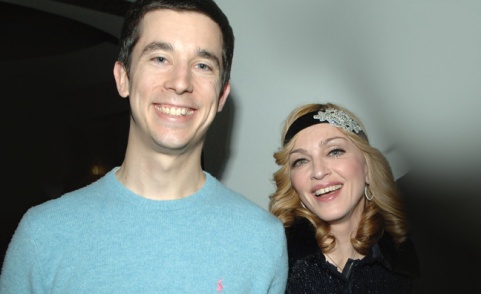
Madonna is set to release Confessions II on July 3 – a sequel to 2005's Confessions On A Dance Floor with Stuart Price again co-producing.  Following Madonna's collaboration with Sabrina Carpenter on hit single Bring Your Love, here's a chance to revisit our Hitmakers feature with Stuart Price on Hung Up, the lead single from Confessions On A Dance Floor... In 2005, Hung Up not only took her back to the top of the world’s charts, but it made her a fixture on global dancefloors. Co-writer Stuart Price reveals how a night on the M1, a chance Radio 2 play, and a handwritten note saw the Material Girl sample ABBA’s Gimme! Gimme! Gimme! (A Man After Midnight)… When I started doing remixes as Jacques Lu Cont, my French label said [producer/artist] Mirwais was releasing material, and did I want to remix it? I happened to be in Paris so I met him and we clicked right away. I remixed one of his songs, then he called up a few months later and told me he had produced the Madonna album [Music] and she was going to tour it. He said, “I know you can play, I’d like to have someone who understands musically where I was coming from in the rehearsals.” So I went to LA as keyboard player for her band. As it turned out, it wasn’t working and I was going to leave because they were struggling with the direction. But then she shifted it around and said, “As you understand electronic music, can you help with the direction of the show?”  We weren’t writing, but we had that musical connection. That segued into another tour a few years later, which kind of remixed her songs, and afterwards she said, “We’ve reworked so much old music together, why don’t we rework something new? Let’s start writing!”  Madonna was doing a movie at the time with [film director] Luc Besson, that didn’t materialise, which was going to feature music from different generations – a punk rock era, a ’20s era, and a disco era. So she asked, “Do you have anything that is like ABBA at Studio 54?” Originally, I said no. However, six months beforehand, I had a DJing residency at a club in Liverpool called The Masque, at the Chibuku Shake Shake night. One night, I was coming back from Chibuku, it was 5am on the M1, I was falling asleep – I wasn’t driving! – and Radio 2 was on. Gimme! Gimme! Gimme! started playing, and in that dream state I thought, ‘Wow, that would be a really good sample for a song.’ So just before I went up to play Chibuku again, I quickly hacked the sample into a track that I could play in my DJ set. It was immediate – the whole room felt pretty special. I played it for the next couple of months, but like most DJs, I wore out my records and moved on. So when Madonna mentioned ABBA, I suddenly went, “Well, there is one thing...” I played her the track, she listened intently, then she just opened her mouth and sang: “Every little thing that you say or do, I’m hung up, I’m hung up on you...” It really happened that quickly. We were in the studio, which was in the attic of my flat in Maida Vale, so I recorded her. Subsequently, the production took some work, but the whole thing about making Confessions On A Dance Floor was that it was such fun. Hung Up really set the tone for that album. In her brilliantly instinctive way, Madonna just pivoted, and instead of doing the movie with loads of sections, she went, “We’re going to make a dance record!” Madonna is a great enabler of creative freedom Stuart Price You have to give her credit because dance music was a dirty word in America in 2005, it was not at all on the radio. Did the mixed reaction to [previous album] American Life influence her? It’s a pattern I’ve spotted with many artists that I’ve worked with subsequently. Once someone puts themselves in the freedom zone of saying, “I no longer care how this is going to be received, it feels right,” they tend to be rewarded with a successful record.  The Liverpool track was just three components, ABBA, a filter and a beat! Madonna said, “I need more to go on to make this into a song,” so I just picked up my instruments, and came up with a verse and a bridge structure. Madonna is a great enabler of creative freedom. We had developed a shorthand on tour, so in the studio we didn’t need to over communicate. The best way to explain our collaboration is how the record says ‘produced by Madonna/Price’, and that’s not because she is just putting her name there. She is as much a visionary as anyone else – I mean, she is the visionary on the record! When she sees the seed of something, she envisions it from beginning to end in a moment. It’s then a case of creating an environment to make it happen.  So our studio days would typically be us working together in the afternoon. Overnight, I would come up with a new song or a template which I would send to her. Then, she would either arrive with something, or she’s very capable of switching on and writing in that moment. There’s a lot to be said for a tireless work ethic and no entourage. It was just two people writing. If you’re focused, you can achieve a lot in a short period of time. I don’t want to reduce the song and say it was easy, but we knew where we wanted to go!      That said, there was no Plan B if ABBA didn’t clear the sample [laughs]. We knew ABBA were reluctant to allow sampling of their work, so Madonna’s manager flew to Stockholm to meet with Benny and Björn at their Polar Studios. She gave them a handwritten letter from Madonna in which she expressed her admiration for their work, and the hope that we could collaborate. What resonated with them, I think, was that we had taken cues from them, but we had tried to move it forward, and they approved the sample that day.   There’s definitely my career pre-Madonna – no pun intended! – and post-Madonna. Hung Up was a nice transition between those two worlds. I went from a background of DJing and remixing into writing and production with this track, and there are times in the studio where people bring it up, so it continues to play a role in my career. Interview: Paul Stokes Photo: K Mazur/Getty

Chris Dempsey: The Music Week Interview

subscribers only

Myles Smith - The Music Week Interview

subscribers only

How It's Dunn: Award-winning songwriter Ines Dunn on crafting hits, AI, and representation

subscribers only

MORE Music Week Features

Show More
Loading
subscribe link free-trial link

follow us...