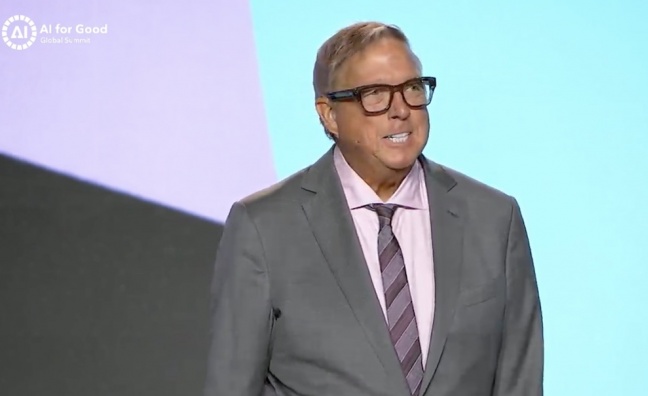
Universal Music Group’s EVP and chief digital officer Michael Nash has delivered a keynote speech on UMG, AI and music at the largest UN summit on artificial intelligence, AI For Good in Geneva.
This summit, for which over 13,000 delegates have registered, gathers UN decision makers, politicians and other stakeholders to discuss AI in the context of the UN Sustainable Development Goals.
The event is organised by ITU together with 40 UN organisations and the Swiss government.
UMG has been focused on an industry-wide effort on responsible use of AI in music, which has been enshrined in agreements with digital platforms and music technology partners.
Nash’s appearance follows the US Senate rejection last month of a proposed 10-year ban on AI guardrails, a vote that was welcomed by the RIAA (Recording Industry Association of America).
In his introduction, Don Was said: “Some of us are excited, some are nervous and everyone has got questions… What does AI mean for profound artistic communication?”
Speaking on the opening day, Nash told the audience in the room and online: “Music engages a massive global audience – it is the soundtrack of life on this planet. Half of the world’s population is actively engaged.”
Internet-enabled fans spend an average of 20 hours listening per week.
With growing medical and wellness partnerships, Nash underlined music’s role as a power for good in the world.
“The scope of technological disruption may be unprecedented with AI… but it’s artists that shape global culture,” he said of the emerging technology.
The senior UMG exec said their philosophy was to centre the conversation on artists, defend their rights and interests, and forge new creative and commercial opportunities.
He also stressed that copyright fraweworks need to be upheld.
“Of course it’s essential that we energetically defend our artists’ interests,” said Nash, who described the anti-copyright premise of some AI innovators as “deeply flawed”.
He noted that the Human Artistry Campaign on AI has now amassed 170 members.
In contrast, Nash said the approach should be for new tools in the hands of artists to help expand the market.
UMG has backed licensed voice clone technology that allows artists to sing in different languages.
The major’s Sound Therapy partnership with Apple uses UMG’s patented generative AI system.
“The result: immersive artist-approved remixes that deliver a range of wellness benefits to subscribers,” said Nash.
Nash also highlighted the use of AI in The Beatles’ Now And Then, which became the first such use of the technology to win a Grammy.
Looking back at earlier tech disruption, he credited Apple’s work with the industry on the iPod and iTunes as a critical early step in digital music that helped create a trillion dollar company.
Nash also took the opportunity to unveil Keith Urban’s new video, Straight Lines, which has used ethical AI. Generative video tech firm Moonvalley was able to create the video using still photos, as well as enhancing footage.
“AI innovation can drive music culture and, in so doing, drive even greater benefits to the quality of life on this planet,” said Nash.
During a Q&A session, Nash addresses the rise of the band The Velvet Sundown, who have received global coverage as an apparently AI-created band.
“Because of all the publicity, they have one million listeners on Spotify but that would not break them into the top 10,000 acts on the platform,” said Nash.
Nash also revealed that the major’s consumer research found that the vast majority – 77% – of those who are interested in the application of AI in music still say that real artists matter the most.
Other UMG speakers at the AI For Good summit this week include Chris Horton, as well as artists Erland Cooper and Amaya Gloor, who will also perform.
 FOLLOW