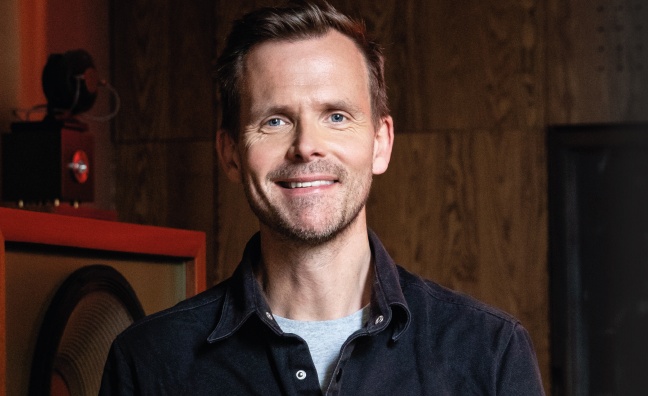
Formerly in charge of the Ivors Academy until 2023, Graham Davies then headed to the US as CEO & president of the Digital Media Association (DiMA) representing DSPs. As the British industry veteran approaches two years in the role, he dissects the key issues for the global streaming sector including innovation, tax stifling growth and AI music…
What’s your experience been so far of the big move to the US representing streaming services?
“I’m pleased to say it’s gone well. In terms of coming to the decision to leave the Ivors, I was there five years and during that time I believe I transformed that organisation. I left them very strong and it’s a great team there under new leadership. I thought that there was an opportunity to grow what DiMA is and to strengthen the voice of music streaming services in the industry debate. I’m really pleased to say that the organisation had the same ambition, and in a relatively short time I think that we have strengthened it.”
How is DiMA expanding its role with the sector?
“What we had done at DiMA historically was [Washington] DC-focused on a relatively small set of issues and lobbying on The Hill [Congress]. We now have a wide agreement on policy that we advocate on across The Americas. So we’ve broadened out into Canada, Brazil, Mexico, and are now coordinating across Latin America. I can say that I literally hotfooted from giving evidence to the Culture Committee of the Chilean Parliament prior to this interview. Last week I was up in Canada giving testimony to the Canadian broadcasting regulatory authorities. That’s the nature of the role, which is fantastic, and there’s been this ambition to grow what we do as the voice of music streaming.”
You took part in the UK parliament’s streaming inquiry. Are US lawmakers supportive of DSPs?
“In terms of perceptions of streaming services, it’s a mixed picture, it really does depend on which committee you’re going into, or the Congressperson you are speaking to. The main thing is that there is a real need to educate. I think music can struggle sometimes in terms of people understanding how the industry works. There can be misconceptions around whether the streaming services are paying artists directly. If you have artists that are unhappy about their personal income – and I’ve represented them in the UK – it can be very easy to just blame streaming overall, when the streaming services are paying the most of any licensing model in the industry.”
What are your concerns about the impact of the proposed 5% levy on platforms in Canada?
“From our perspective, streaming is working. It’s an unbelievable success story, and we do that in partnership with the music industry. Our members invest in teams in Canada, working with the music industry to find and promote the best talent, that’s a joint effort. Our members do their own promotional and support activities, too. That’s on top of the 70% of money that’s going to rights-holders. [The levy] is putting real pressure on the model that’s working, our members will have to consider their investments in Canada. So that was the backdrop to our Scrap The Tax campaign.” [The levy was being appealed as Music Week went to press.]
Is the slowing rate of streaming growth in the major markets a concern?
“A market is only so big. With this year-on-year growth that we’ve had over the last decade, it is understandable that it would start to hit the point of maximum [increases]. But there are huge growth opportunities in other territories. We are now representing Latin America, which is one of the strongest growth markets, so there’s a huge opportunity for continuing growth of streaming. Clearly, it won’t necessarily mean the same growth for the same repertoires of music. Spotify in their Loud & Clear report had some very interesting statistics about how much revenue is coming from exports for successful artists.”
Streaming is working – it’s an unbelievable success story, and we do that in partnership with the music industry
Graham Davies
Are we entering a new era of streaming with different tiers for consumers?
“I think the way to see it is that our members are just constantly innovating. It’s a very competitive market because of the nature of the product offering being very similar. But we are seeing that being put together with bundles of other product offerings and tiers for the superfan opportunity to buy into more. I expect our members to be doing all of those things.”
How should the streaming services deal with the music industry clamour for further price rises?
“At DiMA, we don’t generally comment on pricing. What I would say is that the journey from consumers getting used to not paying for music, with music being available for free, and building to where we are now has been and is a delicate path. For me, one of the remarkable things is that it is arguable that never in history have so many people paid for music on a monthly basis. In the past, physical product would be more about Christmas and gifting. It’s understandable that rights-holders will always want to have music valued more highly, and so they should. But I think there’s always a delicate balance to strike with ensuring the growth path with consumers.”
What can DSPs do to deal with the increasing scale and range of AI-based music on platforms?
“Our members have no incentive to carry deceptive or harmful content. But the job of saying, ‘Is this authorised?’, that’s really the role of rights-holders, because they’re closer to it. There is a field now through the DDEX supply chain to notify where there’s an AI component. But the challenge of accurate data in the supply chain is enormous. We are engaged fully in the industry with that.”
It’s been tough for British talent in recent years. Are UK artists getting a fair crack on global DSPs?
“I genuinely think that all artists get a fair crack, including from the UK. What we would say is that streaming has democratised the music industry, and we’re still in that evolution. Technology has lowered the barriers to people becoming creators. We should applaud that, but it does mean that there are more artists and more music, so that’s the flip side – the money has to go around to more places and you have a harder path to being heard. But the services provide this global platform for artists. They don’t need to sign a deal, they can remain independent if they want to. Anyone can go to market.”
Finally, is the streaming sector helping to grow the wider music industry?
“It absolutely is. It’s a generator of that ancillary spend, whether it’s on merch, or whether it’s on tours and everything else. So it is very much part of growing the widest possible pie for the industry.”
PHOTO: Louise Haywood-Schiefer
 FOLLOW